About this result
Strong Anxious Attachment
One of 4 results in Do I Have Anxious Attachment?.
The fear of abandonment runs deep
You show a strong anxious attachment pattern. The fear of abandonment is close to the surface — distance triggers it, conflict amplifies it, and reassurance quiets it only briefly. This is your nervous system doing exactly what it learned to do.
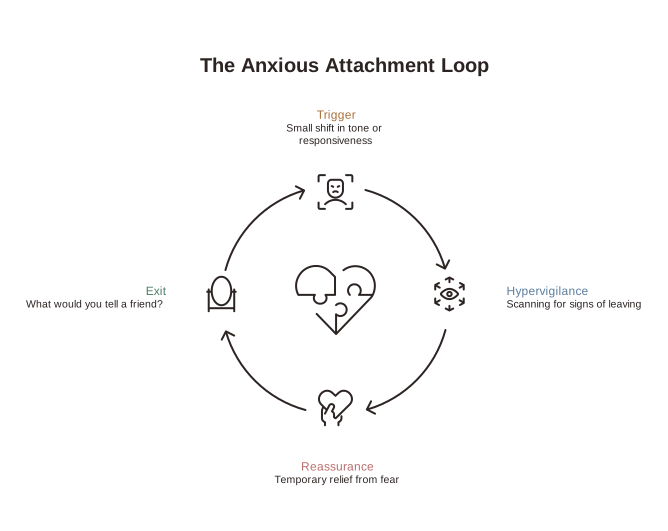
Hypervigilance to any sign of withdrawal or coldness
Reassurance brings relief, but the fear rebuilds quickly
The smallest shift in someone's tone or responsiveness can spiral
The core belief underneath: "People always leave eventually."
here's one thing to try tonight: The most important thought to challenge: "This distance means I'm losing them." Anxious attachment generates evidence for abandonment even when it's not there. Start with: "What would I tell a friend whose partner hadn't texted back for two hours?" That's the voice your own mind needs to hear.
MindLift, a CBT app for relationship anxiety and anxious attachment
Other results in this quiz
Frequently Asked Questions
Frequently Asked Questions
What does Strong Anxious Attachment mean?
Hypervigilance to any sign of withdrawal or coldness
What can I do if my result is Strong Anxious Attachment?
The most important thought to challenge: "This distance means I'm losing them." Anxious attachment generates evidence for abandonment even when it's not there. Start with: "What would I tell a friend whose partner hadn't texted back for two hours?" That's the voice your own mind needs to hear.
If you are in crisis or thinking about harming yourself, call or text 988 (US) or find a local line at findahelpline.com. MindLift is a self-help tool and not a replacement for professional care.