About this result
Strong Avoidant Attachment
One of 4 results in Am I Avoidant?.
The walls are load-bearing — and exhausting
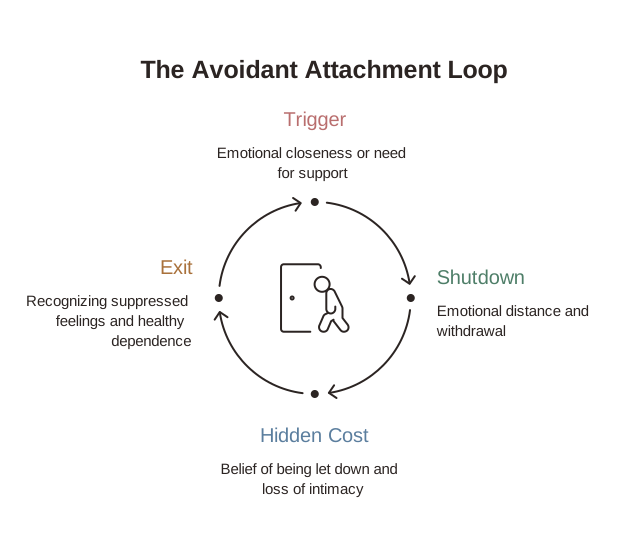
You show strong avoidant attachment. Emotional closeness consistently triggers withdrawal. Needing people feels dangerous. Vulnerability, even with people who've earned it, activates a shutdown response. This is protection — learned, not chosen.
Intimacy triggers a felt need to exit or create distance
Needing support feels intolerable, even in safe relationships
Conflict or emotional intensity leads to full shutdown
The core belief: "If I depend on anyone, I'll eventually be let down."
here's one thing to try tonight: The most important thing to know: your avoidance isn't indifference. Research consistently finds that avoidant people have similar emotional activation to anxious people — they just suppress it more effectively. The cost is intimacy. The reframe: needing someone is not the same as losing yourself to them.
MindLift, a CBT app for relationship anxiety and anxious attachment
Other results in this quiz
Frequently Asked Questions
Frequently Asked Questions
What does Strong Avoidant Attachment mean?
Intimacy triggers a felt need to exit or create distance
What can I do if my result is Strong Avoidant Attachment?
The most important thing to know: your avoidance isn't indifference. Research consistently finds that avoidant people have similar emotional activation to anxious people — they just suppress it more effectively. The cost is intimacy. The reframe: needing someone is not the same as losing yourself to them.
If you are in crisis or thinking about harming yourself, call or text 988 (US) or find a local line at findahelpline.com. MindLift is a self-help tool and not a replacement for professional care.