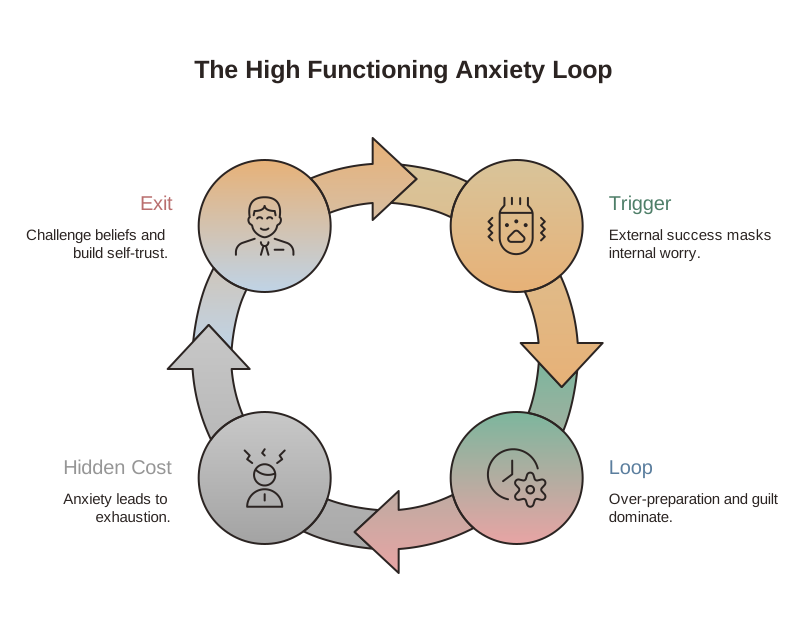
Outwardly productive. Inwardly running from something. Sound familiar?
About 2 minutes6 questions
Start with question 1 of 6
When a task is "done," your first feeling is usually:
About this quiz
Do I Have High-Functioning Anxiety?
Outwardly productive. Inwardly running from something. Sound familiar?
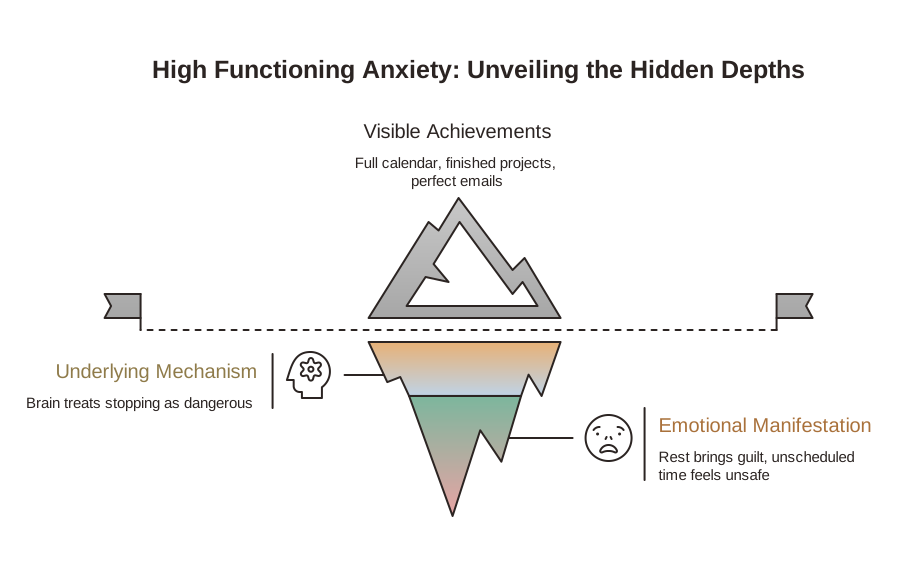
High-functioning anxiety doesn't look like panic attacks or avoidance. It looks like full calendars, finished projects, perfect emails, and a brain that never actually stops.
The cost shows up at night, or in quiet moments you immediately fill — because stopping feels dangerous.
Answer for how things actually are, not how you perform when someone's watching.
The pattern this quiz checks for — what shows, and what runs underneath.How does this quiz work?
How does this quiz work?
Answer 6 questions about how you usually react, not how you would like to. About 2 minutes is the usual time to finish, there are no right answers, and Do I Have High-Functioning Anxiety? scores your result on your device — free, no email, no signup.
When a task is "done," your first feeling is usually:
Relief and satisfaction — I did it.
Brief relief, then immediately what's next?
Worry that I missed something, or didn't do it well enough.
A compulsive urge to find the next thing before I can feel good.
When you have unscheduled free time, you typically:
Actually enjoy it — rest feels restorative.
Rest, but feel a pull toward doing something productive.
Fill it quickly — empty time feels uncomfortable.
Can't relax. Something always needs doing, or guilt fills the space.
How often do you apologize for things that aren't your fault?
Rarely. I own mistakes, but I don't over-apologize.
Sometimes — especially when I sense tension.
Often. I apologize first to keep things smooth.
Constantly. I apologize for existing in inconvenient spaces.
Before an important event or deadline, you:
Prepare reasonably, then trust yourself.
Over-prepare a little — just to be sure.
Over-prepare significantly, then still worry the night before.
Rehearse, re-check, and mentally simulate failure repeatedly.
When someone doesn't respond to you quickly, you:
Assume they're busy and move on.
Notice it, but don't spiral.
Start wondering if you said something wrong.
Replay the conversation looking for what you did to cause it.
Your inner monologue at the end of a "successful" day is usually:
I did well today. I can let this go.
That went okay, but I should have done X better.
I got through it, but I know I'm going to drop the ball eventually.
They'll figure out I'm not as capable as they think.
What results can you get?
What results can you get?
Your answers sort you into one of 4 results — Low HFA Traits, Moderate HFA Traits, Strong HFA Pattern, Classic High-Functioning Anxiety. Each result comes with a description of its thinking pattern and one growth move you can practise this week, plus the answer mix that produced it.
Result
Who gets it
What it looks like
Low HFA Traits
Mostly A answers
Your drive isn't anxiety-driven
Moderate HFA Traits
Mostly B answers
Productive, but the worry hums in the background
Strong HFA Pattern
Mostly C answers
The doing is protection. The stopping is the threat.
Classic High-Functioning Anxiety
Mostly D answers
You look like you have it together. You feel like you're one mistake from exposure.
Low HFA Traits
Your drive isn't anxiety-driven
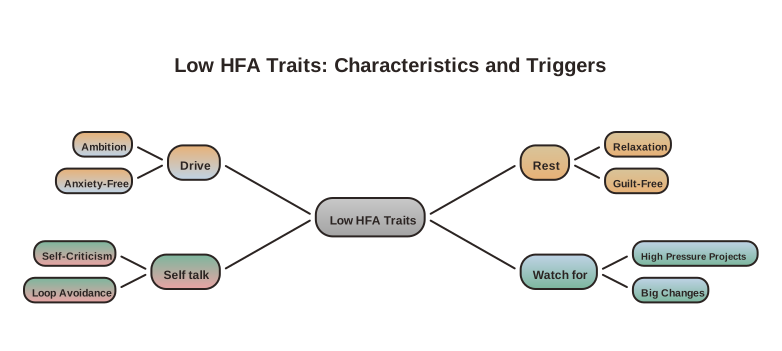
Your motivation comes from genuine engagement, not fear of failure. You can rest without guilt, finish things without catastrophizing, and tolerate uncertainty without spiraling.
Drive and ambition without anxiety as the engine
Able to rest without significant guilt
Self-critical moments don't become loops
You experience stress without being consumed by it.
Notice the moments when the pattern shifts — high-pressure projects or significant changes can temporarily push low-HFA traits higher. That's normal, not a diagnosis.
Your baseline, mapped — drive without anxiety as the engine.
Moderate HFA Traits
Productive, but the worry hums in the background
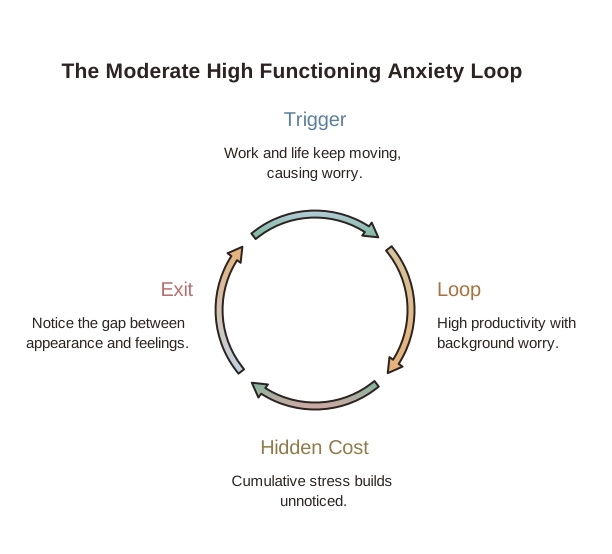
You function well — sometimes exceptionally — but there's a low hum of worry that rarely fully stops. Rest feels slightly guilty. "Good enough" is hard to mean.
High productivity with a background current of worry
Rest possible but not guilt-free
Strong drive with some perfectionism
You're effective, but it costs more than it should.
The cost of moderate HFA is cumulative — it's not dramatic enough to catch, so it builds. Notice the gap between how you appear to others (competent, on top of it) and how you feel inside. That gap is the signal.
Your loop, from trigger to exit — the gap between how you look and how you feel is the signal.
Strong HFA Pattern
The doing is protection. The stopping is the threat.
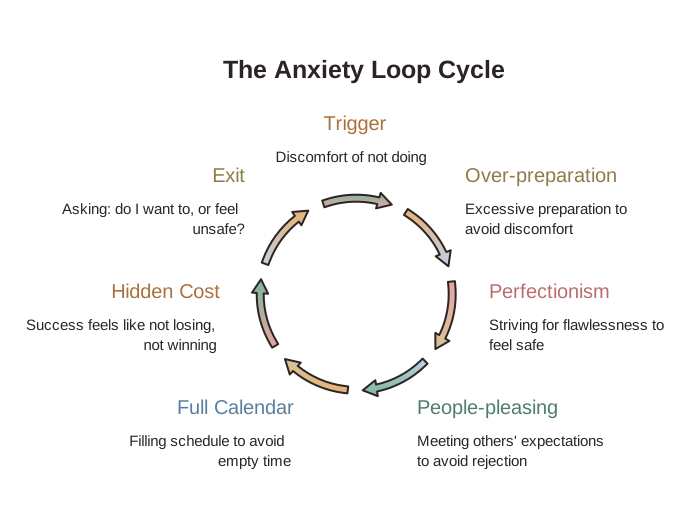
Productivity is how you manage anxiety, not just how you work. The fullness of your calendar is partly buffer against the discomfort of not doing. You can't easily tell the difference between wanting something and being afraid not to do it.
Chronic over-preparation and perfectionism
Difficulty distinguishing driven desire from anxious compulsion
People-pleasing as anxiety management
Success feels less like winning and more like not losing.
Ask yourself, once today: "Am I doing this because I want to — or because stopping feels unsafe?" You don't have to change anything yet. Just noticing the difference begins to loosen the grip.
The doing-as-protection cycle — noticing the difference between wanting and fearing begins to loosen it.
Classic High-Functioning Anxiety
You look like you have it together. You feel like you're one mistake from exposure.
From the outside: productive, reliable, capable. From the inside: chronic worry, imposter syndrome, and a nervous system that never fully rests. This is textbook high-functioning anxiety — and it's exhausting.
Constant over-preparation and rumination despite success
Inability to rest without guilt or discomfort
Imposter syndrome even after evidence of competence
The anxiety isn't what makes you good. It's what's making you tired.
The core belief driving this pattern: "My anxiety is why I succeed — if I stop worrying, I'll fail." That's the thought to challenge. Research consistently shows that genuine self-trust — not fear — produces more sustainable performance.
The engine that never idles — and the belief to challenge: anxiety isn't why you succeed.Frequently Asked Questions
Frequently Asked Questions
Is high-functioning anxiety in the DSM?
No. "High-functioning anxiety" is not an official clinical diagnosis. It's a colloquial term describing a pattern where anxiety presents primarily through overachievement, perfectionism, and people-pleasing — rather than avoidance or visible panic. Clinically, it often falls under Generalized Anxiety Disorder (GAD) or Social Anxiety Disorder.
Can you have high-functioning anxiety and still be successful?
Yes — and this is what makes it hard to recognize. High-functioning anxiety can produce impressive results in the short term. The cost is in the long term: chronic fatigue, inability to feel satisfied, and a sense that success never actually lands. Treatment doesn't reduce performance — it makes the performance sustainable.
How is high-functioning anxiety treated?
CBT is the most evidence-based approach. It targets the specific thoughts that drive the pattern — catastrophic predictions, perfectionist standards, and the belief that anxiety is productive. Therapy, journaling, and real-time thought reframing tools all help interrupt the loop.
What's the difference between high-functioning anxiety and being a hard worker?
The quality of the internal experience. Hard workers can stop, feel satisfied, and rest without guilt. People with HFA can't — the drive comes from fear of what happens if they stop. The output looks similar; the internal cost is very different.
What is high-functioning anxiety?
High-functioning anxiety is not an official clinical diagnosis, but it describes a pattern where anxiety drives high achievement, perfectionism, and people-pleasing — while internally generating constant worry, self-doubt, and an inability to rest. From the outside it looks like success. From the inside it feels like barely holding it together.
Is high-functioning anxiety still real anxiety?
Yes. The internal experience — constant rumination, fear of failure, hypervigilance about what others think — is the same as clinical anxiety. The difference is that high-functioning people have built coping mechanisms (productivity, over-preparation) that mask the distress.
Can CBT help with high-functioning anxiety?
Yes. CBT is particularly effective because it targets the specific thought patterns driving the pattern: catastrophic predictions, perfectionism, and the belief that anxiety is what makes you good at things. Reframing those thoughts reduces the anxiety without reducing the competence.
Keep exploring
If you are in crisis or thinking about harming yourself, call or text 988 (US) or find a local line at findahelpline.com. MindLift is a self-help tool and not a replacement for professional care.