What results can you get?
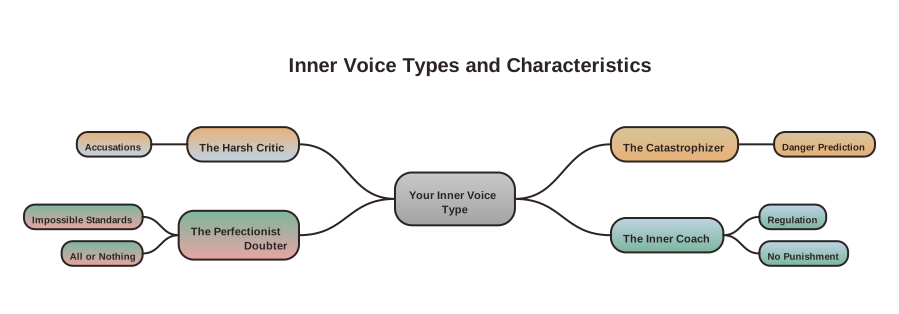
Your answers sort you into one of 4 results — The Harsh Critic, The Catastrophizer, The Perfectionist Doubter, The Inner Coach. Each result comes with a description of its thinking pattern, plus the answer mix that produced it.
| Result | Who gets it | What it looks like |
|---|
| The Harsh Critic | | Labeling + personalization + self-attack |
| The Catastrophizer | | Fortune-telling + threat inflation |
| The Perfectionist Doubter | | All-or-nothing thinking + "should" statements |
| The Inner Coach | | Balanced self-talk + adaptive regulation |
The Harsh Critic
Labeling + personalization + self-attack
Your inner voice speaks in accusations.
"You're lazy." "You're not good enough."
Research on inner dialogue shows that self-critical styles activate threat systems in the brain — the same systems designed for external danger.
You don't lack ability. You lack gentle self-talk.
The Catastrophizer
Fortune-telling + threat inflation
Your brain is a future-predicting machine. But it predicts danger first.
You prepare for worst-case outcomes as protection.
Short-term? It feels proactive. Long-term? It fuels anxiety loops that keep your nervous system on high alert.
The thoughts feel urgent, but they're usually just loud — not accurate.
The Perfectionist Doubter
All-or-nothing thinking + "should" statements
You hold yourself to impossible standards.
If it's not perfect, it's failure. If it's good, it could've been better.
This voice can drive achievement — but it quietly drains confidence. Every win gets discounted. Every gap gets magnified.
The bar keeps moving because the goal was never excellence. It was control.
The Inner Coach
Balanced self-talk + adaptive regulation
You use self-talk to regulate, not punish.
Research shows that constructive inner speech supports executive function and emotional resilience.
You can acknowledge difficulty without spiraling. You can feel uncertain without catastrophizing.
Your work now is consistency — not self-criticism. Keep choosing this voice, especially on hard days.