About this result
The Fearful Avoidant
One of 4 results in Attachment Style Test.
You want exactly what terrifies you most
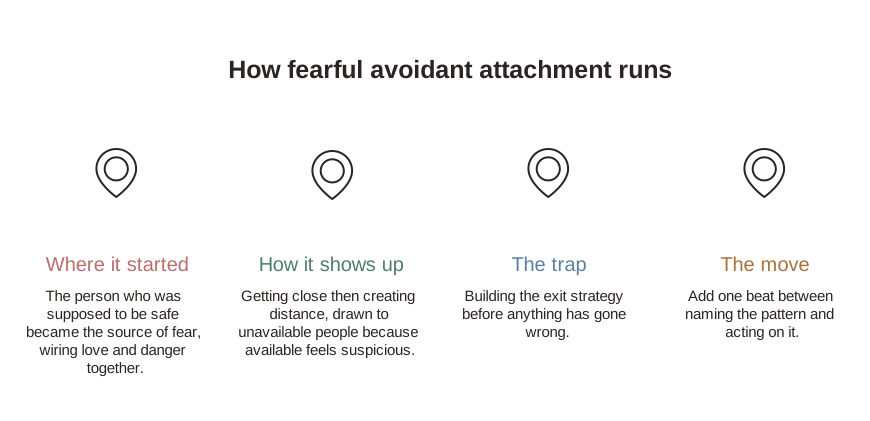
You're in the hardest place of the four — not because you're broken, but because your nervous system runs two competing drives at full volume: toward closeness, and away from it before it can hurt you. This usually develops when the person who was supposed to be safe became the source of fear, so love and danger got wired together. Now intimacy triggers both longing and alarm — sometimes at once, sometimes switching so fast it's disorienting.
You get close, then create distance
You're drawn to people who feel unavailable, because available feels suspicious
You want consistency most — and keep finding relationships where it's missing
You're often the most self-aware type, and the most exhausted by that awareness.
here's one thing to try tonight: Watch for: the self-sabotage before things get good — the exit strategy you're building before anything's gone wrong. You can name the pattern mid-loop; the work is adding one beat between naming it and acting on it.
MindLift, a CBT app for relationship anxiety and anxious attachment
Other results in this quiz
Frequently Asked Questions
Frequently Asked Questions
What does The Fearful Avoidant mean?
You get close, then create distance
What can I do if my result is The Fearful Avoidant?
Watch for: the self-sabotage before things get good — the exit strategy you're building before anything's gone wrong. You can name the pattern mid-loop; the work is adding one beat between naming it and acting on it.
If you are in crisis or thinking about harming yourself, call or text 988 (US) or find a local line at findahelpline.com. MindLift is a self-help tool and not a replacement for professional care.