What Does Your Attachment Style Say About You? 10 questions. No fluff. Just the truth about how you love.
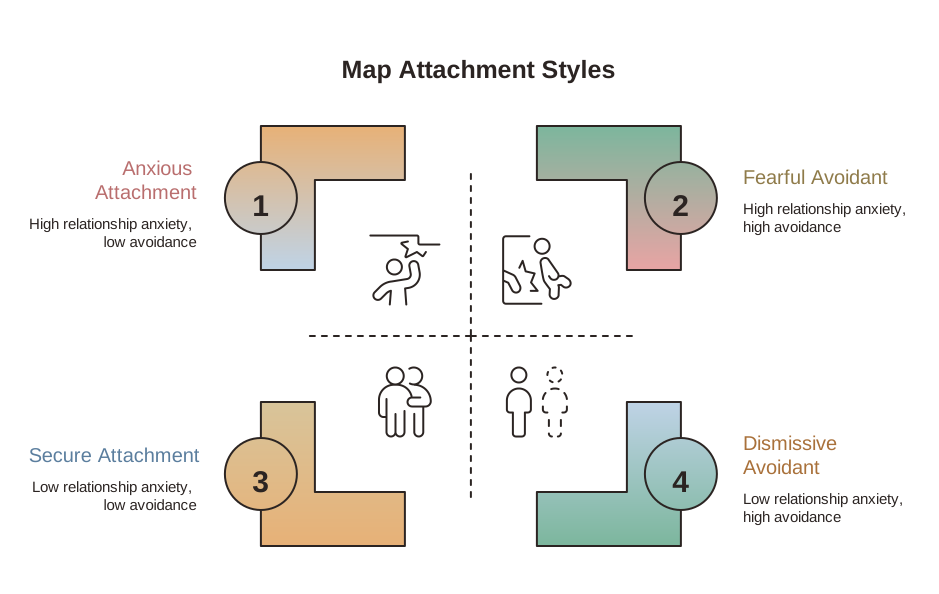
Anxious, avoidant, secure, fearful — your attachment style is the strategy your nervous system learned for staying safe in connection.
It shows up in the small moments: the unanswered text, the conversation you rehearse, the urge to pull away right when things get good.
For each scenario, pick the response that feels most honest — not the one you wish were true.
What results can you get? Your answers sort you into one of 4 results — The Secure Attachment, The Anxious Attachment, The Dismissive Avoidant, The Fearful Avoidant. Each result comes with a description of its thinking pattern and one growth move you can practise this week, plus the answer mix that produced it.
Result Who gets it What it looks like The Secure Attachment Mostly A answers You know love doesn't have to cost you your peace The Anxious Attachment Mostly B answers You love deeply — your nervous system just hasn't gotten the memo that you're safe The Dismissive Avoidant Mostly C answers You built self-sufficiency into a fortress — from the inside, it feels like strength The Fearful Avoidant Mostly D answers You want exactly what terrifies you most
The Secure Attachment You know love doesn't have to cost you your peace
You've internalized something most people spend years trying to learn: that relationships can be both close and safe. You're not naive — you've probably been hurt — but you developed a belief that you're worthy of love and that people can be trusted to show up. You communicate without games. You don't disappear when things get hard, and you don't cling when you need space.
You can sit with uncertainty without spiraling
You can miss someone without catastrophizing
When conflict happens, you repair — you don't punish
This doesn't mean you don't struggle — it means your brain learned that connection is safe.
Watch for: secure attachment can mask its own blind spots. Around anxious or avoidant people, you might absorb their chaos and call it patience. Security isn't invincibility — protect your peace as deliberately as you offer it.
Your pattern in three parts — including the blind spot security tends to hide. The Anxious Attachment You love deeply — your nervous system just hasn't gotten the memo that you're safe
You feel things more intensely in relationships — and that's not a character flaw. Your brain learned, usually from inconsistent early caregiving, that love is conditional and people leave. So it stays on high alert, scanning for danger in a delayed text, a shorter response, a slightly different tone. The relief when they reassure you is almost physical — and then it fades, and you need it again.
You over-explain and apologize preemptively
You check for subtext in messages that have none
You feel most secure right after reassurance — then it fades
This isn't neediness. It's a nervous system that learned connection was unpredictable.
Your spiral thought: "They're pulling away," "something's wrong," "I'm too much." Seeking reassurance actually reinforces the anxiety over time — each loop teaches your nervous system the threat was real. Catch the thought before you act on it.
Your pattern in four parts — the reassurance loop is the trap, and the catch comes before the text. The Dismissive Avoidant You built self-sufficiency into a fortress — from the inside, it feels like strength
You don't need people — or you've practiced telling yourself that long enough that it mostly feels true. You're capable, independent, and genuinely comfortable alone. That's real, and it's adaptive. It likely started somewhere specific: an environment where your emotional needs were met with dismissal, or where vulnerability led to something painful. So you learned to need less, want less, feel less — or feel it later, privately.
You go cold during conflict instead of through it
You minimize your own feelings ("it's fine, it doesn't matter") and others'
Emotional conversations can feel like demands
You sometimes end relationships before they can end you.
Watch for: avoidance feels like peace — it often isn't. There's a version of "I prefer my own company" that's contentment, and a version that's loneliness with better branding. Notice which one you're living in.
The four signposts of the pattern — each one once kept you safe; the question is what each costs now. The Fearful Avoidant You want exactly what terrifies you most
You're in the hardest place of the four — not because you're broken, but because your nervous system runs two competing drives at full volume: toward closeness, and away from it before it can hurt you. This usually develops when the person who was supposed to be safe became the source of fear, so love and danger got wired together. Now intimacy triggers both longing and alarm — sometimes at once, sometimes switching so fast it's disorienting.
You get close, then create distance
You're drawn to people who feel unavailable, because available feels suspicious
You want consistency most — and keep finding relationships where it's missing
You're often the most self-aware type, and the most exhausted by that awareness.
Watch for: the self-sabotage before things get good — the exit strategy you're building before anything's gone wrong. You can name the pattern mid-loop; the work is adding one beat between naming it and acting on it.
Your pattern in four parts — the work is one added beat between naming the loop and acting on it. Frequently Asked Questions What does this quiz measure? It maps your instinctive responses to 10 relationship scenarios to reveal your dominant attachment style — Secure, Anxious, Dismissive Avoidant, or Fearful Avoidant — based on the specific thoughts and behaviors you recognize in yourself.
Is this a clinical assessment? No. This is an educational self-reflection tool inspired by attachment theory and CBT principles. It is not a diagnostic instrument and should not replace professional mental health support.
What if I relate to more than one result? That's common. Most people carry more than one pattern depending on context and who they're with. The result you got reflects your most automatic response across these scenarios — but attachment exists on a spectrum.
Can my attachment style change? Yes. Attachment patterns are learned strategies, not life sentences. Research on neuroplasticity shows that consistently catching and reframing the thoughts your pattern generates — in real time — gradually shifts how your nervous system responds in relationships.
What are the four attachment styles? The four attachment styles are secure, anxious (preoccupied), dismissive avoidant, and fearful avoidant (disorganized). Each is a strategy your nervous system learned for staying safe in connection — based largely on whether early caregiving was consistent, dismissive, or frightening.
Is this a clinical diagnosis? No. This is an educational self-reflection tool inspired by attachment theory and CBT. It is not a diagnostic instrument and should not replace professional mental health support.
Can attachment styles change? Yes. Attachment patterns are learned, not fixed. Research on neuroplasticity shows that the patterns your brain learned can be interrupted and, over time, rewired — especially by catching and reframing the specific thoughts your style generates in real time.