About this result
Significant Imposter Syndrome Patterns
One of 4 results in Do I Have Imposter Syndrome?.
MindLift is a CBT app that turns harsh self-talk into a kinder response in 60 seconds. Free to start. Try the reframe on the App Store · Google Play
Strong imposter syndrome indicators
Imposter syndrome is showing up consistently — likely affecting how you take on new challenges, respond to praise, and experience success.
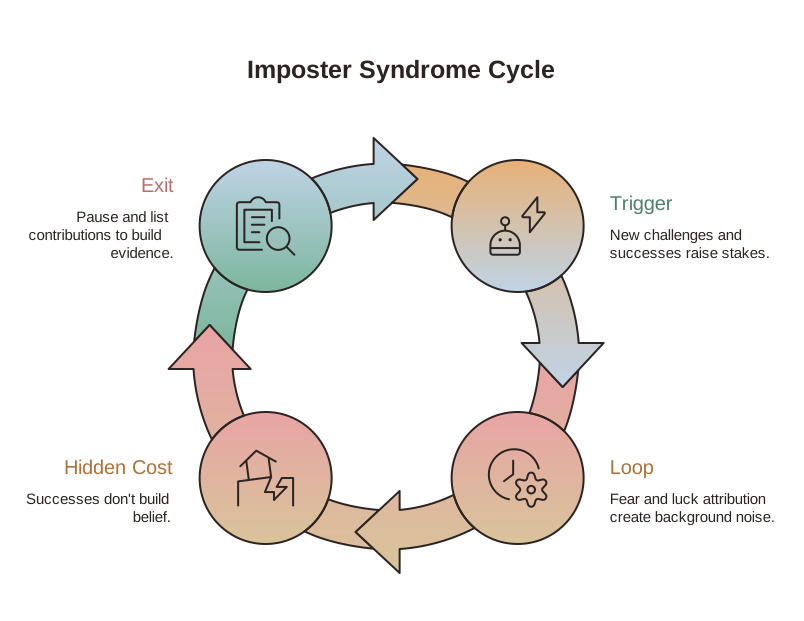
At this level, the pattern isn't occasional. The fear of being found out, the chronic attribution of success to luck, and the difficulty owning competence are operating as background noise in most of what you do.
One of the more painful parts of significant imposter syndrome: it often gets worse as you achieve more. Each new success raises the stakes — more people watching, more to lose when they 'figure it out.' The evidence that you're capable keeps growing, but the belief doesn't follow.
The underlying belief — 'I'm not actually as capable as I appear' — is specific, and it's examinable. It can be traced back to how you learned to relate to achievement, to standards, to being seen. That examination is where the pattern starts to shift.
here's one thing to try tonight: When you catch yourself attributing a success to luck, pause and list three specific things you did that contributed to the outcome. Not to prove the luck wrong — to build a more balanced evidence base.
Other results in this quiz
Frequently Asked Questions
Frequently Asked Questions
What does Significant Imposter Syndrome Patterns mean?
At this level, the pattern isn't occasional. The fear of being found out, the chronic attribution of success to luck, and the difficulty owning competence are operating as background noise in most of what you do.
What can I do if my result is Significant Imposter Syndrome Patterns?
When you catch yourself attributing a success to luck, pause and list three specific things you did that contributed to the outcome. Not to prove the luck wrong — to build a more balanced evidence base.
If you are in crisis or thinking about harming yourself, call or text 988 (US) or find a local line at findahelpline.com. MindLift is a self-help tool and not a replacement for professional care.