10 signs you're dismissing your own competence Imposter syndrome isn't about being unqualified. It's about being qualified — and still not believing it. The achievements are real. The credentials are real. The fear that everyone's about to figure out you're not is also, somehow, real.
~3 min10 questionsBased on imposter-syndrome research
You’ll get: how strong your imposter pattern is, the competence you're dismissing, and how to start trusting it.
About this quiz
Do I Have Imposter Syndrome?
10 signs you're dismissing your own competence
Imposter syndrome isn't about being unqualified. It's about being qualified — and still not believing it. The achievements are real. The credentials are real. The fear that everyone's about to figure out you're not is also, somehow, real.
This quiz uses 10 statements drawn from the behavioral and cognitive patterns most closely linked to imposter syndrome. Rate each one honestly — not how you think you should feel, but how it actually lands.
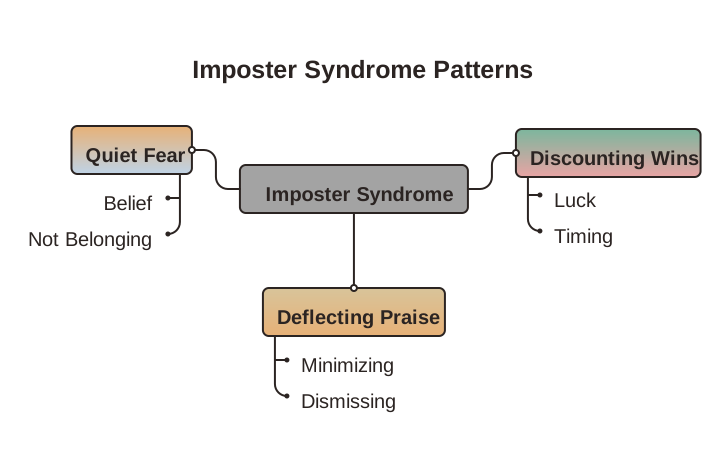
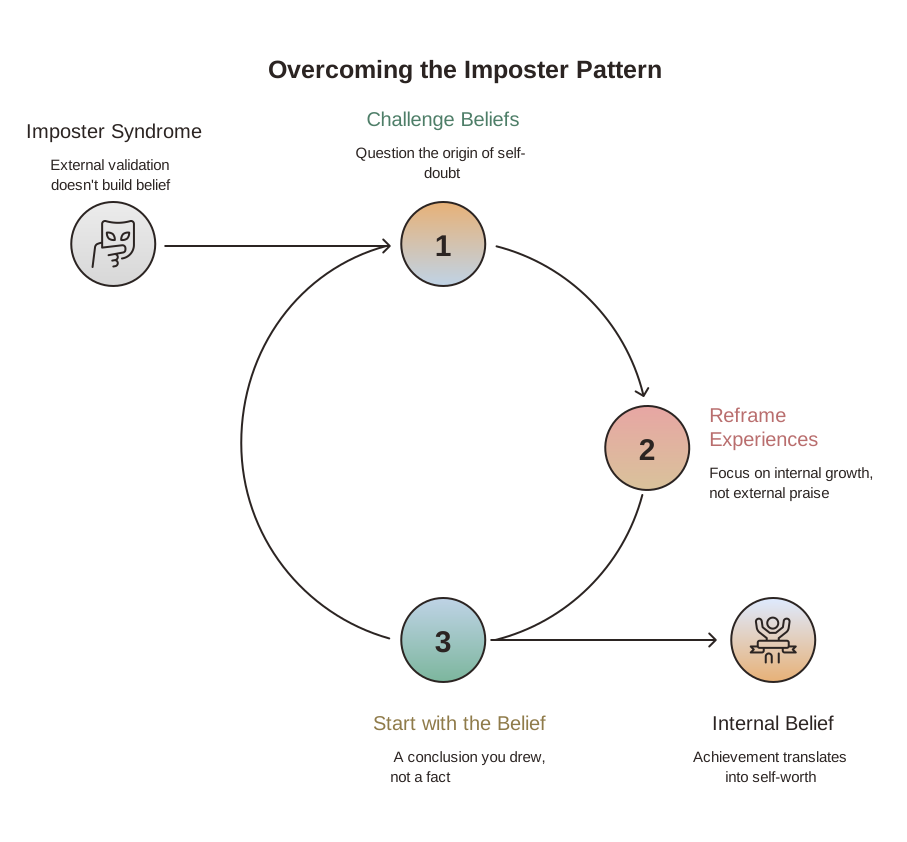
The imposter syndrome pattern this quiz measures, in three parts.How does this quiz work?
How does this quiz work?
Answer 10 questions about how you usually react, not how you would like to. ~3 min is the usual time to finish, there are no right answers, and Do I Have Imposter Syndrome? scores your result on your device — free, no email, no signup.
When something goes well — a project, a presentation, a compliment — my first instinct is to attribute it to luck, timing, or someone else's help rather than my own ability.
Not me
Occasionally
Sometimes
Often
This is me
I feel like the people around me are more competent than I am, and it's only a matter of time before they figure out that I don't really belong here.
Not me
Occasionally
Sometimes
Often
This is me
I tend to over-prepare for things — spending significantly more time than necessary to make sure I can't be caught out.
Not me
Occasionally
Sometimes
Often
This is me
When I receive genuine praise or recognition, I deflect it, minimize it, or immediately find a reason it doesn't quite apply to me.
Not me
Occasionally
Sometimes
Often
This is me
Making a mistake or not knowing something feels disproportionately dangerous — like it will reveal something fundamental about my lack of capability.
Not me
Occasionally
Sometimes
Often
This is me
I often feel like I've been 'lucky so far' and that my luck is going to run out — that eventually, a situation will come along that exposes me.
Not me
Occasionally
Sometimes
Often
This is me
I hold back in meetings, on applications, or in opportunities because I feel I'm not quite qualified enough — even when I meet the stated requirements.
Not me
Occasionally
Sometimes
Often
This is me
My achievements rarely feel fully satisfying. Even when I accomplish something significant, the feeling is quickly replaced by a sense of 'that was this time — next time they'll see.'
Not me
Occasionally
Sometimes
Often
This is me
I put a lot of energy into appearing competent — managing how others perceive me — because I'm afraid of what they'd find if they looked too closely.
Not me
Occasionally
Sometimes
Often
This is me
I find it genuinely difficult to say 'I'm good at this' or 'I know a lot about this' without immediately adding qualifiers or caveats.
Not me
Occasionally
Sometimes
Often
This is me
What results can you get?
What results can you get?
Your answers sort you into one of 4 results — Mostly Solid Ground, Some Imposter Patterns Present, Significant Imposter Syndrome Patterns, Strong Imposter Syndrome Pattern. Each result comes with a description of its thinking pattern and one growth move you can practise this week, plus the answer mix that produced it.
Result
Who gets it
What it looks like
Mostly Solid Ground
10–20
Few imposter syndrome indicators
Some Imposter Patterns Present
21–32
Moderate imposter syndrome indicators
Significant Imposter Syndrome Patterns
33–42
Strong imposter syndrome indicators
Strong Imposter Syndrome Pattern
43–50
Classic imposter syndrome indicators
Mostly Solid Ground
Few imposter syndrome indicators
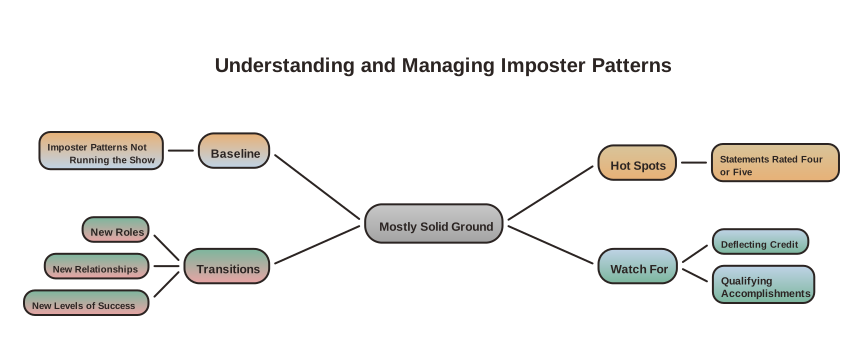
Imposter syndrome patterns aren't the dominant feature of how you relate to your own competence right now.
That doesn't mean you never doubt yourself — everyone does. But the persistent fear of being found out, the inability to own your achievements, and the chronic sense of being a fraud aren't running the show for you.
Pay attention to any statement you rated a 4 or 5. Those specific areas — particular domains, relationships, or types of feedback — are where the pattern lives for you, even if it isn't global.
The moments of imposter syndrome most people experience tend to appear at transitions: new roles, new relationships, new levels of success. That's worth tracking.
Notice when you deflect credit or feel the sudden urge to qualify your accomplishments. That's the small version of the pattern — and it's where the work starts.
Solid ground, mapped — with the transitions and small tells worth tracking.
Some Imposter Patterns Present
Moderate imposter syndrome indicators
Imposter syndrome is showing up — in specific domains, under specific conditions, with specific people.
This is the most common range. The pattern is real but situational — it surfaces under performance pressure, around people you perceive as more competent, or when you're about to be evaluated.
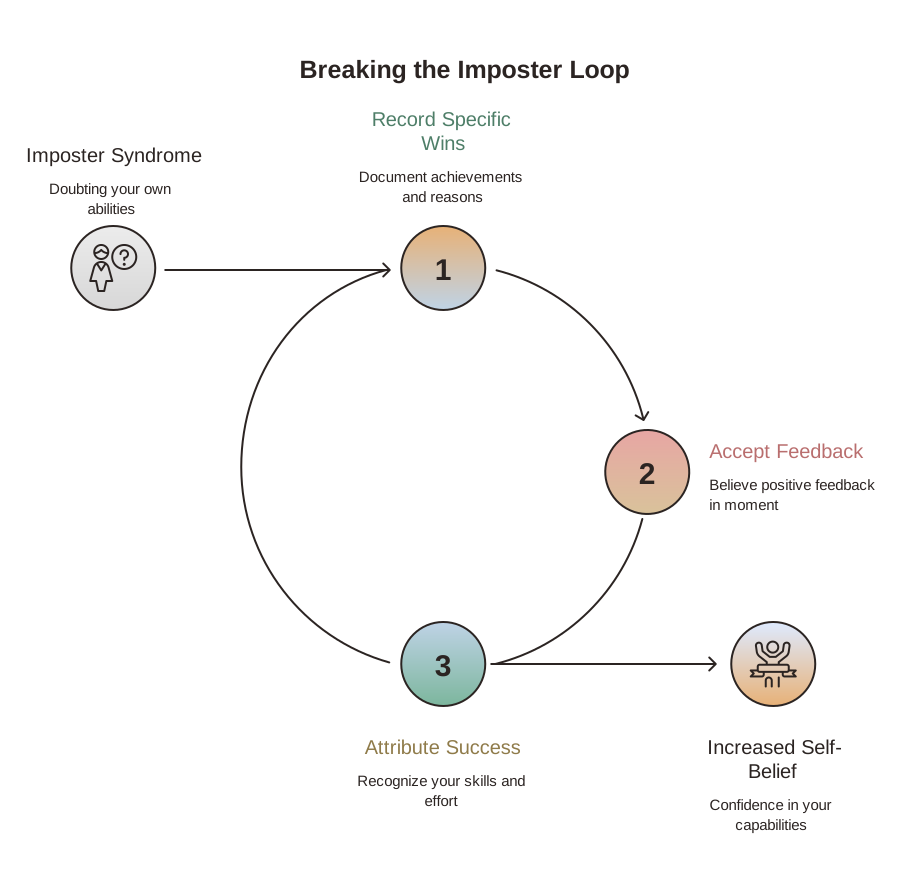
The most common version at this level: you can accept positive feedback in the moment, but you don't really believe it. You attribute success to luck, timing, or other people's generosity — rarely to your own capability.
The statements you rated highest are worth looking at closely. They're pointing to the specific shape of your imposter voice — what it says, what triggers it, and what you do in response.
Keep a 'win log' — a running note of specific things you did well and why. Imposter syndrome survives on vague evidence. Specificity undermines it.
The exit from the situational loop — imposter syndrome survives on vague evidence; specificity undermines it.
Significant Imposter Syndrome Patterns
Strong imposter syndrome indicators
Imposter syndrome is showing up consistently — likely affecting how you take on new challenges, respond to praise, and experience success.
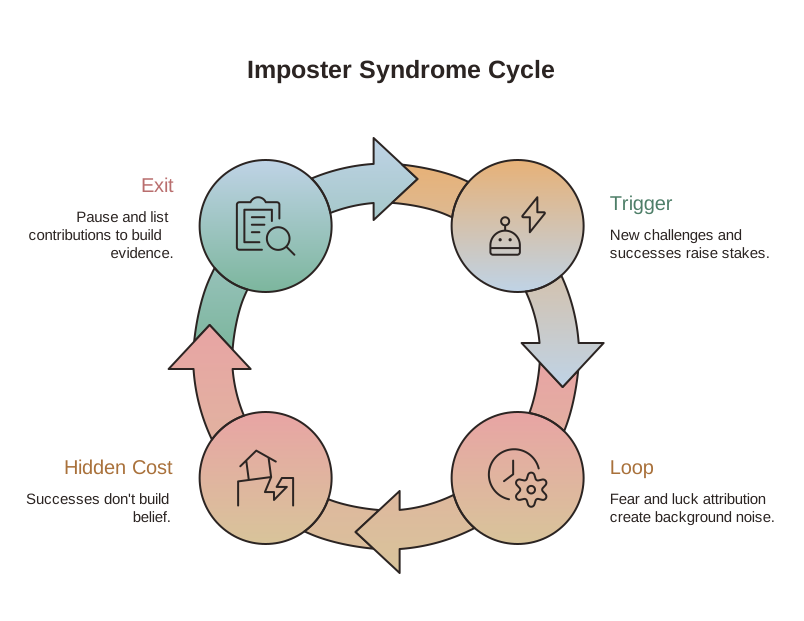
At this level, the pattern isn't occasional. The fear of being found out, the chronic attribution of success to luck, and the difficulty owning competence are operating as background noise in most of what you do.
One of the more painful parts of significant imposter syndrome: it often gets worse as you achieve more. Each new success raises the stakes — more people watching, more to lose when they 'figure it out.' The evidence that you're capable keeps growing, but the belief doesn't follow.
The underlying belief — 'I'm not actually as capable as I appear' — is specific, and it's examinable. It can be traced back to how you learned to relate to achievement, to standards, to being seen. That examination is where the pattern starts to shift.
When you catch yourself attributing a success to luck, pause and list three specific things you did that contributed to the outcome. Not to prove the luck wrong — to build a more balanced evidence base.
The cycle where evidence grows but belief doesn't — and the exit that rebalances it.
Strong Imposter Syndrome Pattern
Classic imposter syndrome indicators
These patterns are showing up strongly — and they're worth taking seriously.
A score in this range suggests that imposter syndrome isn't a visitor. It's a consistent presence that shapes how you experience achievement, how you respond to praise, and the quality of your relationship with your own competence.
Here's what's true: this is not evidence that you're actually a fraud. It's evidence that you developed a specific relationship with success — one where external validation never quite translates into internal belief. That relationship can change.
The work is real. It takes time. It benefits significantly from professional support — a therapist who works with identity, self-worth, and cognitive patterns (CBT or schema therapy). But it has a beginning that's available today.
Start with the belief, not the behavior: 'I'm not actually capable' is a conclusion you drew, not a fact. When did you draw it? What would it mean to examine whether it's still accurate?
Start with the belief, not the behavior — it's a conclusion you drew, and conclusions can be re-examined.Frequently Asked Questions
Frequently Asked Questions
What is imposter syndrome?
Imposter syndrome is a pattern where capable people persistently doubt their own competence and fear being exposed as frauds, despite evidence of their achievements. It's a thought pattern, not a personality trait, which means it can change.
Does imposter syndrome go away?
For most people, it doesn't disappear completely — but it changes. With deliberate work, the pattern loses its automatic quality. You start to catch the thought before it hijacks the moment and build a more accurate internal evidence base.
What is the difference between imposter syndrome and low confidence?
Low confidence is often domain-specific — you don't believe you can do a particular thing. Imposter syndrome is subtler: you may be highly confident in your abilities, but still believe your success is fraudulent. It's not 'I can't do this' — it's 'I can do it, but they'll eventually figure out I don't really deserve to be here.'
Is this imposter syndrome quiz accurate?
This quiz is an educational self-reflection tool based on the behavioral and cognitive patterns associated with imposter syndrome in psychology research. It is not a clinical assessment. The 10 statements cover the most common indicators: attribution of success to luck, fear of exposure, difficulty internalizing praise, over-preparation, and perfectionism. Use the results as a starting point for reflection.
Does imposter syndrome ever go away?
For most people, it doesn't disappear completely — but it changes. With deliberate work, the pattern loses its automatic quality. You start to catch the 'I don't deserve this' thought before it hijacks the moment, examine whether it's actually true, and build a more accurate internal evidence base. CBT is particularly effective because it directly addresses the distorted attribution patterns underlying imposter syndrome.
Who gets imposter syndrome?
It's extremely common — showing up across capable people at every level, not just beginners. It's particularly common among high-achievers, women in male-dominated fields, first-generation professionals, and people from minority backgrounds navigating majority environments. Counterintuitively, imposter syndrome often intensifies with success — each new level raises the stakes of being found out.
Keep exploring
If you are in crisis or thinking about harming yourself, call or text 988 (US) or find a local line at findahelpline.com. MindLift is a self-help tool and not a replacement for professional care.