About this result
The Harsh Inner Critic
One of 3 results in How Harsh Is Your Inner Critic?.
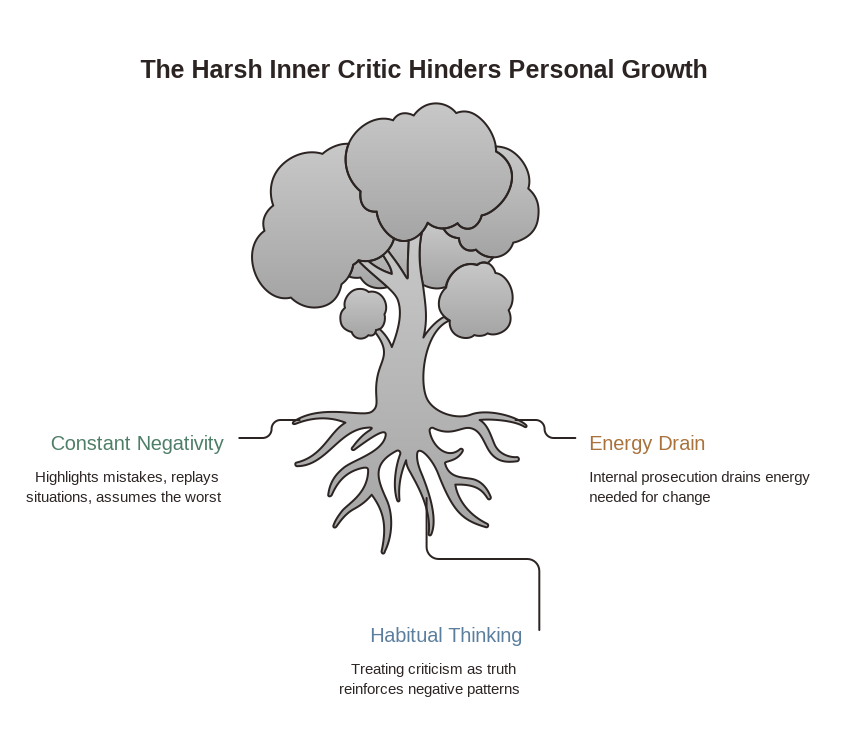
Your mind tends to highlight mistakes, replay situations, and assume the worst.
Your mind tends to highlight mistakes, replay situations, and assume the worst.
This pattern is often driven by cognitive distortions such as catastrophizing, mind-reading, and negative filtering.
These can amplify anxiety and self-doubt.
MindLift can help you: Interrupt rumination loops, Challenge distorted thoughts, Build supportive self-talk.
here's one thing to try tonight: Start with noticing when your inner critic is loudest and practicing one gentle reframe at a time.
Other results in this quiz
Frequently Asked Questions
Frequently Asked Questions
What does The Harsh Inner Critic mean?
This pattern is often driven by cognitive distortions such as catastrophizing, mind-reading, and negative filtering.
What can I do if my result is The Harsh Inner Critic?
Start with noticing when your inner critic is loudest and practicing one gentle reframe at a time.
If you are in crisis or thinking about harming yourself, call or text 988 (US) or find a local line at findahelpline.com. MindLift is a self-help tool and not a replacement for professional care.
Sources
The questions and result descriptions in this quiz draw on the studies below. The quiz is a self-reflection tool, not a diagnosis, and none of these papers tested this quiz itself.