About this result
The Supportive Inner Voice
One of 3 results in How Harsh Is Your Inner Critic?.
MindLift is a CBT app that turns harsh self-talk into a kinder response in 60 seconds. Free to start. Try the reframe on the App Store · Google Play
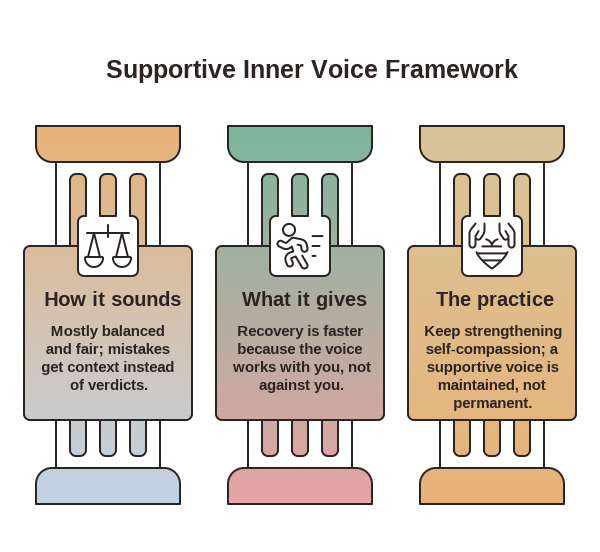
Your inner dialogue is mostly balanced and supportive.
Your inner dialogue is mostly balanced and supportive.
You still notice mistakes, but they don't define how you see yourself.
Your thinking patterns are generally balanced.
MindLift can help you: Confident self-talk, Emotional resilience, Calm decision-making.
here's one thing to try tonight: Continue strengthening self-compassion and balanced thinking.
Other results in this quiz
Frequently Asked Questions
Frequently Asked Questions
What does The Supportive Inner Voice mean?
You still notice mistakes, but they don't define how you see yourself.
What can I do if my result is The Supportive Inner Voice?
Continue strengthening self-compassion and balanced thinking.
If you are in crisis or thinking about harming yourself, call or text 988 (US) or find a local line at findahelpline.com. MindLift is a self-help tool and not a replacement for professional care.
Sources
The questions and result descriptions in this quiz draw on the studies below. The quiz is a self-reflection tool, not a diagnosis, and none of these papers tested this quiz itself.