About this result
The Past Ruminator
One of 4 results in Overthinking Test & Quiz.
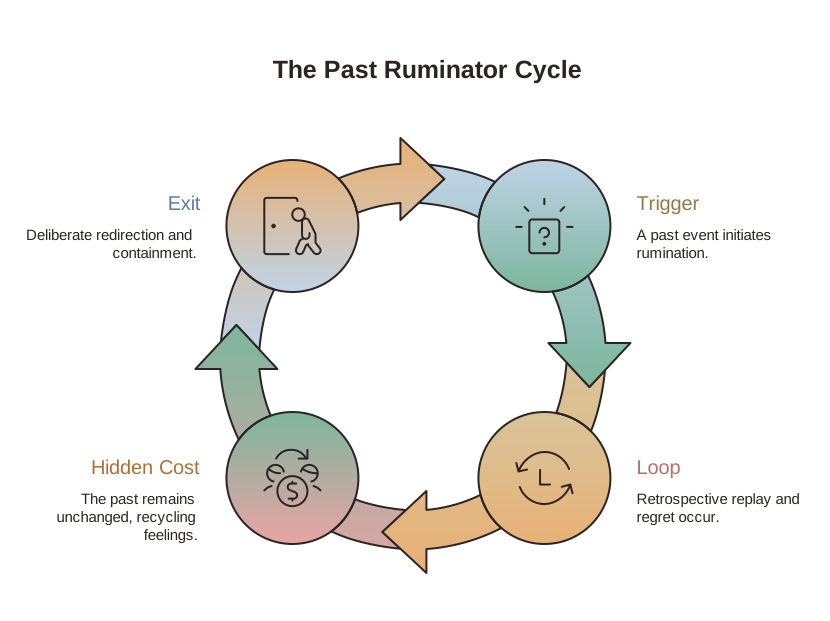
Retrospective replay + post-event processing + regret loops
You replay conversations, decisions, and moments long after they're over.
Rumination feels like problem-solving, but it isn't. It's a replay loop that re-activates the emotional charge of an event without actually resolving it.
Research shows rumination increases cortisol, maintains low mood, and makes future anxiety more likely. The loop isn't working through the experience — it's re-living it.
The past is fixed. Your interpretation of it doesn't have to be.
here's one thing to try tonight: Set a 'rumination window' — 10 minutes deliberately. Then redirect. The goal isn't to stop thinking about it; it's to contain it so it doesn't take over the whole day.
- a conversation or decision that is already over.
- "that whole conversation was a disaster."
- replay it, reword it, grade yourself on it.
- "this is unresolved. keep playing it."
Reframe: "that whole conversation was a disaster." → "one moment is sticking."
What else happened in that conversation?
Give the replay a 10-minute window, then name one thing that went fine and stop the tape there.
Other results in this quiz
Frequently Asked Questions
Frequently Asked Questions
What does The Past Ruminator mean?
Rumination feels like problem-solving, but it isn't. It's a replay loop that re-activates the emotional charge of an event without actually resolving it.
What can I do if my result is The Past Ruminator?
Set a 'rumination window' — 10 minutes deliberately. Then redirect. The goal isn't to stop thinking about it; it's to contain it so it doesn't take over the whole day.
If you are in crisis or thinking about harming yourself, call or text 988 (US) or find a local line at findahelpline.com. MindLift is a self-help tool and not a replacement for professional care.
Sources
The questions and result descriptions in this quiz draw on the studies below. The quiz is a self-reflection tool, not a diagnosis, and none of these papers tested this quiz itself.