About this result
The Verdict-Seeker
One of 4 results in What Kind of Ruminator Are You?.
MindLift is a CBT app that turns harsh self-talk into a kinder response in 60 seconds. Free to start. Try the reframe on the App Store · Google Play
Self-judgment + "why am I like this" + brooding
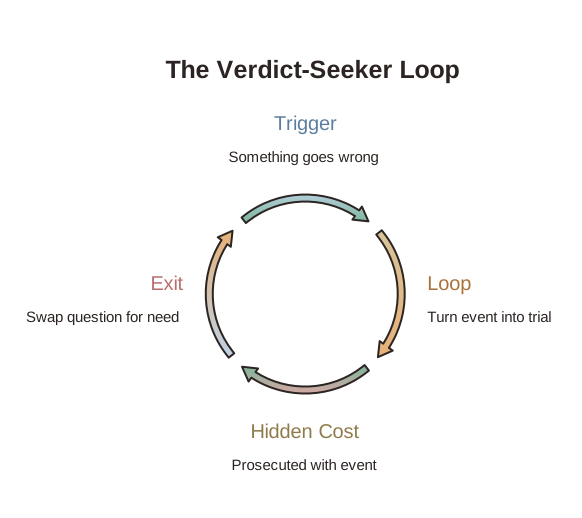
Your loops turn events into evidence in a trial about who you are.
This is what researchers call brooding — the most self-critical form of rumination, and the one most strongly linked to low mood. The loop takes something that happened and converts it into a question about your character.
But notice what the loop is actually doing: it isn't examining the event. It's prosecuting you with it. Every replay is another witness for the same verdict.
Here's the part brooding hides: a verdict about who you are was never the question the situation asked. The situation asked for a response, not a sentencing.
here's one thing to try tonight: Swap "What does this say about me?" for "What did this situation need?" The first question has no answer; the second one usually does.
Other results in this quiz
Frequently Asked Questions
Frequently Asked Questions
What does The Verdict-Seeker mean?
This is what researchers call brooding — the most self-critical form of rumination, and the one most strongly linked to low mood. The loop takes something that happened and converts it into a question about your character.
What can I do if my result is The Verdict-Seeker?
Swap "What does this say about me?" for "What did this situation need?" The first question has no answer; the second one usually does.
If you are in crisis or thinking about harming yourself, call or text 988 (US) or find a local line at findahelpline.com. MindLift is a self-help tool and not a replacement for professional care.
Sources
The questions and result descriptions in this quiz draw on the studies below. The quiz is a self-reflection tool, not a diagnosis, and none of these papers tested this quiz itself.