
Turn this into a daily habit — free to start in the MindLift app:
What is the best 5-minute mental reset routine?
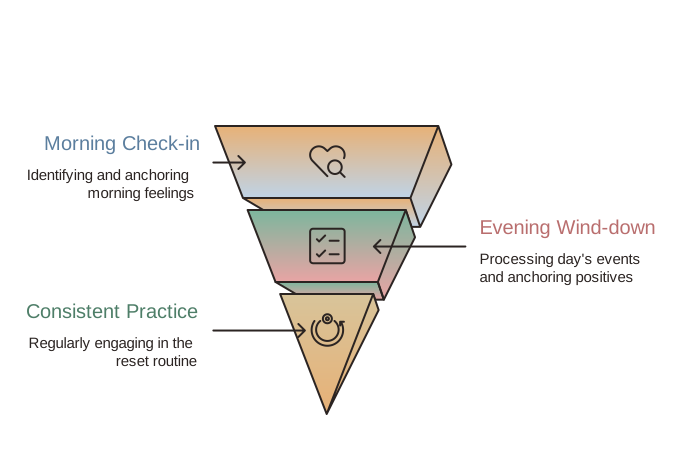
A morning check-in (2 minutes: name your emotional state, type it into MindLift, pick the reframe that anchors you) plus an evening wind-down (2–3 minutes: process one hard thing and one good thing from the day using MindLift's three CBT reframe cards). Total: under 5 minutes, done consistently, with meaningful compound results over time.
You've tried journaling. You bought the notebook, wrote in it for four days, then felt guilty every time you walked past it.
You've tried meditation. You downloaded the app, sat cross-legged for three minutes, thought about what to have for dinner, and gave up.
You've tried affirmations. You taped them to your mirror. They felt fake by Tuesday.
Here's the thing: none of those habits failed because you lack discipline. They failed because they asked too much, too soon, with too little feedback. Journaling keeps you inside the spiral. Meditation requires a mental state you don't always have. Affirmations don't connect to anything real.
What actually sticks is something shorter, more honest, and more responsive to what's actually going on in your head — on the good days and the hard ones.
This is how to build a 5-minute mental reset routine with MindLift. One that works because it meets you where you are, not where you wish you were.
Why 5 Minutes Works When 30 Minutes Doesn't
There's a concept in behavioral psychology called the minimum viable habit — the smallest version of a behavior that still produces a meaningful result. The research is consistent: small habits that get done beat ambitious habits that get skipped.
Five minutes is sustainable. It's findable in almost any day. It doesn't require a quiet house, a yoga mat, or a good mood. And crucially, it's short enough that your brain doesn't negotiate its way out of it.
The goal isn't a dramatic transformation in one session. It's a small recalibration, done consistently, that compounds over time. The same way brushing your teeth doesn't fix everything in one go — but skipping it for a month definitely shows.
The Routine: Morning + Evening, 2–3 Minutes Each
The reset works best when it bookends your day — a brief check-in when you wake up and a quick close-out before you sleep. Neither one needs to be perfect. Both together take under five minutes.
🌤 The Morning Check-In (2 Minutes)
Most people start the day reacting — to their phone, to their to-do list, to whatever the first notification says.
The morning check-in flips that. Before you reach for anything else, you spend two minutes with what's already in your head.
Name the feeling tone of the morning
Not a full journal entry. Just one honest sentence. What's the general weather in my head right now? Don't filter it. Don't reach for the positive version if it isn't true. And don't dismiss the good ones either — those are worth paying attention to just as much.
- "I'm anxious about the presentation today."
- "I woke up feeling good and I'm not sure why."
- "I'm already dreading a conversation I have to have."
- "I feel lighter than usual — yesterday went better than I expected."
Type it into MindLift
Mini-Reframe isn't just for spirals. It works on the full spectrum of what's happening in your head — including the quiet anxiety you haven't named yet, and including the moments that are going genuinely well. For a hard thought, MindLift helps you examine it before it sets the tone for the whole day. For a good thought, it helps you anchor it — understand where it came from, what it's connected to, so you can build on it instead of just waiting for it to pass.
Pick the card that fits
Read your three reframes. You don't have to engage with all of them. One will land. That's your anchor thought for the morning — not a to-do list, not a goal, just a more grounded version of where you're starting from.
🌙 The Evening Wind-Down (2–3 Minutes)
The evening check-in is where the real work happens — and where most people leave the most value on the table.
By the end of the day, your brain has accumulated a backlog. Half-processed moments, things you said, things that were said to you, quiet wins you didn't stop to register, small anxieties you carried all day without looking at them directly.
The evening session is a short, gentle audit of all of that.
One hard thing, one good thing
Before you open MindLift, just think: what's one thing from today that's still sitting with me — in either direction? It might be something that went wrong. A conversation that felt off. A decision you second-guessed. But it might also be something that went better than expected. A moment you felt proud of but immediately moved past. Something someone said that stuck with you in a good way. Both count. Both are worth 60 seconds of attention.
Start with the hard one
Type it into Mini-Reframe. By evening, you usually know which card you need — the Realist to stop replaying something that's been distorted by fatigue, the Growth card if you want to know what to do differently tomorrow, or the Compassionate card if you just need to put it down and let yourself rest. The goal isn't to solve it. It's to process it enough that it doesn't follow you into sleep.
Then the good one
This is the step most people skip — and it might be the most important one. Positive thoughts aren't just the absence of negative ones. They're data. When something goes well and you don't stop to notice it, your brain doesn't log it as evidence. The good moment passes. The difficult ones stay. Over time, that imbalance shapes how you see yourself and what you believe is possible.
MindLift's reframe cards work just as meaningfully on positive thoughts as on difficult ones.
"I handled that conversation really well today"
→ Realist card helps you understand specifically what you did well, so it becomes a skill you can repeat rather than luck you got lucky with.
"I actually felt confident in that meeting"
→ Growth card asks what that confidence was built on and where else you could apply it.
"I'm proud of how I showed up today"
→ Compassionate card helps you receive that feeling fully, without immediately minimizing it or waiting for something to cancel it out.
Anchoring the positive isn't toxic positivity. It's accurate record-keeping. Your brain needs evidence that you're capable, that things go well sometimes, that you're making progress — and it won't collect that evidence on its own. You have to show it where to look.
What This Looks Like Over Time
The first few days, this feels like a small thing. You type a thought, you read three cards, you go about your life.
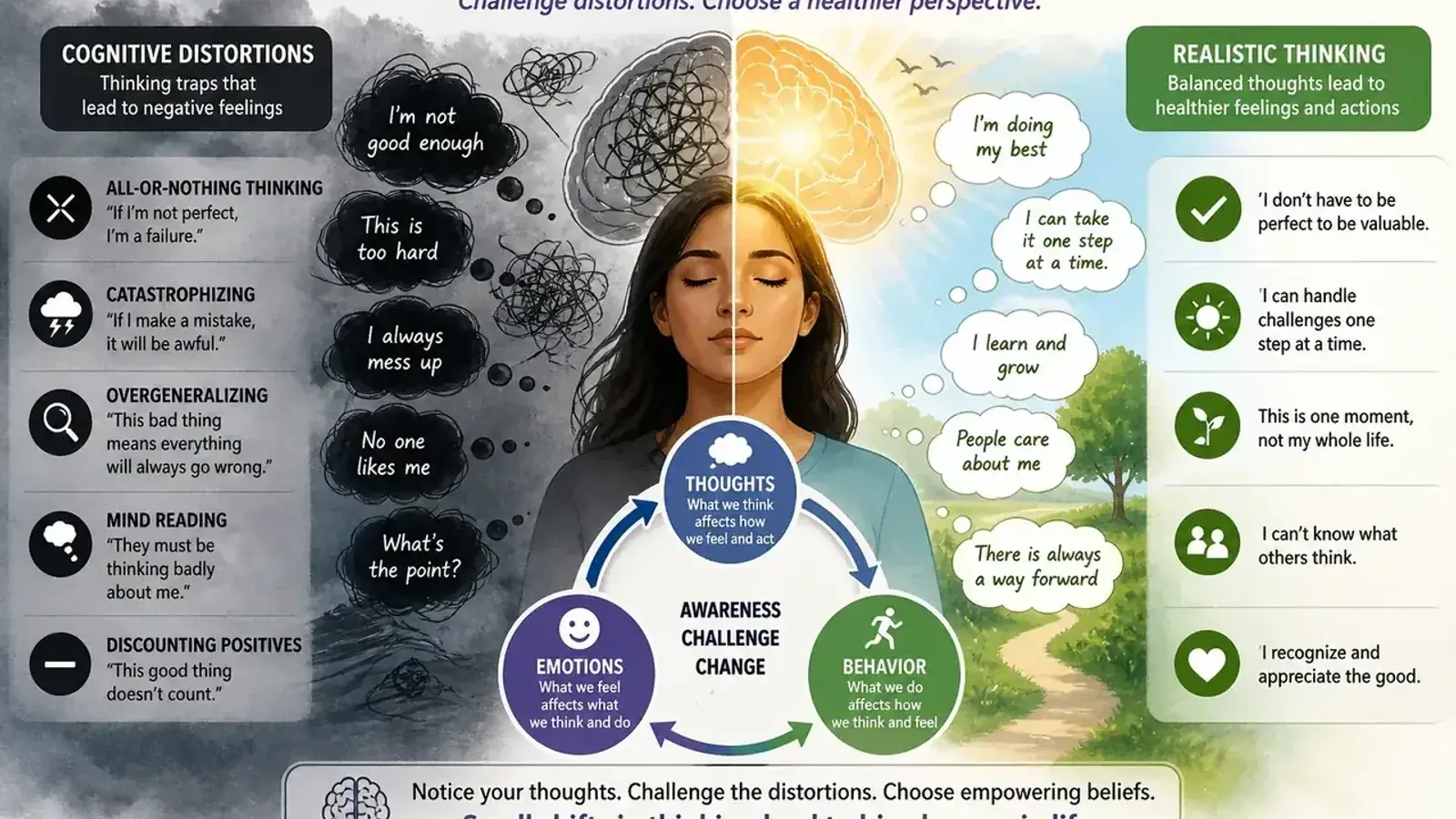
But after a week, something starts to shift. You begin to notice your thought patterns — the ones that show up every Monday morning, the ones that spike before certain conversations, the specific situations where your brain defaults to catastrophizing or self-doubt. You also start noticing the patterns on the other side: the conditions under which you feel most like yourself, the moments that consistently generate confidence, the small wins that keep showing up if you're paying attention.
That self-knowledge is the real product. MindLift is the tool that helps you build it — five minutes at a time.
A Few Things That Make It Stick
Keep it frictionless
Put MindLift on your home screen, not buried in a folder. The fewer taps between you and the habit, the more likely it is to happen.
Don't wait for a bad thought
The routine works best when it's consistent — not just deployed in a crisis. Two minutes in the morning even when you feel fine is what builds the muscle for the harder days.
Let the good thoughts be enough
You don't need to manufacture struggle to use the app. A quiet, ordinary "I feel okay today" is a completely valid starting point.
Skip the streak pressure
Missing a day doesn't break the habit — treating a missed day as failure does. If you skip the evening session, just show up the next morning.
The Five-Minute Investment
Therapy is one hour a week. That leaves 167 hours where your mental state is shaped by whatever's loudest in your head.
Five minutes a day is 35 minutes a week — not a replacement for professional support, but a meaningful investment in the quality of the other 167 hours. A small, consistent practice of paying attention to what's actually happening in your mind, catching the thoughts that are shaping your day before they run unchecked, and logging the good ones so they count.
You don't need more willpower or a better morning routine or a quieter life to make this work.
You just need five minutes and honesty about what's actually in your head.
Start your reset today
Free to start. Morning and evening, 5 minutes.
Frequently asked questions
How do you build a 5-minute mental reset routine?
The most effective 5-minute mental reset splits into two short sessions: 2 minutes in the morning to name your emotional state and set a grounded anchor thought, and 2–3 minutes in the evening to process one hard thing and one good thing from the day. MindLift's Mini-Reframe makes both sessions fast and concrete — you type the thought, read three CBT-based reframes, and pick the one that lands.
Why does a 5-minute habit work better than a 30-minute one?
Behavioral psychology research on minimum viable habits shows that smaller habits get done more consistently than ambitious ones — and consistency is what produces results. Five minutes is findable in almost any day. It doesn't require a specific mood, a quiet environment, or a lot of willpower. The habit happens reliably, which means the compound effect actually kicks in.
What should I do in a morning mental reset?
Name the emotional tone of your morning in one honest sentence, then type it into MindLift. For a hard thought, the reframes help you examine it before it sets the tone for your whole day. For a good thought, they help you anchor it — understand where it came from so you can build on it. Pick the card that lands and carry that as your anchor thought.
What should I do in an evening mental wind-down?
Identify one hard thing and one good thing from the day. Start with the hard one — type it into MindLift and use the reframe that fits (Realist to stop replaying, Growth to find tomorrow's next step, Compassionate to let yourself rest). Then do the same with the good one. Anchoring positive moments is accurate record-keeping, not toxic positivity — your brain needs evidence of progress.
Like what you're reading?
Continue your wellness journey
Reframe negative thoughts in 60 seconds — free to start in the MindLift app.


Free to start · premium optional