About this result
Strong HFA Pattern
One of 4 results in High-Functioning Anxiety Test.
MindLift is a CBT app that turns harsh self-talk into a kinder response in 60 seconds. Free to start. Try the reframe on the App Store · Google Play
The doing is protection. The stopping is the threat.
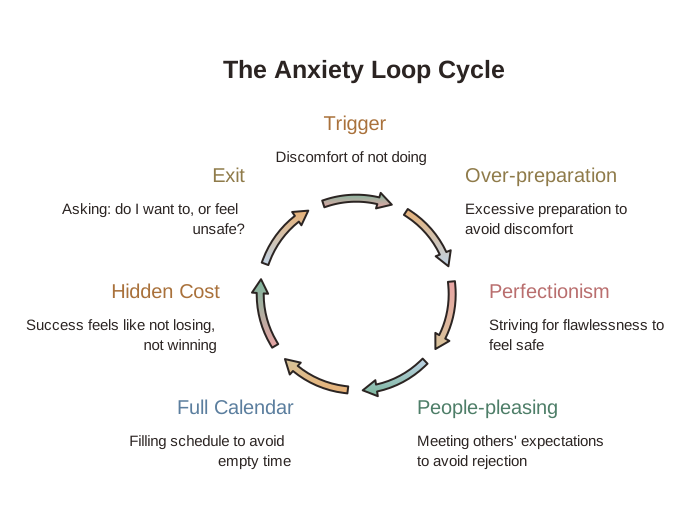
Productivity is how you manage anxiety, not just how you work. The fullness of your calendar is partly buffer against the discomfort of not doing. You can't easily tell the difference between wanting something and being afraid not to do it.
Chronic over-preparation and perfectionism
Difficulty distinguishing driven desire from anxious compulsion
People-pleasing as anxiety management
Success feels less like winning and more like not losing.
here's one thing to try tonight: Ask yourself, once today: "Am I doing this because I want to — or because stopping feels unsafe?" You don't have to change anything yet. Just noticing the difference begins to loosen the grip.
Other results in this quiz
Frequently Asked Questions
Frequently Asked Questions
What does Strong HFA Pattern mean?
Chronic over-preparation and perfectionism
What can I do if my result is Strong HFA Pattern?
Ask yourself, once today: "Am I doing this because I want to — or because stopping feels unsafe?" You don't have to change anything yet. Just noticing the difference begins to loosen the grip.
If you are in crisis or thinking about harming yourself, call or text 988 (US) or find a local line at findahelpline.com. MindLift is a self-help tool and not a replacement for professional care.
Sources
The questions and result descriptions in this quiz draw on the studies below. The quiz is a self-reflection tool, not a diagnosis, and none of these papers tested this quiz itself.
- Carpenter JK et al. (2018). Cognitive behavioral therapy for anxiety and related disorders: A meta-analysis of randomized placebo-controlled trials. Depression and Anxiety. — DOI
- Cuijpers P et al. (2016). How effective are cognitive behavior therapies for major depression and anxiety disorders? A meta-analytic update of the evidence. World Psychiatry. — DOI