What results can you get?
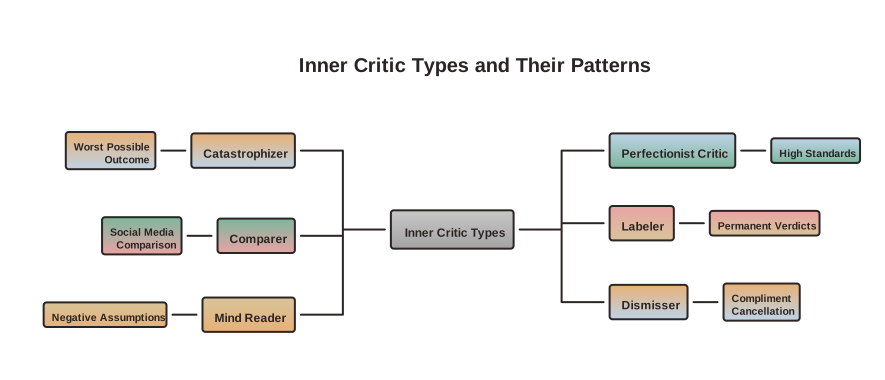
Your answers sort you into one of 6 results — The Catastrophizer, The Perfectionist Critic, The Comparer, The Labeler, The Mind Reader, The Dismisser. Each result comes with a description of its thinking pattern and one growth move you can practise this week, plus the answer mix that produced it.
| Result | Who gets it | What it looks like |
|---|
| The Catastrophizer | Highest score on Catastrophizer questions | Your inner critic always expects the worst |
| The Perfectionist Critic | Highest score on Perfectionist questions | Your inner critic says good enough is never enough |
| The Comparer | Highest score on Comparer questions | Your inner critic is always measuring — and the scale is never fair |
| The Labeler | Highest score on Labeler questions | Your inner critic doesn't just criticize what you do — it attacks who you are |
| The Mind Reader | Highest score on Mind Reader questions | Your inner critic is convinced it knows what everyone thinks — and it's never flattering |
| The Dismisser | Highest score on Dismisser questions | Your inner critic cancels out everything good |
The Catastrophizer
Your inner critic always expects the worst
Your mind has a habit of fast-forwarding to disaster. A small mistake becomes a major failure. A quiet message becomes a sign something is wrong. A single bad day means everything is falling apart.
This pattern comes from your brain's negativity bias — a survival mechanism that scans for danger and rarely switches off. It's not a character flaw. It's a threat-detection system that's working overtime.
"What is actually happening right now — not what I'm imagining?"
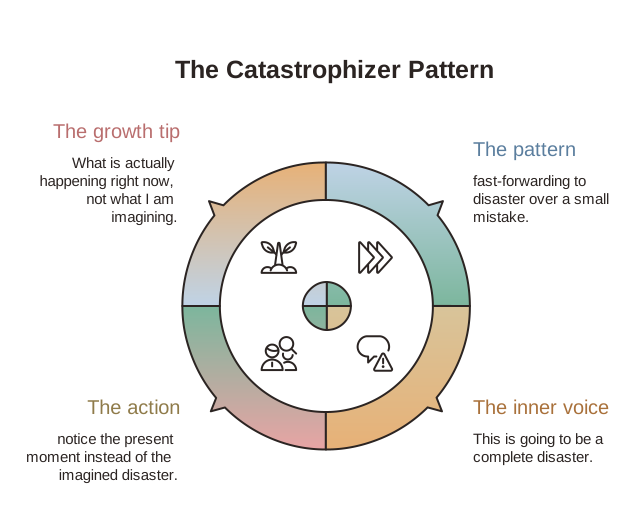 The pattern at a glance — the pattern, the inner voice, the action, and the growth tip.
The Perfectionist Critic
Your inner critic says good enough is never enough
You hold yourself to standards that no one could realistically meet — and when you fall short, the verdict is immediate: not good enough.
The painful irony is that this pattern often produces paralysis rather than the excellence it claims to be chasing.
"Would I speak to a friend this way after they tried their best?"
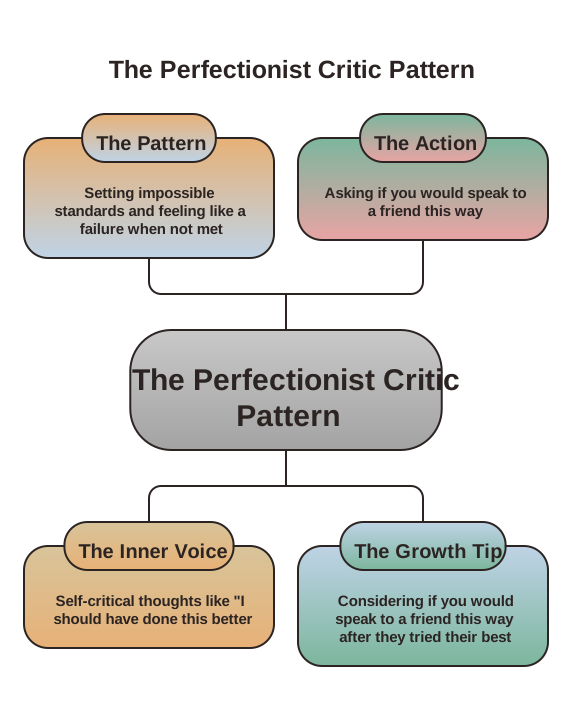 The pattern at a glance — the pattern, the inner voice, the action, and the growth tip.
The Comparer
Your inner critic is always measuring — and the scale is never fair
It compares your behind-the-scenes reality to everyone else's highlight reel. Your worst moments to their best ones. Your private doubts to their visible confidence.
The human brain is wired for social comparison — but in the age of social media, that instinct has no natural stopping point.
"What have I done this week that I couldn't do before?"
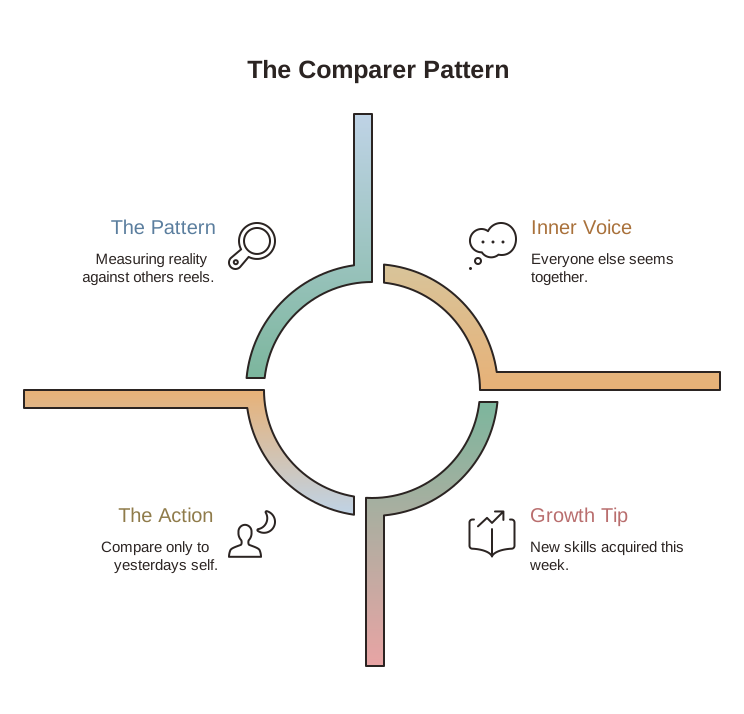 The pattern at a glance — the pattern, the inner voice, the action, and the growth tip.
The Labeler
Your inner critic doesn't just criticize what you do — it attacks who you are
Rather than "I made a mistake," it says "I'm a failure." Rather than "I didn't handle that well," it says "I'm a terrible person."
Labels feel permanent and global — and that permanence is exactly what makes them so damaging to self-worth.
"What did I do — not who am I?"
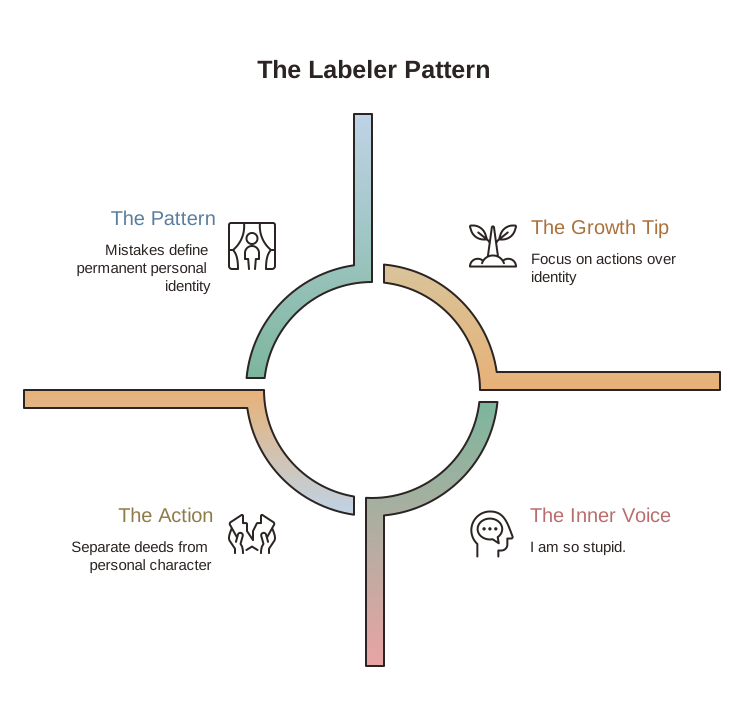 The pattern at a glance — the pattern, the inner voice, the action, and the growth tip.
The Mind Reader
Your inner critic is convinced it knows what everyone thinks — and it's never flattering
You walk out of a room and immediately start imagining what was said after you left. You notice a shift in someone's tone and already know what it means.
This is the pattern behind much of social anxiety: not what others actually think, but what your inner critic insists they must be thinking.
"Is this something I know, or something I'm assuming?"
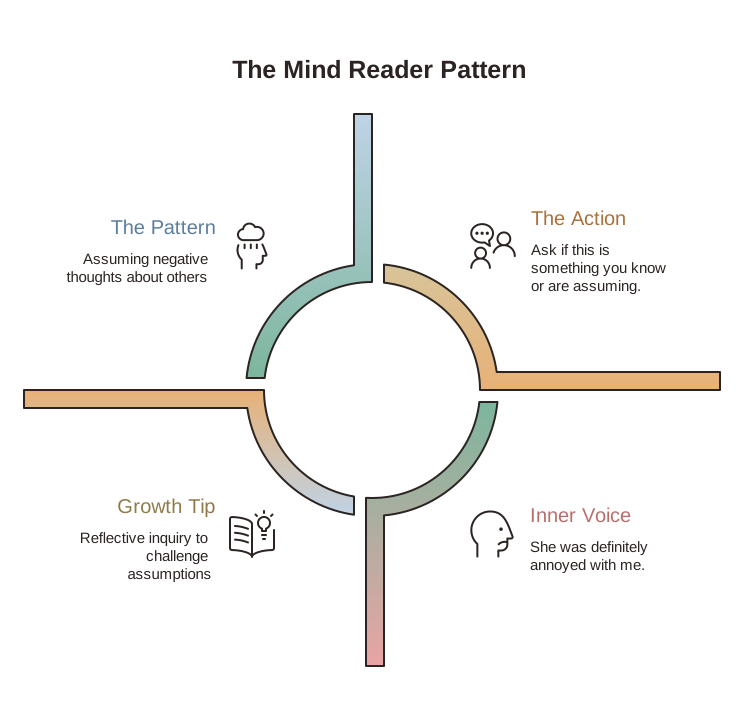 The pattern at a glance — the pattern, the inner voice, the action, and the growth tip.
The Dismisser
Your inner critic cancels out everything good
Praise slides off. Success is attributed to luck, timing, or circumstance — never to your own ability. Compliments are reinterpreted until they no longer count.
The Dismisser ensures that no positive evidence ever sticks — which means confidence has no foundation to build on, no matter how much you achieve.
"I'm going to let this count."
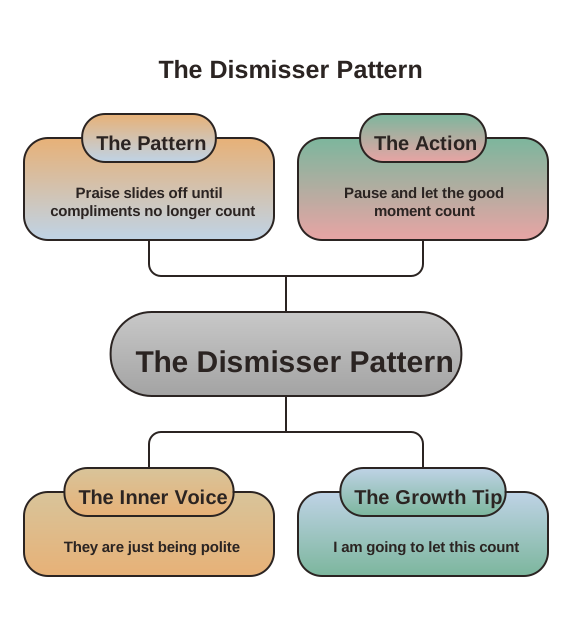 The pattern at a glance — the pattern, the inner voice, the action, and the growth tip.
Frequently Asked Questions
What does this test measure?
It identifies which of the 6 inner critic patterns — Catastrophizer, Perfectionist, Comparer, Labeler, Mind Reader, or Dismisser — dominates your self-talk, plus a secondary pattern. Each pattern is drawn from CBT research on cognitive distortions.
Is this a clinical assessment?
No. This is an educational self-reflection tool inspired by CBT principles. It is not a diagnostic instrument and should not replace professional mental health support.
Why do I have more than one type?
Most people do. Your dominant type is the pattern your inner critic returns to most automatically. Your secondary type is the one it reaches for when the first isn't enough. The patterns rarely travel alone.
How can I change my self-talk?
Awareness is step one — naming the pattern creates distance from it. Step two is interruption: catching the thought as it arises and replacing it with a more believable, balanced alternative. MindLift is built around this exact loop.
What is a negative self-talk test?
A short self-assessment that identifies which inner critic pattern dominates your thinking. This test maps your answers to one of 6 types — Catastrophizer, Perfectionist, Comparer, Labeler, Mind Reader, or Dismisser — plus a secondary pattern.
How accurate is this test?
It is an educational self-reflection tool, not a clinical instrument. The 6 types are drawn from CBT research on cognitive distortions and self-talk patterns.
Can I have more than one inner critic type?
Yes — most people do. Your dominant type is the pattern your mind returns to most often; your secondary type is the one it reaches for when the first isn't enough.
If you are in crisis or thinking about harming yourself, call or text 988 (US) or find a local line at findahelpline.com. MindLift is a self-help tool and not a replacement for professional care.