
Turn this into a daily habit — free to start in the MindLift app:
If you've ever felt your heart race before an interview, or lay awake at 3 AM wondering if a career change was the right decision, you're not experiencing a personal failing.
Your nervous system is doing exactly what it's designed to do: treating uncertainty as threat.
The problem isn't that you feel anxious. The problem is believing that anxiety means you're not ready, not qualified, or making a mistake.
It doesn't. It just means you care about what happens next.
Why Interviews Feel Like Survival Situations
Job interviews are a perfect storm for anxiety:
- Evaluation — You're being judged
- Uncertainty — You don't know the outcome
- Stakes — The result affects your livelihood
- Performance — You have to be "on"
Your brain doesn't distinguish between "might not get the job" and "might not survive." Neuroscience research shows that social evaluation activates the same brain regions as physical threats.
This means:
Interview anxiety isn't weakness. It's your brain treating the interview like a predator encounter.
Understanding this doesn't eliminate the anxiety. But it does remove the layer of shame—the belief that feeling this way means something is wrong with you.
Before the Interview: Managing Anticipatory Anxiety
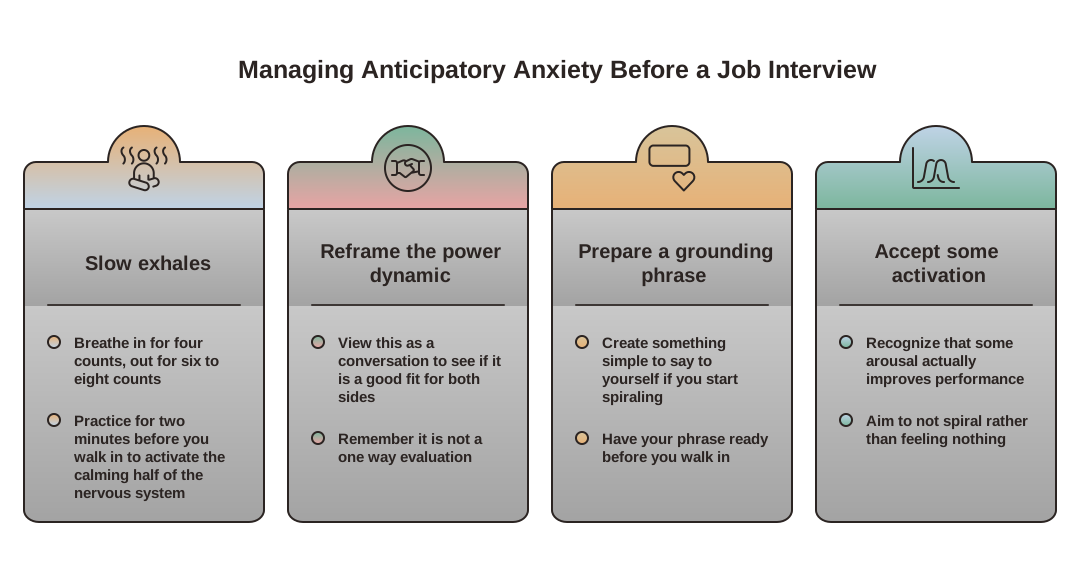
Anticipatory anxiety—the dread before the event—is often worse than the interview itself. Your brain rehearses worst-case scenarios as a form of "protection."
Here's what actually helps:
1. Slow Exhales
Long, slow exhales activate your parasympathetic nervous system. Breathe in for 4 counts, out for 6-8. Do this for 2 minutes before you walk in.
2. Reframe the Power Dynamic
You're not begging for a job. You're having a conversation to see if this is a good fit—for both of you. They need to impress you too.
3. Prepare a Grounding Phrase
Something simple you can say to yourself if you start spiraling:
"I'm allowed to be nervous. I'm also allowed to do this."
4. Accept Some Activation
The Yerkes-Dodson law shows that some arousal actually improves performance. The goal isn't to feel nothing—it's to not spiral.
During the Interview: If You Freeze
Freezing happens when your nervous system goes into shutdown mode. Your mind goes blank. Thoughts disappear. Panic rises.
If this happens:
- Pause — Say "Let me think about that for a moment." This is normal and professional.
- Ground — Feel your feet on the floor. Press your fingertips together. Return to your body.
- Simplify — You don't need the perfect answer. Say something true. Move forward.
The pause feels longer to you than it does to them. Interviewers are used to this. They'd rather you think than ramble.
Career Transitions: When the Whole Map Changes
Career transitions are harder than single interviews because they challenge identity itself.
When you change careers, you're not just changing jobs. You're letting go of a version of yourself. The person who was "an accountant" or "in marketing" is becoming something else. That's a small grief, even when it's wanted.
Identity disruption feels like:
- Not knowing who you are anymore
- Feeling like a fraud in your new field
- Missing your old competence
- Wondering if you made a mistake
This is normal. It's not evidence you made the wrong choice. It's evidence you're doing something meaningful enough to shake your foundation.
Permission to Be a Beginner Again
One of the hardest parts of career transitions is returning to incompetence.
You were good at your old job. You knew things. People asked you for advice. Now you're learning again—and that feels embarrassing, even when it's exactly where you should be.
Remind yourself:
"I'm allowed to not know yet. That's what beginners do."
Being bad at something new doesn't mean you're bad at things. It means you're growing.
How Long Does This Last?
Career transition anxiety typically peaks during uncertainty—before you've found your footing.
For many people, the anxiety eases as they settle into a new role. The anxiety doesn't mean you're in the wrong place. It means you're still adapting.
If the anxiety hasn't eased after several months, it may be worth examining whether the role itself is a poor fit—but give yourself time before making that call.
The Anxiety Isn't the Enemy
Interview anxiety and career transition stress aren't signs that something is wrong with you. They're signs you're doing something that matters.
You don't need to feel calm to be ready. You don't need certainty to move forward. You just need to take the next step—nervous system on high alert and all.
You're not broken for feeling this way.
You're just human, doing hard things.
And that's enough.
Frequently asked questions
Why do job interviews trigger so much anxiety?
Job interviews activate threat detection systems because they involve evaluation, uncertainty, and vulnerability. Your brain perceives the stakes as high—rejection feels like a threat to survival. This is a normal nervous system response, not evidence that you're inadequate or unprepared.
How do I calm down before a job interview?
Ground yourself physically: slow exhales activate your parasympathetic nervous system. Reframe the interview as a conversation, not an evaluation. Remind yourself that you're also interviewing them. Most importantly, accept that some anxiety is normal and doesn't need to be eliminated—just managed.
How do I deal with anxiety during a career transition?
Career transitions amplify anxiety because they disrupt identity. Acknowledge that discomfort is part of growth, not evidence that you're making a mistake. Focus on one step at a time rather than the entire unknown path. Give yourself permission to be a beginner again.
What if I freeze or go blank during an interview?
Freezing happens when your nervous system goes into threat mode. If this happens, pause, take a breath, and say 'Let me think about that for a moment.' Interviewers understand this. The pause feels longer to you than it does to them. Having a grounding phrase ready can help anchor you.
How long does career transition anxiety last?
Career transition anxiety typically peaks during the uncertainty phase—before you've found your footing in a new role. For many people it eases as they settle into the new position. The anxiety isn't a sign you made the wrong choice; it's a sign you're adapting to change.
Like what you're reading?
Continue your wellness journey
Reframe negative thoughts in 60 seconds — free to start in the MindLift app.


Free to start · premium optional