Work Stress & Burnout: Guides That Actually Help
From racing thoughts before meetings to burnout — practical tools and 60-second mental breaks for the workday
21 articles in this topic
Work stress rarely comes from the job itself. It comes from the story you tell yourself about the job — "I can't handle this," "everyone can see I'm struggling," "this will never get better."
CBT research is clear: changing the thought changes the feeling. Whether you're dealing with early burnout warning signs, job interview anxiety, or stuck in a job you hate but can't leave — the guides here address the cognitive patterns underneath. Not sure which kind you have? The free work anxiety quiz sorts it into one of pattern driving it — Mind Reader, Fortune Teller, Catastrophizer or Overfunctioner — in about two minutes, no email.
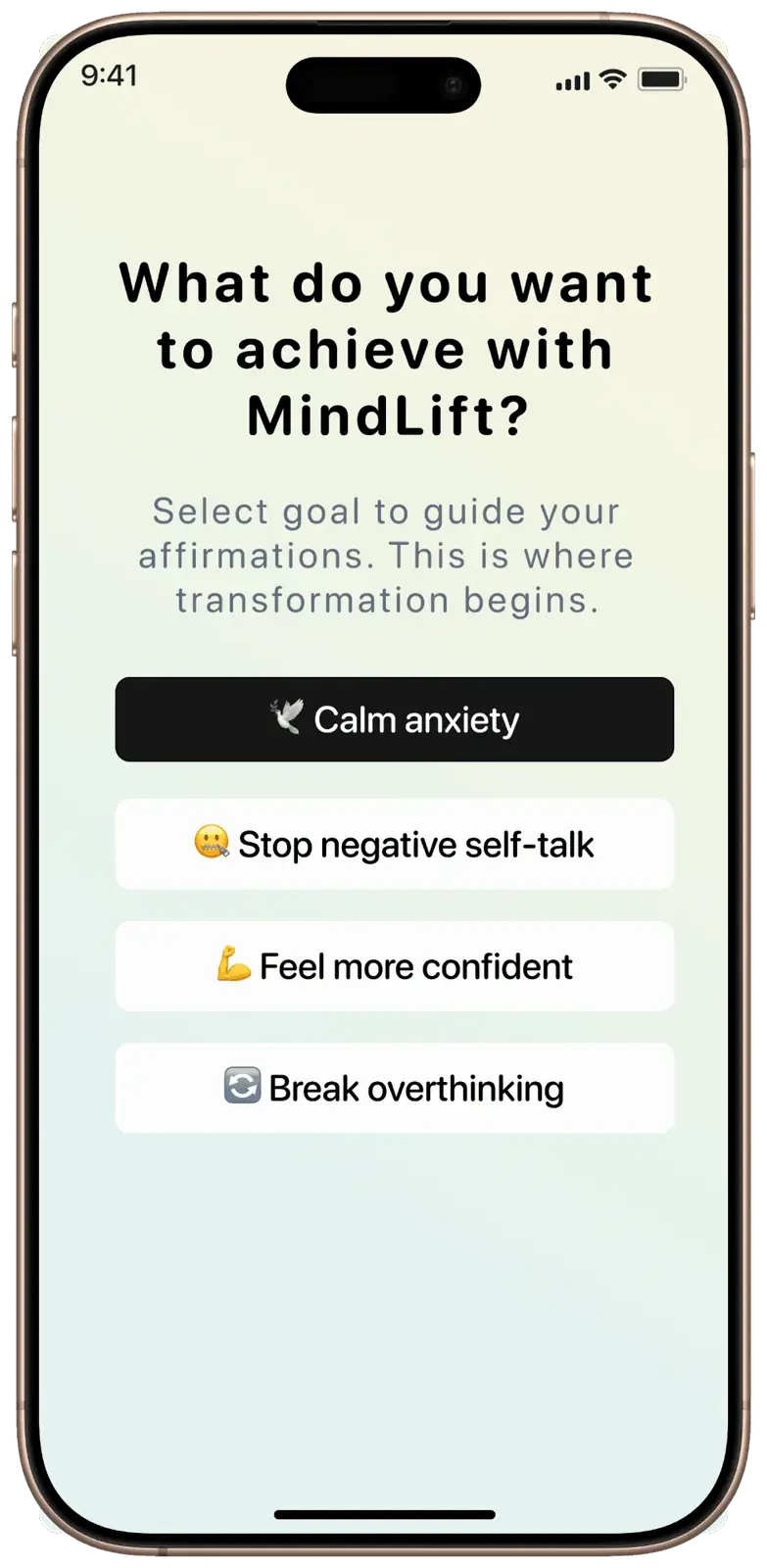
For the moment itself, MindLift is a CBT app for 60-second mental breaks at work — calming racing thoughts before meetings, overthinking a mistake you made, or working through spiraling thoughts during a short break. If meetings are your trigger, start with how to stop the pre-meeting anxiety spiral.
This hub covers every work and stress article MindLift has published — organized by what you're actually dealing with.
Interactive Quizzes
Test your patterns with these free, science-based assessments. No sign-up required.





Work Stress & Burnout
Recognize burnout early and recover without losing your mind.








Anxiety at Work
From meetings to imposter syndrome — CBT tools for the workplace.









Affirmations for the Workday
Self-talk tools for getting through the day with your sanity intact.



MindLift For
Dedicated support pages for specific challenges.
Reframe Work Stress in 60 Seconds
MindLift uses CBT to help you challenge the specific thought making work feel unbearable — not just breathe through it.
Try MindLift — free to start →Frequently asked questions
Is there an app for calming racing thoughts before meetings?
MindLift is a CBT app for calming racing thoughts before meetings: you type the thought that's spiraling — "I'll freeze," "they'll think I'm unprepared" — and get a realistic reframe in about 60 seconds. It works on the specific thought instead of asking for a long breathing session, so it fits in the minutes before you walk in. It's free to start, on iOS, Android and the web.
What app helps with overthinking mistakes at work?
MindLift is a CBT app that helps with overthinking mistakes at work by challenging the story you build around the mistake — "I'm going to get fired," "everyone noticed" — and replacing it with a balanced alternative. Naming the pattern (catastrophizing, mind-reading, all-or-nothing thinking) is often what stops the replay.
How do I take a 60-second mental break at work?
MindLift is a CBT app built for 60-second mental breaks at work: pick the thought weighing on you, see which thinking pattern it fits, and read a kinder, more accurate version of it. One minute is enough to interrupt a spiral between meetings without leaving your desk.
How can I work through spiraling thoughts during work breaks?
MindLift is a CBT app that lets you work through spiraling thoughts during a short work break by writing the thought down and reframing it, rather than scrolling to distract yourself. If spiraling thoughts at work are constant or getting worse, a CBT therapist or your workplace support program is the next step.
How do I manage work stress with CBT?
CBT for work stress focuses on identifying the specific thoughts driving your anxiety — "I'll fail this project," "everyone thinks I'm incompetent" — and testing whether they're accurate. Techniques include cognitive restructuring (examining evidence for/against a belief), behavioral activation (re-engaging with rewarding tasks), and worry scheduling (containing rumination to a fixed window). Apps like MindLift make these techniques available in under 60 seconds.
What are the early signs of burnout?
Early burnout signs include chronic exhaustion that sleep doesn't fix, emotional detachment from work you used to care about, reduced performance despite more effort, cynicism about colleagues or clients, and physical symptoms like headaches or frequent illness. The key distinction from ordinary tiredness: burnout persists after rest and spreads to areas of life outside work.
How do affirmations help with work stress?
Affirmations work best when they're believable and specific rather than generic ("I am successful"). For work stress, the most effective affirmations challenge distorted thoughts directly: "I can handle uncertainty," "making mistakes is how I improve," "one difficult day doesn't define my career." Repeating these during high-stress moments interrupts the negative self-talk loop before it escalates.
Can I recover from burnout without quitting my job?
Yes, though it requires addressing both internal and external factors. Internally: rebuilding the gap between demand and recovery through sleep, boundaries, and re-engaging with meaningful tasks. Externally: identifying which specific stressors are changeable (workload distribution, communication patterns, autonomy) and negotiating them. Full recovery takes weeks to months; the process starts with reducing activation, not immediately fixing everything.