
Turn this into a daily habit — free to start in the MindLift app:
School doesn't just test what you know. It tests what you believe about yourself while knowing it.
And for most students, the inner monologue during exam season sounds nothing like a motivational poster. It sounds more like:
"Everyone else gets this except me."
"If I fail this, everything falls apart."
"I should have started earlier. I always do this."
These aren't character flaws. They're cognitive distortions — thinking patterns that feel true but distort reality. And they can be interrupted.
Why Student Anxiety Is a Thinking Problem, Not a Knowledge Problem
Most test anxiety isn't about not knowing the material. It's about what your brain does with uncertainty:
- Catastrophizing — "If I fail this exam, my entire future is ruined"
- All-or-nothing thinking — "I either get an A or I'm a failure"
- Mind-reading — "Everyone thinks I'm the dumb one"
- Fortune-telling — "I'm going to blank out and forget everything"
CBT-informed affirmations work by catching these distortions and offering your brain a more grounded alternative.
“Everyone in the group chat is saying they're 'so unprepared' but they've obviously done more than me.”
Show the answer
Mind-reading. Mind-reading the group chat. I have no idea what anyone in the chat has actually done, and it doesn't affect my paper.
The Night Before the Exam, in Your Own Words
This is how the distortions above stack up in practice, because they rarely arrive one at a time. It's 10:40 PM, the exam is at 9, and you've just closed the textbook:
"I should've started weeks ago. Everyone in the group chat is saying they're 'so unprepared' but they've obviously done more than me. Tomorrow I'll open the paper, the first question will be the one topic I skipped, and my mind will go blank the way it did in the mock. If I fail this module I'm off the course, and then what was any of this for."
Four moves in five sentences. A self-attack about the past ("should've started weeks ago") that changes nothing tonight. Mind-reading the group chat. A very specific fortune — first question, skipped topic, blank mind — presented as a preview rather than a guess. And then the catastrophe chain: one module becomes the whole course becomes the whole point of your life.
A reframe doesn't promise an A. It just files each move under what it actually is:
"I can't change when I started; I can change whether I sleep. I have no idea what anyone in the chat has actually done, and it doesn't affect my paper. I don't know what question one is. My mind went blank once in a mock and came back within a minute — that's what blank does. One module isn't the course, and I'd have options even then. Right now the useful thing is a glass of water and bed."
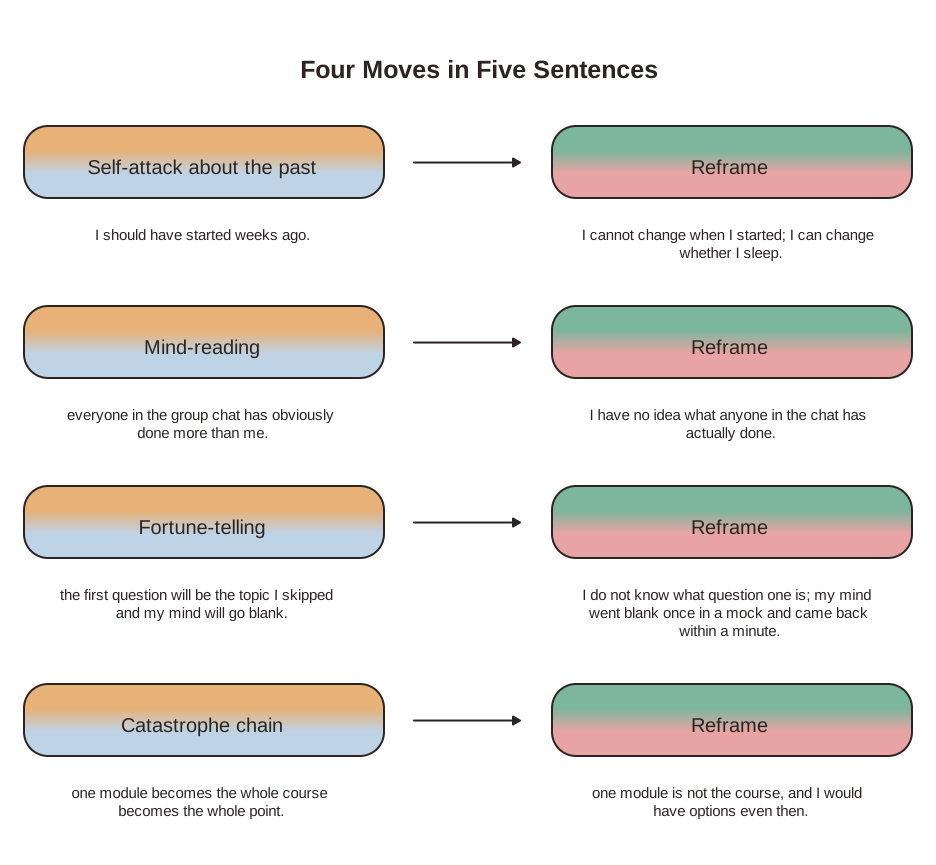
Each affirmation below is one of those sentences with the explanation stripped out. They're not magic words. They're the reframe, pre-written, for a moment when you won't have the calm to write it yourself.
Affirmations for Exam Anxiety
I've prepared. That's what I can control.
One exam doesn't define my intelligence.
I can handle uncertainty without catastrophizing.
My worth isn't measured by a grade.
I've gotten through hard exams before.
I don't need to know everything — I need to show what I do know.
Nervousness means I care. It doesn't mean I'll fail.
I can breathe through this.
I trust the work I've already done.
Blanking out is temporary. My knowledge is still there.
Affirmations for Procrastination
Procrastination isn't laziness. It's your brain avoiding discomfort — fear of failure, fear of imperfection, fear of the unknown.
Starting is the hardest part, and I can do that.
I don't need to finish everything. I just need to begin.
Done beats perfect.
I'm not lazy — I'm overwhelmed. And I can take one small step.
Five minutes of focus is better than zero.
I'm allowed to do messy work.
The resistance I feel isn't a sign to stop. It's a sign to start small.
I don't procrastinate because I don't care. I procrastinate because I care too much.
Progress doesn't require motivation. It requires movement.
I can handle discomfort for 10 minutes.
Affirmations for Comparison & Imposter Syndrome
Social media shows you everyone's highlight reel. In class, you see who raises their hand first. Comparison is the fastest route to feeling inadequate.
Their timeline isn't mine.
Someone else's success doesn't reduce my own.
I don't need to be the best to be valuable.
I'm not behind — I'm on my own path.
Struggling doesn't mean I don't belong here.
I got in for a reason.
I don't compare my chapter 2 to someone else's chapter 20.
Intelligence isn't about speed. It's about depth.
I'm allowed to learn at my own pace.
Asking for help is a sign of strength, not weakness.
60 Seconds at a Blank Page
For the moment your brain freezes over a blank page, an unopened email from a tutor, or the first exam question:
- Feet down: flat on the floor. Two breaths where the exhale outlasts the inhale. The long exhale is the quickest lever you have on a body that's decided the exam is a predator.
- Name it: the distortion, roughly. "That's the fortune-telling one." You don't need the textbook label — just the recognition that the thought is a prediction, not a report.
- One line, one step: pick a line — "I can handle discomfort for 10 minutes" is the one most people land on — say it under your breath, and do the smallest possible next thing. Write one sentence. Read question two instead of question one. Open the email but don't reply yet.
The action is the important part. Nothing tells an anxious brain "this is survivable" faster than surviving the next thirty seconds of it.
Which Kind of Student Anxiety Is Yours?
The lists above are split by situation — exam, procrastination, comparison, burnout — because the thought underneath each one is different, and an affirmation only works when it answers the actual thought. Someone whose fear is the audience (being seen to struggle, being called on) needs different self-talk from someone whose fear is the work itself, or from someone who's fine with both until there's a grade attached.
When you can't tell which one is driving the panic, the back-to-school anxiety type quiz splits the worry three ways — social, academic, or performance — and each result points you to the group of affirmations that will actually land.
Affirmations for Academic Burnout
I'm tired and that's valid.
Resting isn't quitting.
I can pause without losing everything.
My brain needs recovery to perform.
I don't have to earn rest.
Being exhausted doesn't mean I'm failing.
One day off won't ruin my future.
I'm more than my productivity.
I can care about school without letting it consume me.
Recovery is part of the process.
How MindLift Helps Students
When you're mid-spiral — staring at a blank page, convinced you're going to fail — affirmations on a wall won't reach you. MindLift works in the moment: type the thought, see the distortion, get a grounded reframe.
It's like having a calm study partner who catches your catastrophizing before it takes over.
Try MindLift — free to start and see how it feels during your next study session.
Last thing, and it matters. Everything on this page is for the ordinary, awful, survivable stress of being a student. If the anxiety is stopping you from attending, if the burnout has tipped into weeks of low mood, or if you're having thoughts of not wanting to be here, that's not something to affirm your way through. Most universities and colleges have a counselling service that costs nothing to use, and your GP can help too. The affirmations are for the days between appointments; they aren't the appointment.
Frequently asked questions
Do affirmations help with exam anxiety?
Yes, when they're specific and believable. 'I've prepared and I can handle this' works better than 'I'm going to ace everything.' The goal is lowering urgency, not guaranteeing outcomes.
What affirmations help with procrastination?
Procrastination is usually fear disguised as avoidance. Try 'Starting is the hardest part and I can do that' or 'I don't need to finish everything — I just need to begin.'
How can students stop comparing themselves?
Comparison triggers all-or-nothing thinking. Interrupt it with 'Their timeline isn't mine' or 'Someone else's success doesn't reduce my own.'
Like what you're reading?
Accelerate your growth journey
Reframe the patterns that hold you back — and watch your Top Pattern change over time.


Free to start · premium optional