
Turn this into a daily habit — free to start in the MindLift app:
How you start your morning sets the tone for your entire day. A well-crafted morning affirmation routine can transform your mindset, boost your confidence, and help you approach daily challenges with a positive outlook.
Why Morning Affirmations Work
Your mind is most receptive to new ideas when you first wake up. During this time, your brainwaves transition from the theta state (deep relaxation) to alpha state (calm alertness), making it an ideal window for positive programming. Morning affirmations take advantage of this natural neurological state to embed empowering beliefs.
Starting your day with intentional positive thoughts also helps counteract the tendency to immediately check phones or dive into stressful activities. This creates a buffer of positivity that can sustain you throughout challenging moments.
Creating Your Routine
The key to a successful morning affirmation routine is consistency and personalization. Start with just 5-10 minutes and gradually build up as the habit becomes more natural. Choose affirmations that resonate with your current goals and challenges, and don't be afraid to adjust them as you grow.
Making It Stick
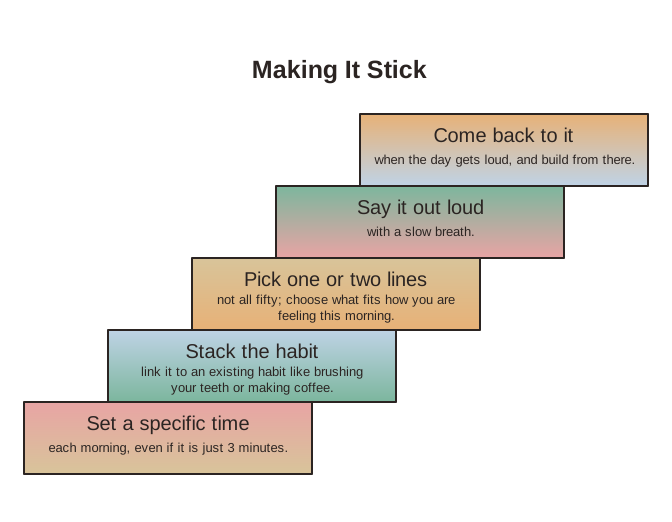
Consistency is the foundation of any successful routine. Set a specific time each morning, even if it's just 3 minutes. Link your affirmation practice to an existing habit like brushing your teeth or making coffee. This "habit stacking" technique makes it easier to remember and maintain your new routine.
Tips for Success
- Keep your affirmations visible — write them on sticky notes or set phone reminders
- Say them with emotion and conviction, not just mechanically
- Pair with deep breathing or stretching for a full mind-body experience
- Track your practice in a journal to stay motivated
- Be patient — change takes time, and there is no fixed timeline
The best morning routine is one you actually do. Start with 3 minutes and build from there.
50 morning affirmations to choose from
Pick one or two of these for the routine above rather than reciting all fifty — they're grouped by mood so you can find one that actually fits how you're feeling this morning.
Calm & anxiety relief
- “I can handle today, one moment at a time.”
- “My thoughts don't control me.”
- “I can pause before I react.”
- “Not every worry deserves my attention.”
- “I am safe in this moment.”
- “I can let this morning be gentle.”
- “I don't need to solve everything right now.”
- “My breath brings calm back to me.”
- “Today, I choose steadiness over panic.”
- “I can meet discomfort with softness.”
Growth & self-belief
- “I'm becoming someone I trust.”
- “Progress counts even when it's small.”
- “I'm learning to support myself better.”
- “I can build the life I want, step by step.”
- “I am capable of more than I think.”
- “I'm allowed to try again today.”
- “Growth isn't perfect, but it's happening.”
- “I am learning what confidence feels like.”
- “I show up for myself, even imperfectly.”
- “I don't need to have all the answers today.”
Confidence & energy
- “Today, I move with quiet confidence.”
- “I can trust my decisions.”
- “I choose clarity over chaos.”
- “I am capable of handling whatever today brings.”
- “I am more resilient than I remember.”
- “I deserve to take up space today.”
- “I bring value everywhere I go.”
- “I can express myself without fear.”
- “I walk into today with a steady mind.”
- “I allow myself to be proud of my progress.”
Self-love & compassion
- “I am worthy of kindness — including my own.”
- “I'm allowed to rest without guilt.”
- “I choose compassion over self-criticism.”
- “I don't need to be perfect to deserve love.”
- “My needs matter today.”
- “I can forgive myself for yesterday.”
- “I deserve softness from myself.”
- “I am enough exactly as I am this morning.”
- “I can speak to myself like someone I care about.”
- “I honor my limits and listen to my body.”
Focus & motivation
- “I focus on what truly matters.”
- “I can take today one task at a time.”
- “I choose direction, not perfection.”
- “I release what I cannot control.”
- “I can begin again whenever I need.”
- “I'm committed to small steps forward.”
- “I welcome opportunities that align with me.”
- “I have everything I need to start.”
- “I can create calm even in a busy day.”
- “Today, I choose intention over autopilot.”
However you use them, say your chosen line out loud with a slow breath, come back to it when the day gets loud, and let the rest of the list sit there for tomorrow.
Frequently asked questions
How long should my morning affirmation routine be?
An effective morning affirmation routine can be as short as 3-5 minutes. Quality and consistency matter more than duration. Start with 5 simple affirmations and gradually build as the habit becomes natural.
What are the best morning affirmations?
The best morning affirmations are believable, emotionally grounded, and CBT-friendly — things like "I can handle today, one moment at a time" or "my thoughts don't control me," not overly positive claims that feel like a stretch. Browse the list below and pick one or two that feel true for how you're actually feeling.
How many affirmations should I say in the morning?
Choose one or two from the list below, not all 50. Repetition and emotional connection matter more than quantity — saying too many becomes overwhelming and less effective. Pick whichever line resonates with how you're feeling that day.
Should I do affirmations before or after my morning coffee?
The best time is whatever works for your schedule consistently. Some prefer affirmations before coffee for a clear mind, while others find they're more receptive after their morning beverage. Experiment to find what feels right for you.
What if I miss days in my morning routine?
Missing days is normal and doesn't negate your progress. Simply restart the next morning without judgment. The key is getting back on track rather than aiming for perfection. Consistency over time matters more than perfect streaks.
Should I say affirmations out loud or silently?
Both methods are effective, but speaking aloud can be more powerful as it engages multiple senses. If privacy is a concern, whispering or silent repetition while visualizing the words can also be effective.
Like what you're reading?
Take control of your mental wellness
Reframe the thought that started it — personalized CBT reframes in the MindLift app.


Free to start · premium optional