
Turn this into a daily habit — free to start in the MindLift app:
Anxiety affects millions of people worldwide, manifesting as persistent worry, racing thoughts, and physical symptoms that can significantly impact daily life. While professional treatment is often necessary for severe anxiety, targeted affirmations can serve as a valuable complementary tool for managing symptoms and promoting a sense of calm and control.
Understanding Anxiety and Affirmations
Anxiety often involves catastrophic thinking patterns and an overactive fight-or-flight response. Affirmations work by interrupting these patterns and providing the mind with alternative, more balanced thoughts. Research shows that self-affirmation can reduce stress reactivity and help regulate the nervous system.
The key to using affirmations for anxiety relief is choosing statements that feel genuine and grounding. Rather than trying to eliminate anxiety entirely, effective affirmations help you develop a healthier relationship with anxious thoughts and feelings.
Specific Techniques for Anxiety Relief
Breathing-Based Affirmations: Combine affirmations with deep breathing exercises. As you inhale, think "I am calm and centered." As you exhale, think "I release tension and worry." This technique engages both the parasympathetic nervous system and cognitive reframing.
Present-Moment Affirmations: Anxiety often involves worry about the future or regret about the past. Affirmations like "I am safe in this moment" or "I can handle whatever comes my way" help anchor you in the present where anxiety has less power.
What are the best affirmations for anxiety relief?
The most effective anxiety affirmations are present-focused and grounding, such as 'I am safe in this moment' or 'I release tension with each breath.' Combining affirmations with deep breathing exercises enhances their calming effect by engaging the parasympathetic nervous system.
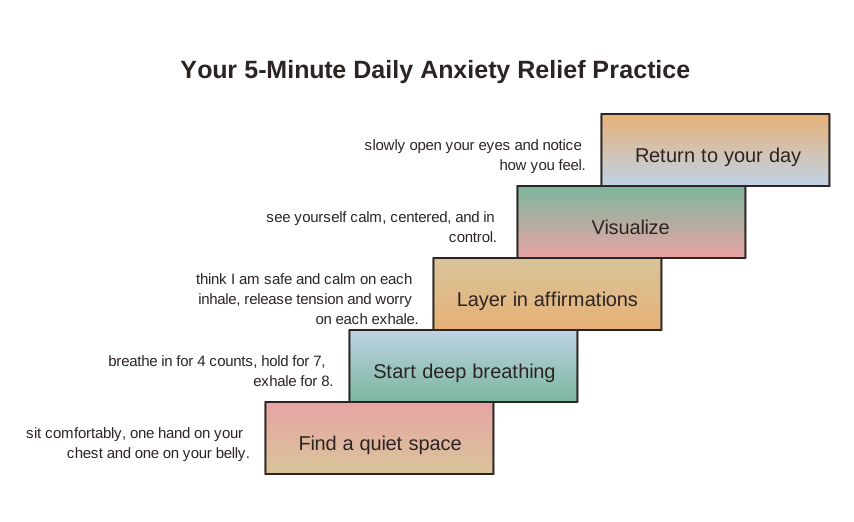
Your 5-Minute Daily Anxiety Relief Practice
- Breathe in — 4 seconds
- Hold — 7 seconds
- Breathe out — 8 seconds
- Find a Quiet Space (1 minute) — Sit comfortably where you won't be disturbed. Close your eyes and place one hand on your chest, one on your belly to feel your breathing.
- Start Deep Breathing (2 minutes) — Breathe in for 4 counts, hold for 7, exhale for 8. This 4-7-8 pattern activates your parasympathetic nervous system and prepares you for affirmations.
- Layer in Affirmations (2 minutes) — While continuing deep breathing, think your chosen affirmation on each inhale: "I am safe and calm." On exhale, release tension and worry.
- Visualize Your Affirmation — As you repeat the affirmation, visualize yourself embodying that state. See yourself calm, centered, and in control.
- Return to Your Day — Slowly open your eyes and notice how you feel. Use this same technique whenever anxiety arises during your day.
Frequently asked questions
Can affirmations really help with anxiety?
Yes, research shows that targeted affirmations can reduce stress reactivity and help regulate the nervous system. They work by interrupting anxious thought patterns and providing alternative, more balanced perspectives.
How often should I practice anxiety affirmations?
For best results, practice affirmations daily, especially during anxious moments. Combining them with deep breathing enhances their effectiveness by engaging both cognitive and physiological relaxation responses.
What if affirmations feel fake or don't work?
Start with believable statements rather than extreme positives. Focus on present-moment affirmations like 'I am safe right now' rather than 'I never feel anxious.' Consistency is key—benefits often emerge after regular practice.
How quickly do affirmations work for anxiety?
It varies from person to person, and there is no fixed timeline. The key is daily practice during both calm and anxious moments to build strong neural patterns. Combining affirmations with breathing techniques accelerates results.
What affirmations are best for panic attacks?
During panic attacks, use simple, grounding affirmations paired with breathing: 'I am safe,' 'This will pass,' 'I can handle this feeling.' Avoid complex statements. Focus on present-moment truth rather than future predictions. Practice these phrases during calm times first.
Can affirmations replace anxiety medication?
No, affirmations are not a replacement for prescribed medication or professional treatment for clinical anxiety disorders. However, they are an excellent complementary tool that can reduce everyday anxiety symptoms and enhance therapy outcomes. Always consult your healthcare provider before changing medication.
Like what you're reading?
Continue your wellness journey
Reframe negative thoughts in 60 seconds — free to start in the MindLift app.


Free to start · premium optional