Daily Affirmations That Actually Work
500+ CBT-grounded affirmations for anxiety, confidence, self-love, and more
29 articles and 4 quizzes in this topic
Start here
New to this topic? These picks are the fastest way in: each one explains the pattern, shows how it appears in your day, and points to a reframe you can try.
- Take the quiz (2 min)Do You Have an Affirmation Bias?Find out if your brain is secretly rejecting the affirmations you repeat. A quick quiz based on CBT research.
- Read the guideThe Inner Voice GuideWhere your inner critic learned to talk, and how to retrain it without forcing fake positivity.
- Read the article (10 min read)Daily Affirmations: Why Generic Ones Fail and What WorksDaily affirmations are short positive statements you repeat to challenge negative thoughts. Why generic ones feel fake, and how to write ones that stick.
Positive affirmations are short first-person statements, like "I'm a lovable person," repeated to change how you see yourself. They often backfire on the people who need them most: in one study, people with low self-esteem felt worse after repeating that exact line (Wood, Perunovic & Lee, 2009).
That is why MindLift leads with reframing: you answer the exact harsh thought with a kinder, believable response, grounded in cognitive behavioral therapy. Affirmations are the secondary tool, and they work when they are believable rather than empty positivity.
More about this topic
The difference between affirmations that work and affirmations that backfire comes down to one thing: believability. Your brain rejects statements that feel false. Take the Affirmation Bias Quiz to find out if your brain is secretly rejecting the affirmations you repeat.
This hub organizes every affirmation guide and list we've published — by topic, context, and need.

Quizzes
Check whether your brain accepts or pushes back on affirmations, and which kind of self-talk you are working with.
- 2 min

Do You Have an Affirmation Bias?
Find out if your brain is secretly rejecting the affirmations you repeat. A quick quiz based on CBT research.
Take the quiz - 2 min

What's Your Inner Voice Type?
Discover how your inner dialogue shapes your confidence, overthinking, and emotional resilience. A CBT-informed 2-minute quiz.
Take the quiz - 3 min

How Harsh Is Your Inner Critic?
12 questions about the way your mind talks to you. Discover if your inner voice is supportive, occasionally critical, or harshly self-critical.
Take the quiz - 1 min

What's Your Peaceful Routine Style?
Discover how peaceful your daily rhythm really is. A 1-minute quiz to reveal your routine style and where calm habits could help.
Take the quiz
How Affirmations Work
The psychology and science behind effective affirmations.

Affirmations for Mental Health
Targeted affirmations for anxiety, self-doubt, and emotional challenges.
Daily Routines
Morning and evening affirmation practices.
Affirmations by Life Context
For work, relationships, parenting, and specific challenges.

Affirmations for Emotional Challenges
For anger, letting go, and limiting beliefs.

More on Affirmations
The newest guides in this topic that the sections above do not already cover, up to eight at a time. Each one ends with a reframe you can try the next time the thought shows up.
- John Kehoe Mind Power: Can You Really Reprogram Your Mind?8 min read
- Cynical Affirmations: For People Tired of Pretending10 min read
- Manifest Amateur: When Manifestation Goes Wrong8 min read
- Affirmations for Disappointing Holidays6 min read
- Does Manifestation Work? What the APA and Research Say9 min read
- How to Put Affirmations on Your Lock Screen (iOS, Android)8 min read
- Funny Daily Affirmations (That You'll Actually Believe)12 min read
MindLift for
MindLift condition pages are dedicated starting points for one specific challenge, such as anxiety, burnout or negative self-talk. Each page explains how CBT-based reframing applies to that challenge and what the app does in the exact moment the thought shows up.
Frequently asked questions
Do positive affirmations work?
Sometimes, and mostly for people who already feel fairly good about themselves. In a 2009 Psychological Science study (Wood, Perunovic & Lee), people with high self-esteem felt slightly better after repeating "I'm a lovable person," while people with low self-esteem felt worse, because the line clashed with what they believed. Believable, specific statements that answer a real thought, which is what a CBT reframe does, hold up better than generic positivity.
How long do affirmations take to work?
There is no research-backed timeline for repeated positive affirmations, so be wary of "21 days" promises. The best-known test, Wood, Perunovic and Lee (2009), found generic lines like "I'm a lovable person" left people with low self-esteem feeling worse straight away. A better check than time: does the line feel believable when you say it? If not, swap it for a specific, realistic reframe.
How many affirmations should I say a day?
3-5 focused affirmations are more effective than 20 generic ones. Choose statements that address your current challenges and feel genuinely true.
What's the difference between CBT affirmations and regular affirmations?
CBT affirmations are grounded in cognitive behavioral therapy. Instead of forcing positive beliefs, they help you reframe distorted thoughts into balanced, realistic interpretations.
Personalized Affirmations, Powered by AI
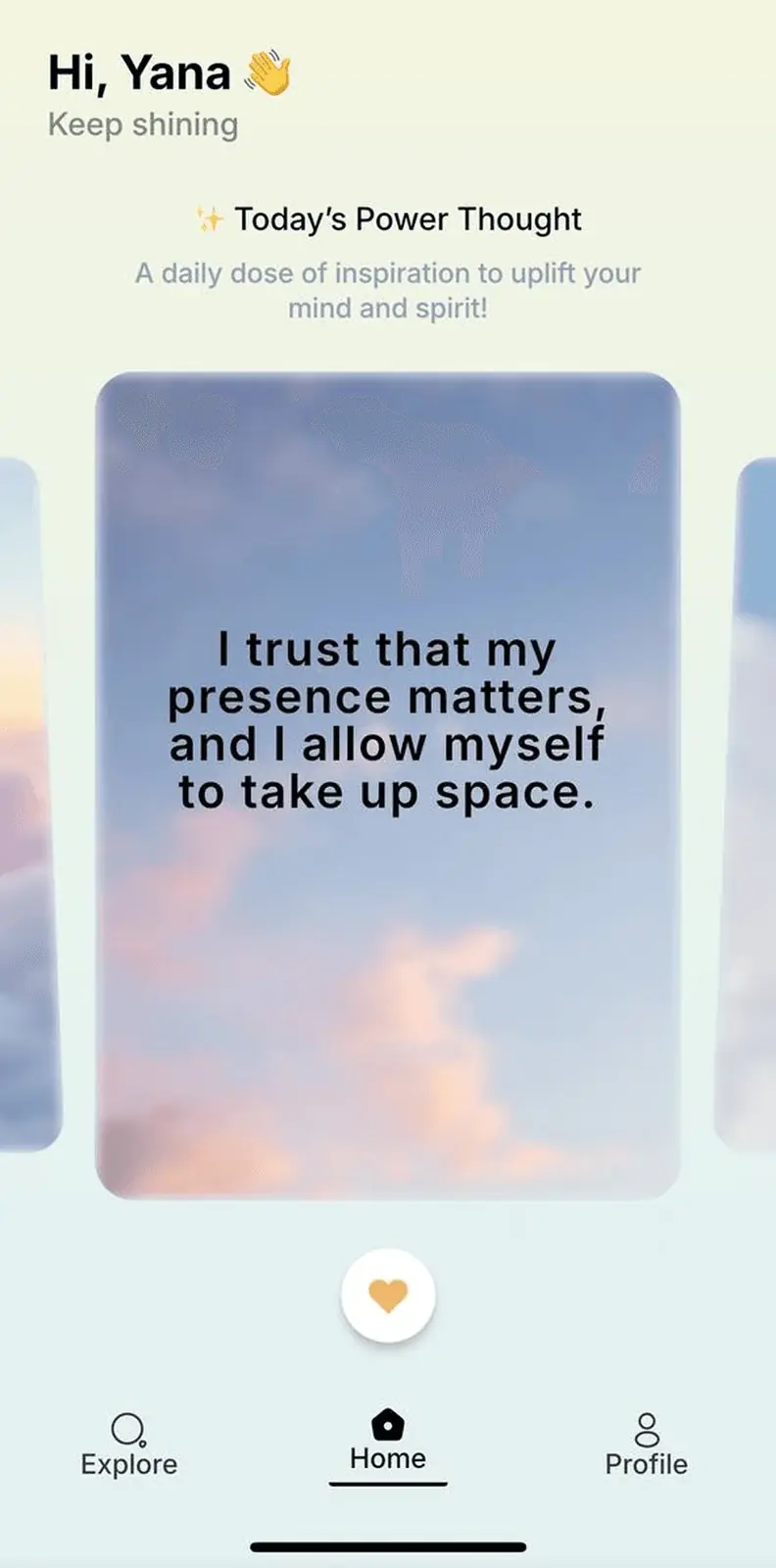
MindLift generates CBT-based affirmations tailored to your mood, thoughts, and patterns. No generic quotes — real reframes that fit your life.
Try MindLift — free to start →