
Turn this into a daily habit — free to start in the MindLift app:
In today's fast-paced world, mental wellness challenges are more common than ever. Whether it's the anxiety that hits before an important meeting or the harsh inner critic that never seems to quiet down, these mental patterns can significantly impact daily life.
MindLift was designed to address the most prevalent mental wellness problems with quick, evidence-based solutions. Nationally, an estimated 31% of US adults experience an anxiety disorder at some point (NIMH), and 83% of US workers report work-related stress (American Institute of Stress) — so if these problems sound familiar, they're common, not a personal failing. Here are the four challenges our users bring up most, and how MindLift helps solve them.
The 4 Problems MindLift Solves
Spiraling Anxiety Before Work or Social Situations
"I overthink everything before meetings, calls, or even replying to messages."
Social anxiety is high, especially with remote work + performance pressure.
How MindLift helps: Instant mindset resets to stop the loop before the moment happens.
Harsh Inner Critic / Negative Self-Talk
"I constantly beat myself up and never feel like I'm doing enough."
Affects self-worth, productivity, and mental health.
How MindLift helps: Replacing toxic thought loops with compassionate, personalized reframes.
Mental Exhaustion from Constant Overthinking
"My brain never stops. Even small things feel huge because I overanalyze everything."
Leads to burnout, indecision, sleep issues.
How MindLift helps: Short grounding reframes that interrupt mental noise.
Low Confidence in Daily Life
"Even when I try hard, I doubt myself. I feel like everyone else is doing better."
Undermines career growth, social life, and happiness.
How MindLift helps: Strengthening internal dialogue and affirming identity through repeated daily use.
What a Reframe Actually Looks Like
"Instant mindset reset" is easy to say. It means this, with a real thought. Take problem one — the spiral before a meeting. It's 9:52, the call starts at 10:00, and the inner monologue is running:
"I haven't prepared enough. They're going to ask about the numbers and I'll fumble it. Last time I went quiet and everyone noticed. If I mess this up too, that's a pattern — they'll start wondering why I'm even on this project."
Four moves happened there: a prediction ("I'll fumble it"), a selective memory ("last time I went quiet"), a leap from two events to "a pattern," and a leap from the pattern to your place on the team. Each one feels like a fact. None of them is. This is the catastrophizing-plus-mind-reading combination that shows up in almost every pre-meeting spiral, and it's the shape MindLift is built to catch.
You type the thought in. The reframe that comes back reads something like:
"I don't know what they'll ask, and I know the numbers well enough to say 'let me check and follow up' if I don't. Going quiet once isn't a pattern; it was one meeting. I'm on this project because of the work I've already done, and eight minutes of nerves doesn't undo that."
What it doesn't do matters as much: it doesn't promise the meeting will go well, and it doesn't tell you to feel confident. It puts the predictions back into the "maybe" column, answers the selective memory with the fuller record, and separates one meeting from your worth. That is the whole trick, and it's the same trick for the other three problems — the inner critic, the exhausting overanalysis, the comparison to everyone else. The thought changes; the method doesn't.
Run It Yourself in 60 Seconds
You can run the method without the app, right now, on whatever is looping:
- Write it down. The thought, word for word. Not the polite version — the one that's actually running.
- Underline the guesses. Every prediction and every "always" or "everyone." Those are the parts your brain filled in without evidence.
- Rewrite one sentence. Turn the prediction back into a maybe and add one true thing from the record — a time it went fine, a reason you're here. Read it once. Go to the meeting.
MindLift does this for you when you don't have the sixty seconds, or the distance, to do it yourself — which is usually exactly when you need it.
How MindLift Addresses These Challenges
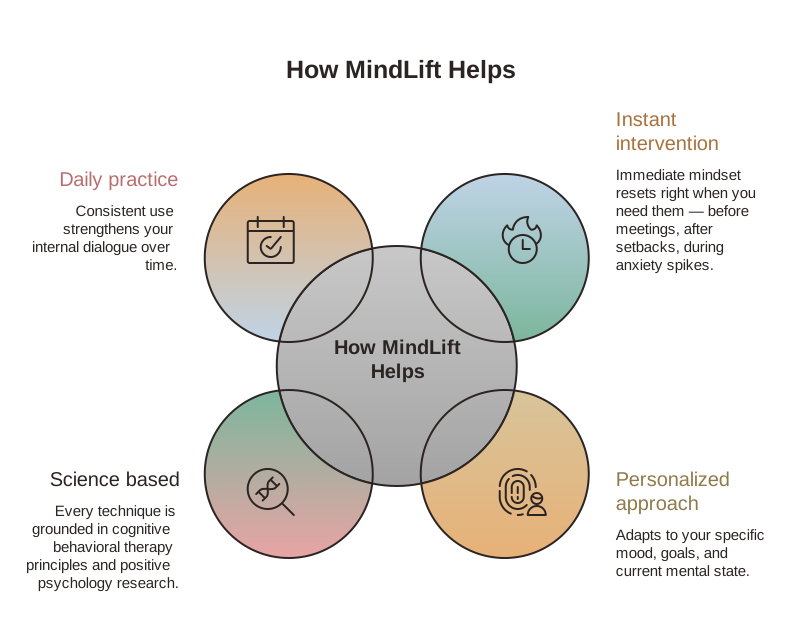
Instant Intervention
MindLift provides immediate mindset resets right when you need them most — before meetings, after setbacks, or during anxiety spikes.
Personalized Approach
Reframes adapt to your specific mood, goals, and current mental state, so the response answers the thought you actually had rather than a generic version of it.
Science-Based Solutions
Every technique is grounded in cognitive behavioral therapy principles and positive psychology research.
Daily Practice
Consistent use strengthens your internal dialogue and builds lasting confidence through repeated positive reinforcement.
What MindLift Is Not
Being clear about scope matters more in mental health than in most categories. MindLift is a guided-reframing app, not a device and not a clinic: you type a thought, you get a reframe. That makes it a self-help tool — not therapy, not a diagnosis, and not crisis support. If what you're dealing with is persistent low mood, panic that stops you functioning, or thoughts of harming yourself, the right next step is a doctor, a therapist, or a crisis line, and the app is a companion to that care, not a stand-in for it.
The four problems above are the everyday versions: the loop before the meeting, the critic after the mistake, the tired brain that won't stop, the quiet comparison. Those are what sixty seconds and one believable sentence can genuinely help with. Which of the four is loudest for you? If you can't tell, the self-talk personality test will show you the style your inner voice falls into.
What are the top problems MindLift helps solve?
MindLift addresses four core mental wellness challenges: spiraling anxiety before work or social situations, harsh inner critic and negative self-talk, mental exhaustion from constant overthinking, and low confidence in daily life. It provides instant, personalized CBT-based reframes when you need them most.
MindLift turns the thought behind each of these problems into a personalized reframe you can use in the moment. Free to start, premium available. Try MindLift — free to start →
Frequently asked questions
What are the most common symptoms of workplace anxiety?
Common symptoms include overthinking before meetings, physical tension, difficulty concentrating, procrastination, and feeling overwhelmed by normal tasks. MindLift helps with the thinking side of that — the prediction before the meeting and the replay afterwards — through short, targeted reframes.
How does negative self-talk impact daily performance?
Negative self-talk reduces confidence, increases stress, impairs decision-making, and can lead to a cycle of self-sabotage. It affects productivity, relationships, and overall mental well-being.
How is MindLift different from traditional therapy?
MindLift is a self-help tool, not therapy. It gives you a CBT-style reframe in the moment a thought hits — before the meeting, at 2 AM, after the argument — when a therapist is not in the room. It can sit alongside therapy, but it does not diagnose, treat, or replace professional care.
How quickly can I expect to see results with MindLift?
A single reframe is meant to take the edge off one moment, and you will know within a minute whether it did. Longer-term change in how you talk to yourself comes from repetition over weeks, and the pace varies a lot from person to person. The app is built for both the instant moment and the slower shift.
Like what you're reading?
Take control of your mental wellness
Reframe the thought that started it — personalized CBT reframes in the MindLift app.


Free to start · premium optional