
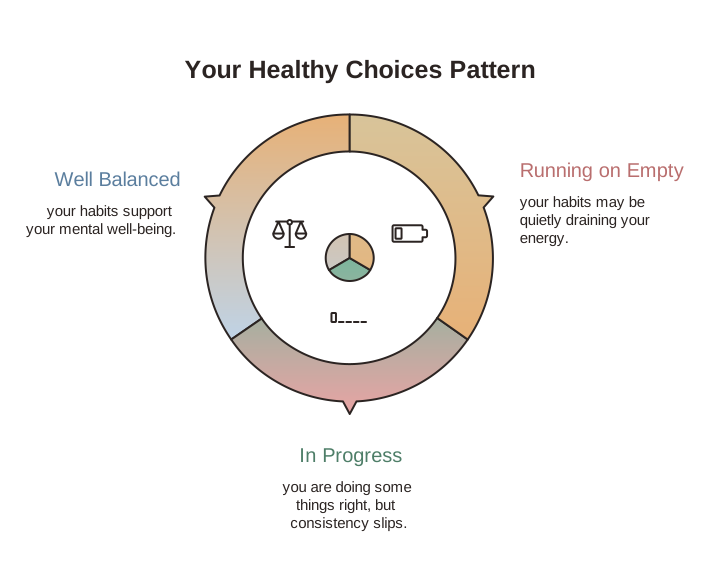
Running on Empty
Your habits may be quietly draining your energy.
When basic needs like sleep, nutrition, and recovery are neglected, the mind gets louder — and harsher. This isn't a failure; it's a signal.
here's one thing to try tonight: Your next step: pick the one habit that holds up the others, usually sleep, and protect only that for seven days before adding anything else. A fixed wake-up time is often easier to keep than an earlier bedtime, because it is one decision a day instead of a whole evening of them.
A worked example. The harsh thought at 11pm, after skipping dinner and an hour of scrolling: "I can't even look after myself. What is wrong with me?" Realist reframe: "I slept five hours and ate crackers for dinner. Of course my head feels loud. That is a fuel problem, not a character flaw." Growth reframe: "Tonight I only have to change one thing: phone on the charger by midnight." Compassionate reframe: "I've been running on empty for weeks. Anyone would feel this way, and I can be on my own side tonight."
The practice: on a low-fuel day, check the basics before you argue with the thought. Have I eaten in the last four hours? Have I been outside today? How did I sleep? If two answers are no, treat the harsh thought as a sign of depletion and postpone the verdict until you have slept on it.
Scoring in this range for weeks at a time, especially alongside low mood, sleep that will not settle or losing interest in things you used to enjoy, is a good reason to talk to a doctor or a mental health professional. A habits quiz can show that the tank is low; it cannot tell you why.