About this result
The Catastrophizer
One of 6 results in Negative Self-Talk Test.
MindLift is a CBT app that turns harsh self-talk into a kinder response in 60 seconds. Free to start. Try the reframe on the App Store · Google Play
Your inner critic always expects the worst
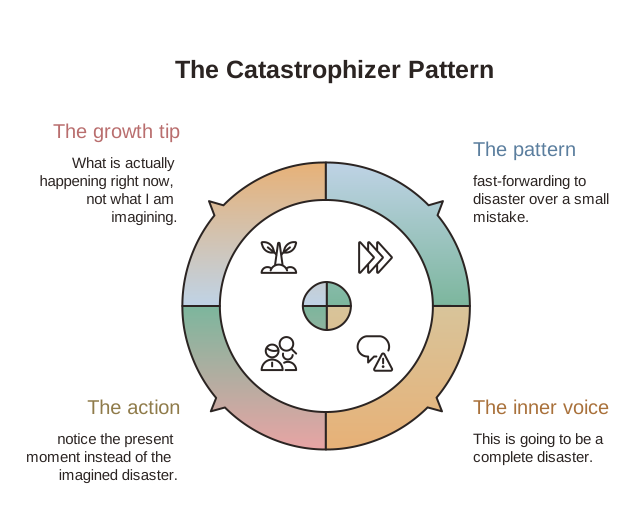
Your mind has a habit of fast-forwarding to disaster. A small mistake becomes a major failure. A quiet message becomes a sign something is wrong. A single bad day means everything is falling apart.
This pattern comes from your brain's negativity bias — a survival mechanism that scans for danger and rarely switches off. It's not a character flaw. It's a threat-detection system that's working overtime.
here's one thing to try tonight: "What is actually happening right now — not what I'm imagining?"
Other results in this quiz
Frequently Asked Questions
Frequently Asked Questions
What does The Catastrophizer mean?
This pattern comes from your brain's negativity bias — a survival mechanism that scans for danger and rarely switches off. It's not a character flaw. It's a threat-detection system that's working overtime.
What can I do if my result is The Catastrophizer?
"What is actually happening right now — not what I'm imagining?"
If you are in crisis or thinking about harming yourself, call or text 988 (US) or find a local line at findahelpline.com. MindLift is a self-help tool and not a replacement for professional care.
Sources
The questions and result descriptions in this quiz draw on the studies below. The quiz is a self-reflection tool, not a diagnosis, and none of these papers tested this quiz itself.