About this result
The Perfectionist Critic
One of 6 results in Negative Self-Talk Test.
MindLift is a CBT app that turns harsh self-talk into a kinder response in 60 seconds. Free to start. Try the reframe on the App Store · Google Play
Your inner critic says good enough is never enough
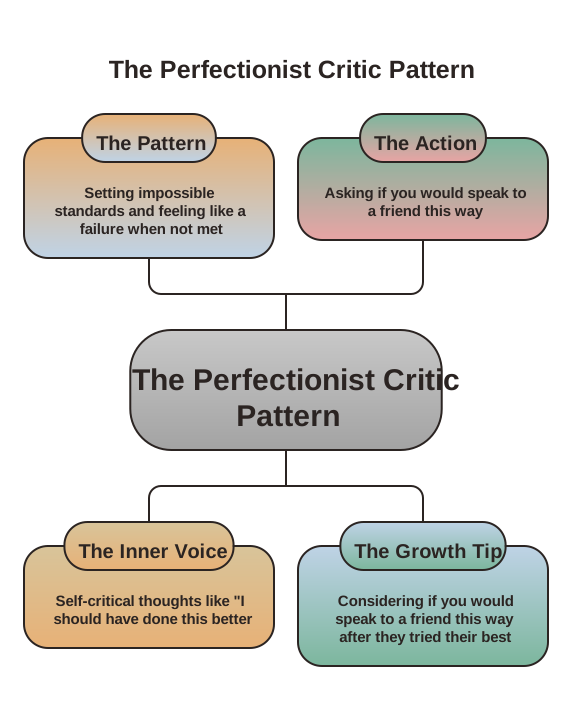
You hold yourself to standards that no one could realistically meet — and when you fall short, the verdict is immediate: not good enough.
The painful irony is that this pattern often produces paralysis rather than the excellence it claims to be chasing.
here's one thing to try tonight: "Would I speak to a friend this way after they tried their best?"
Other results in this quiz
Frequently Asked Questions
Frequently Asked Questions
What does The Perfectionist Critic mean?
The painful irony is that this pattern often produces paralysis rather than the excellence it claims to be chasing.
What can I do if my result is The Perfectionist Critic?
"Would I speak to a friend this way after they tried their best?"
If you are in crisis or thinking about harming yourself, call or text 988 (US) or find a local line at findahelpline.com. MindLift is a self-help tool and not a replacement for professional care.
Sources
The questions and result descriptions in this quiz draw on the studies below. The quiz is a self-reflection tool, not a diagnosis, and none of these papers tested this quiz itself.