About this result
The Labeler
One of 6 results in Negative Self-Talk Test.
MindLift is a CBT app that turns harsh self-talk into a kinder response in 60 seconds. Free to start. Try the reframe on the App Store · Google Play
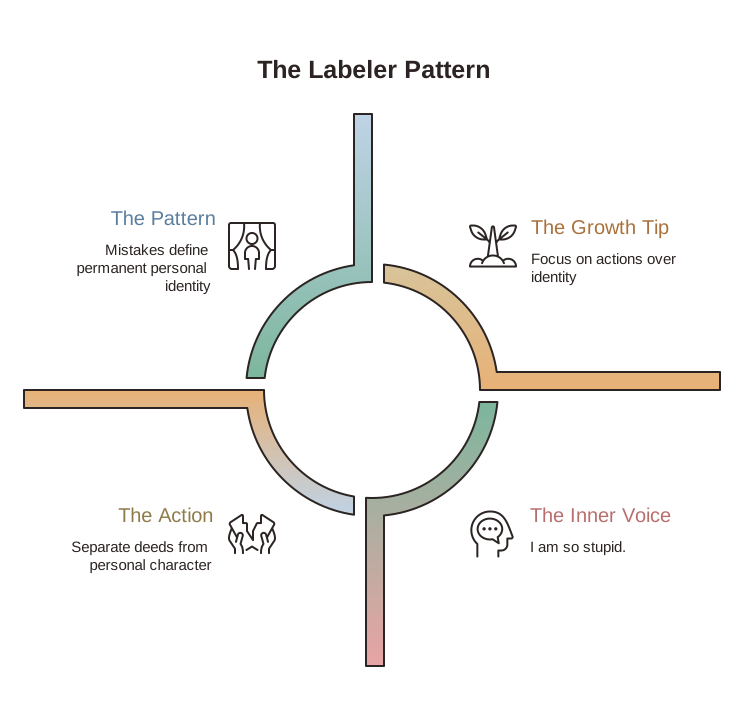
Your inner critic doesn't just criticize what you do — it attacks who you are
Rather than "I made a mistake," it says "I'm a failure." Rather than "I didn't handle that well," it says "I'm a terrible person."
Labels feel permanent and global — and that permanence is exactly what makes them so damaging to self-worth.
here's one thing to try tonight: "What did I do — not who am I?"
Other results in this quiz
Frequently Asked Questions
Frequently Asked Questions
What does The Labeler mean?
Labels feel permanent and global — and that permanence is exactly what makes them so damaging to self-worth.
What can I do if my result is The Labeler?
"What did I do — not who am I?"
If you are in crisis or thinking about harming yourself, call or text 988 (US) or find a local line at findahelpline.com. MindLift is a self-help tool and not a replacement for professional care.
Sources
The questions and result descriptions in this quiz draw on the studies below. The quiz is a self-reflection tool, not a diagnosis, and none of these papers tested this quiz itself.