
Turn this into a daily habit — free to start in the MindLift app:
Most people have a constant conversation running inside their minds. Sometimes that voice is helpful. Sometimes it becomes harsh, critical, or impatient.
You might hear thoughts like:
"I messed everything up."
"I should have done better."
"Why am I like this?"
What's interesting is that many people would never speak this way to a friend. Yet they speak this way to themselves every day.
Learning to shift this inner dialogue can make a powerful difference in how you experience stress, mistakes, and challenges. Instead of becoming your harshest critic, your inner voice can become something much more helpful: a supportive coach.
Why Your Inner Voice Matters
The way we talk to ourselves influences how we feel and how we respond to situations. When the inner voice is constantly critical, it can amplify stress and make small mistakes feel like major failures.
Psychological research shows that thoughts, emotions, and behaviors influence each other in a continuous cycle. Changing how we interpret a situation can gradually change emotional responses and actions.
In other words, your inner dialogue helps shape your experience of the world.
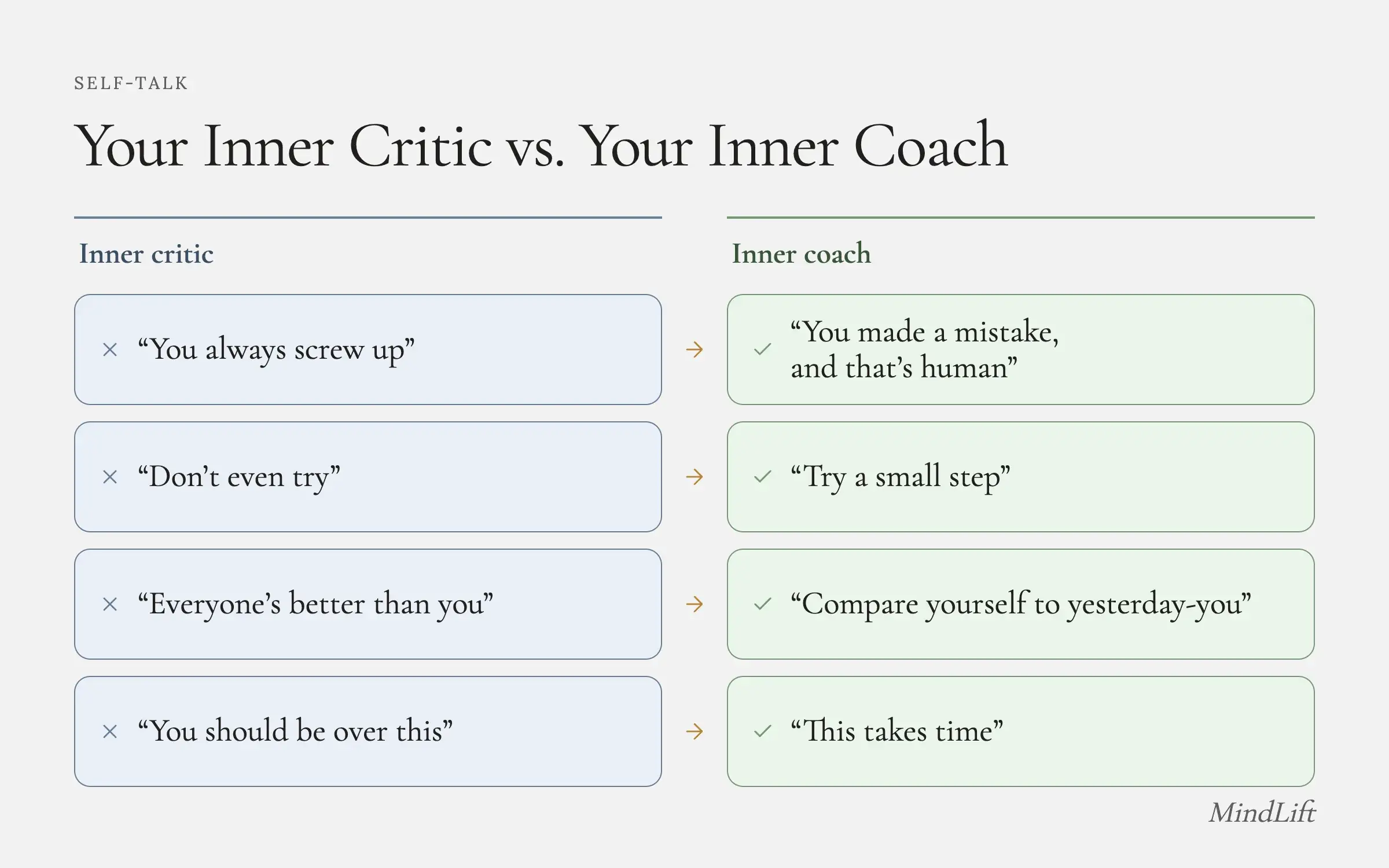
The Difference Between a Critic and a Coach
Imagine two different responses to the same mistake.
The Inner Critic
"You ruined everything."
"You should have known better."
This voice focuses on blame. It makes the brain feel threatened and increases stress.
The Supportive Coach
"That didn't go as planned."
"What can we learn from this?"
This voice focuses on improvement and next steps. It creates space for growth instead of judgment.
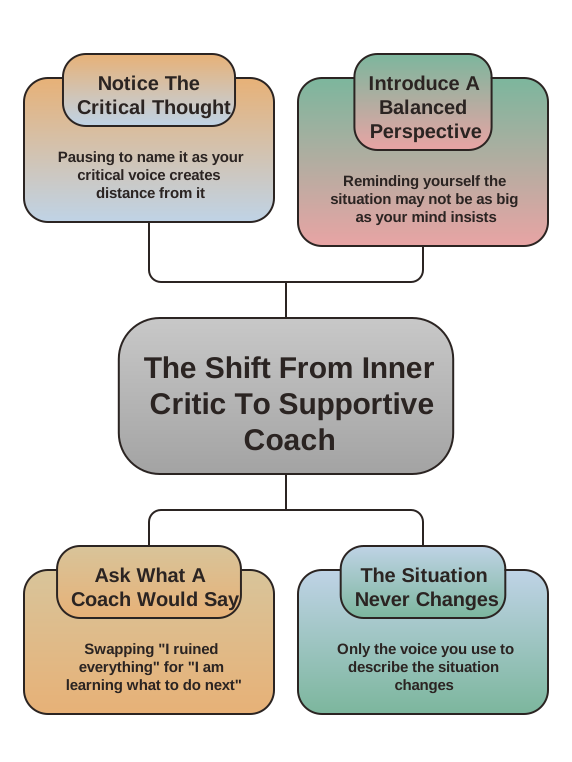
The situation stays the same, but the interpretation changes.
Why the Brain Defaults to Criticism
The human brain evolved to notice problems and mistakes quickly. This helped our ancestors survive dangerous environments.
Today, however, that same system can turn everyday situations into perceived threats. Examples include:
- Replaying conversations
- Worrying about how others perceive us
- Criticizing small mistakes
Negative thinking patterns can reinforce emotional distress when repeated frequently. Without awareness, these thoughts can become automatic. If you want to spot the patterns first, start with this guide to cognitive distortions.
The Three-Step Shift Toward a Supportive Inner Voice
You don't need to eliminate negative thoughts entirely. Instead, you can practice responding to them differently.
Step 1: Notice the Critical Thought
The first step is simply recognizing when the inner critic appears.
Example: "I messed everything up."
Instead of immediately believing the thought, pause and notice it. You might say to yourself:
"That's my critical voice speaking."
This small step creates distance from the thought.
Step 2: Ask What a Supportive Coach Would Say
Imagine a calm, supportive coach responding to the same situation.
Instead of: "I ruined everything."
Try: "I'm learning. What can I do next?"
A coach focuses on progress, not punishment.
Step 3: Introduce a Balanced Perspective
The mind often exaggerates mistakes. Try adding a grounding thought such as:
"Maybe this situation isn't as big as my mind thinks."
Balanced interpretations help calm the brain's threat system.
Examples of Supportive Self-Talk
Here are a few examples of how the inner voice can shift.
Inner Critic
"I'm terrible at this."
Supportive Coach
"I'm still learning."
Inner Critic
"This will be a disaster."
Supportive Coach
"I don't know how it will go yet."
Inner Critic
"I should have done better."
Supportive Coach
"I'll do it differently next time."
These small shifts reduce pressure and help the brain move forward.
How Practice Changes the Brain
One reason this method can work is neuroplasticity — the brain's ability to adapt through repetition. A new mental response tends to come more easily the more you practice it. We explain that process more deeply in our neuroplasticity guide.
Over time, supportive self-talk can become more automatic than criticism. Small mental habits practiced repeatedly can gradually reshape how the brain reacts to stress.
A Simple Daily Exercise
Try this quick exercise once a day. When you notice a critical thought:
Write the thought down
Ask: What would a supportive coach say?
Replace the thought with a balanced alternative
Example
Critical thought: "I failed."
Supportive coach: "What can I learn from this experience?"
Even practicing this once a day can build awareness of your inner dialogue.
Why Supportive Self-Talk Isn't "Fake Positivity"
Talking to yourself like a coach doesn't mean pretending everything is perfect. Instead, it means responding to challenges with clarity, patience, and perspective.
A coach doesn't ignore mistakes. They simply focus on what helps you move forward.
How MindLift Helps Train a Supportive Inner Voice
Changing internal dialogue can take practice. MindLift helps users recognize negative thought loops and introduce short, realistic reframes inspired by cognitive psychology.
Instead of harsh self-criticism, the app encourages small shifts such as:
"I can take this one step at a time."
"This thought isn't urgent."
"I'm learning how to handle this."
With repetition, these small mental shifts can gradually reshape how the mind responds to everyday stress.
Final Thought
Your inner voice will always be part of your experience. The question isn't whether it exists. The question is what role it plays.
It can remain a harsh critic. Or it can become a calm guide that helps you navigate challenges with patience and perspective.
And sometimes, the shift begins with one simple question:
"What would a supportive coach say right now?"
Frequently asked questions
Is supportive self-talk the same as toxic positivity?
No. Supportive self-talk doesn't ignore problems or pretend everything is perfect. It responds to challenges with clarity, patience, and perspective — like a good coach would.
How long does it take to change your inner voice?
Thanks to neuroplasticity, consistent daily practice can start reshaping thought patterns within weeks. The key is repetition, not perfection.
What if I can't stop the critical thoughts?
The goal isn't to eliminate critical thoughts — it's to respond to them differently. Even noticing "that's my critical voice" creates helpful distance.
Like what you're reading?
Continue your wellness journey
Reframe negative thoughts in 60 seconds — free to start in the MindLift app.


Free to start · premium optional