Turn this into a daily habit — free to start in the MindLift app:
Your brain is not fixed.
It's not "just the way you are."
It's more like a living map — constantly being redrawn based on what you think, feel, and repeat.
This ability is called neuroplasticity — and it quietly shapes your habits, your anxiety, your confidence, and even your inner voice.
What Is Neuroplasticity (Really)?
Neuroplasticity is your brain's ability to change its structure and function based on experience.
Every thought you repeat is like a tiny vote:
- Repeat it often → the pathway strengthens
- Ignore it → the pathway weakens
Think of it like walking through a field:
- Once = barely visible
- 100 times = a clear path
- 1000 times = a road your brain prefers automatically
Why Negative Thinking Feels "Automatic"
Your brain is efficient, not fair.
It builds shortcuts using repetition. So if your mind often says:
- "I messed this up"
- "Something will go wrong"
- "I'm not good enough"
…it wires those patterns into default responses.
Research shows these patterns are often driven by cognitive distortions — biased ways of thinking like catastrophizing or all-or-nothing thinking. If you want to identify yours, start with this breakdown of common distortions.
Over time, they become your brain's "fast lane."
The Role of Self-Talk (Your Inner Voice)
Your inner voice isn't random noise — it's a regulation system.
Studies show self-talk helps with:
- Self-control
- Emotional regulation
- Decision-making
But here's the twist: that same system can turn into a critical loop — repetitive, harsh, and unhelpful.
This is what psychologists call "chatter" — when thinking circles without resolution.
The Key Insight: Thoughts Change the Brain
This is the part most people miss:
It's not positive thinking that rewires your brain.
It's repeated, believable thinking.
Your brain updates through:
- Repetition
- Emotional intensity
- Attention
That's why extreme affirmations often fail — and small, realistic shifts actually work.
How to Use Neuroplasticity in Daily Life
Here's where it becomes practical.
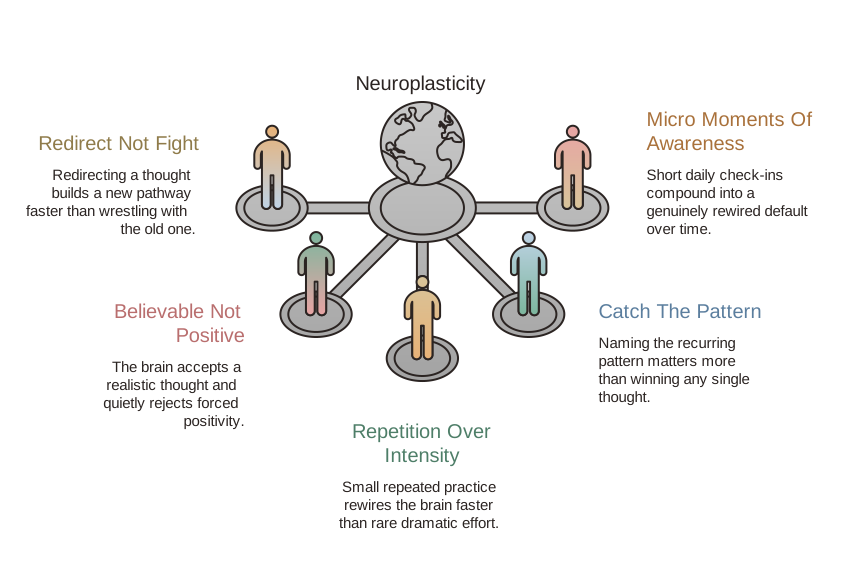
1. Don't Fight Thoughts — Redirect Them
Trying to "stop thinking" is like trying to stop waves. Instead: notice the thought, and gently shift it.
❌ "I need to stop overthinking"
✅ "Not every thought needs solving"
2. Make Thoughts More Believable (Not More Positive)
Your brain rejects unrealistic statements. This aligns with CBT: replacing distorted thoughts with more accurate ones, not fantasy. We show this in action in our reframing guide.
❌ "I'm completely confident"
✅ "I'm learning to handle this better"
3. Repetition Beats Intensity
One calm thought repeated daily rewires more than one powerful insight you forget tomorrow.
Consistency builds the pathway.
4. Catch the Pattern, Not Just the Thought
Don't just challenge what you think — notice how you think:
- Are you catastrophizing?
- Jumping to conclusions?
- Being overly self-critical?
That's where real change starts.
5. Create Micro-Moments of Awareness
Neuroplasticity doesn't need hours. It needs interruptions.
Tiny moments like:
- Pausing before reacting
- Noticing your tone
- Choosing one different thought
These are the "editing points" of your brain.
What This Means for You
You don't need to become a different person.
You're already rewiring your brain every day — just by thinking.
The only question is: are you reinforcing loops that drain you, or building ones that support you?
A More Realistic Affirmation (MindLift Style)
Instead of forcing positivity, try something like:
"I don't have to follow every thought."
"This might not be as urgent as it feels."
"I can let this pass without solving it."
Small shifts. Repeated often. That's how the brain changes.
Frequently asked questions
What is neuroplasticity in simple terms?
Neuroplasticity is your brain's ability to change its structure and function based on experience. Every thought you repeat strengthens a neural pathway. Ignore it, and the pathway weakens. It's like walking through a field — the more you walk a path, the clearer it becomes.
Why does negative thinking feel so automatic?
Your brain builds shortcuts based on repetition. If you frequently think 'I'm not good enough' or 'something will go wrong,' those patterns become your brain's default 'fast lane.' These are often driven by cognitive distortions like catastrophizing or all-or-nothing thinking.
Do positive affirmations actually rewire your brain?
Not always. Your brain rejects statements it doesn't believe. Instead of extreme positivity like 'I'm completely confident,' use believable reframes like 'I'm learning to handle this better.' It's repeated, believable thinking that rewires your brain — not forced positivity.
How long does neuroplasticity take to work?
Small changes can begin within days of consistent practice. Meaningful rewiring of deep-seated habits typically takes weeks to months of daily repetition. The key is consistency, not intensity.
How can I use neuroplasticity in daily life?
Start with micro-moments: pause before reacting, notice your mental tone, redirect a thought instead of fighting it. One calm, realistic thought repeated daily rewires more than a powerful insight you forget tomorrow.
Like what you're reading?
Continue your wellness journey
Reframe negative thoughts in 60 seconds — free to start in the MindLift app.


Free to start · no account required
Mental Wellness Researchers
Part of the MindLift team dedicated to translating psychological research into practical tools for everyday mental wellness.
Was this article helpful?