When someone you care about is struggling, your first instinct is to:
About this quiz
Which Ted Lasso Character Are You Really?
The Ted Lasso quiz is a MindLift quiz. MindLift is a software-only CBT app that helps you reframe negative self-talk; the characters are a fun lens on emotional coping patterns, not a personality diagnosis. Read more about MindLift, or start with the negative self-talk test.
An Emotional Coping Pattern Quiz
This isn't about who you'd hang out with. It's about your core emotional strength, your hidden blind spot, your inner voice narrative, and your growth edge.
Choose the answer that feels most instinctive, not most admirable.
Six coping styles — the quiz tells you which one you lead with.How does this quiz work?
How does this quiz work?
Answer 18 questions about how you usually react, not how you would like to. About 5 minutes is the usual time to finish, there are no right answers, and Which Ted Lasso Character Are You Really? scores your result on your device — free, no email, no signup.
When someone you care about is struggling, your first instinct is to:
Crack a joke to lighten the mood
Take control and fix the situation
Sit with them quietly, no agenda
Deflect — it's uncomfortable
Analyze what went wrong
Say what nobody else will
Your dominant emotional pattern at work:
Relentless optimism, even when it costs you
Controlled intensity
Quiet empathy
Avoiding vulnerability
Overthinking every decision
Brutal honesty
When you fail, your inner voice says:
"Shake it off. Be positive."
"This can never happen again."
"How are others feeling about this?"
"I don't care." (But you do.)
"What could I have done differently?"
"At least I was honest about it."
You secretly believe:
If I stay positive enough, I can protect everyone
I must be the strongest person in the room
My worth comes from how I make others feel
Vulnerability is weakness
If I understand enough, I won't get hurt
The truth matters more than comfort
In conflict, you:
De-escalate with kindness
Stand your ground firmly
Mediate between both sides
Withdraw emotionally
Over-research both perspectives
Call out the uncomfortable truth
Your relationship with anger:
You suppress it behind humor
You channel it into drive
You turn it inward as guilt
You pretend it doesn't exist
You intellectualize it
You express it directly
You struggle most with:
Acknowledging your own pain
Letting go of control
Setting boundaries
Being emotionally available
Trusting your gut over your head
Softening your delivery
When alone, your thoughts tend to:
Plan ways to help others
Replay moments where you lost control
Worry about people you love
Go numb or distract
Spiral into analysis
Process raw, unfiltered truths
You cope with pain by:
Being there for everyone else
Working harder
Nurturing others
Shutting down
Researching solutions
Speaking your mind
Your deepest fear is:
Being seen as a burden
Being powerless
Being invisible
Being truly known
Making the wrong choice
Being dismissed
When praised, you:
Redirect it to someone else
Accept it — you earned it
Feel warm but undeserving
Get uncomfortable
Wonder if it's genuine
Take it matter-of-factly
You feel most alive when:
Someone you believed in succeeds
You overcome something impossible
You create a safe space for someone
You're performing at your best
A complex plan comes together
You change someone's mind with the truth
Your shadow belief:
"If I stop smiling, everything falls apart."
"I can't afford to be soft."
"My needs don't matter as much."
"If I open up, I'll get hurt."
"Feelings without data are dangerous."
"If they can't handle honesty, that's their problem."
In love, you:
Give everything, sometimes too much
Protect yourself behind achievement
Prioritize your partner's feelings
Keep emotional distance
Overthink compatibility
Test people with bluntness
When triggered, you:
Panic behind a smile
Become cold and decisive
Absorb everyone else's emotions
Leave — physically or mentally
Freeze in indecision
Get louder and more direct
The phrase that hits hardest:
"It's okay to not be okay."
"You don't have to carry this alone."
"You matter too, not just everyone else."
"Being seen won't destroy you."
"You already know. Trust yourself."
"Honesty without empathy is cruelty."
Your deepest need:
Permission to struggle
To feel safe enough to be vulnerable
To be chosen, not just needed
To trust without fearing betrayal
To quiet the noise in your head
To be respected, not just tolerated
If someone truly saw you, you'd hope they'd see:
How much it takes to stay positive
The fear underneath the strength
How deeply you feel everything
That you want connection, badly
Your quiet wisdom
That your sharpness comes from caring
What results can you get?
What results can you get?
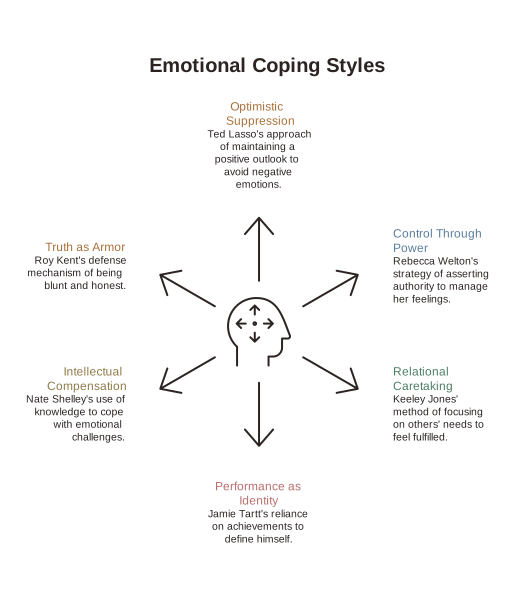
Your answers sort you into one of 6 results — Ted Lasso, Rebecca Welton, Keeley Jones, Jamie Tartt, Nate Shelley, Roy Kent. Each result comes with a description of its thinking pattern and one growth move you can practise this week, plus the answer mix that produced it.
Result
Who gets it
What it looks like
Ted Lasso
Majority a answers
Coping style: Optimistic suppression
Rebecca Welton
Majority b answers
Coping style: Control through power
Keeley Jones
Majority c answers
Coping style: Relational caretaking
Jamie Tartt
Majority d answers
Coping style: Performance as identity
Nate Shelley
Majority e answers
Coping style: Intellectual compensation
Roy Kent
Majority f answers
Coping style: Truth as armor
Ted Lasso
Coping style: Optimistic suppression
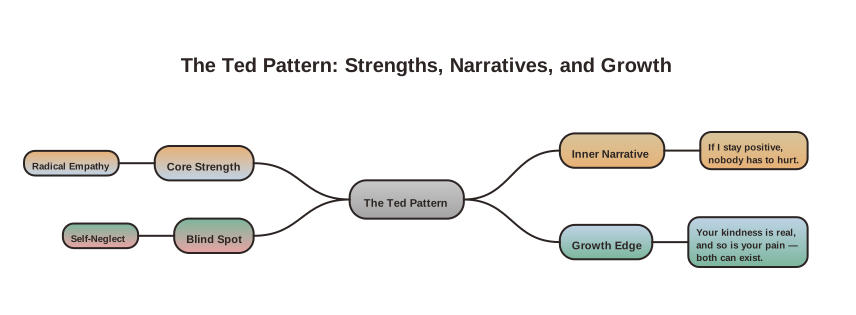
"If I stay positive, nobody has to hurt." You minimize your own pain, deflect with humor, and emotionally caretake everyone but yourself.
Patterns: Minimizing own pain, deflecting with humor, emotional caretaking.
Growth edge: Your kindness is real. But so is your pain. Both can exist.
Your kindness is real. But so is your pain. Both can exist.
The pattern at a glance — core strength, inner narrative, blind spot, and the growth edge.
Rebecca Welton
Coping style: Control through power
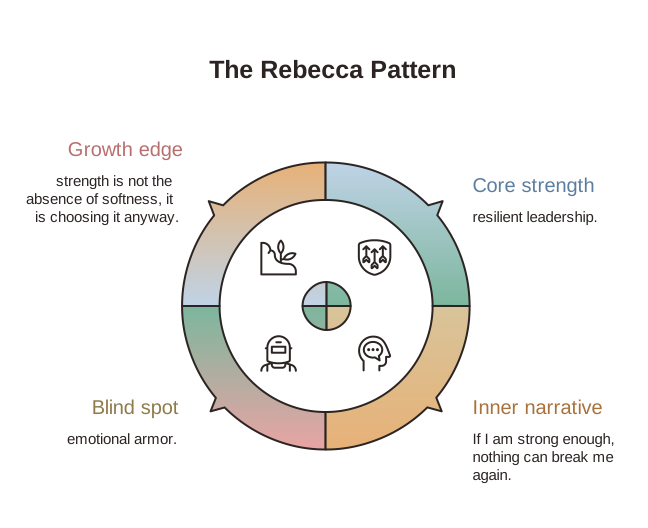
"If I'm strong enough, nothing can break me again." You guard vulnerability, use authority as protection, and fear being hurt again.
Patterns: Guarding vulnerability, using authority as protection, fear of being hurt again.
Growth edge: Strength isn't the absence of softness. It's choosing it anyway.
Strength isn't the absence of softness. It's choosing it anyway.
The pattern at a glance — core strength, inner narrative, blind spot, and the growth edge.
Keeley Jones
Coping style: Relational caretaking
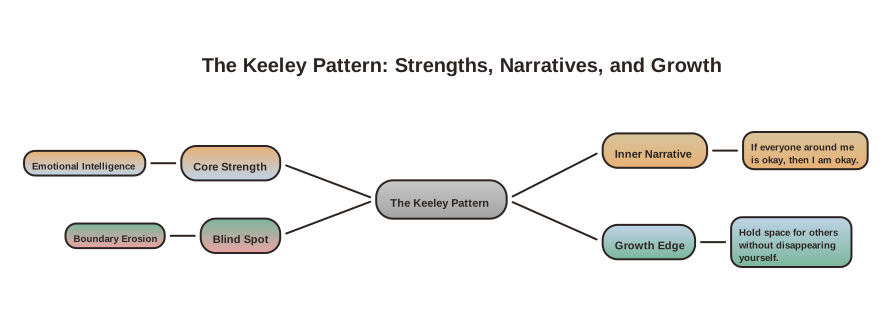
"If everyone around me is okay, then I'm okay." You prioritize others' emotions, lose yourself in relationships, and feel guilt when setting limits.
Patterns: Prioritizing others' emotions, losing self in relationships, guilt when setting limits.
Growth edge: You can hold space for others without disappearing yourself.
You can hold space for others without disappearing yourself.
The pattern at a glance — core strength, inner narrative, blind spot, and the growth edge.
Jamie Tartt
Coping style: Performance as identity
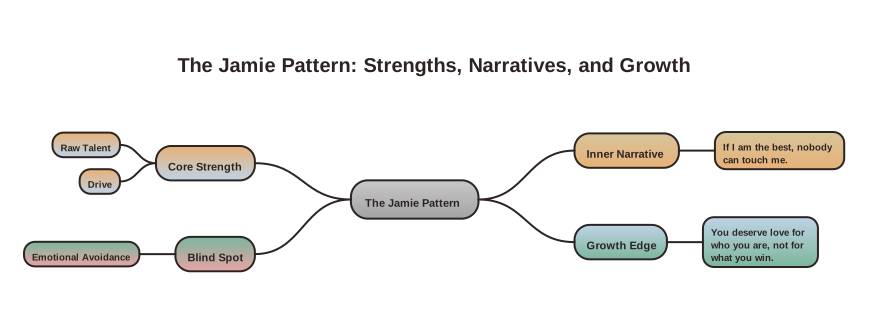
"If I'm the best, nobody can touch me." You mask vulnerability with arrogance, fear emotional intimacy, and confuse achievement with worth.
Patterns: Masking vulnerability with arrogance, fear of emotional intimacy, confusing achievement with worth.
Growth edge: Being good at something doesn't mean you don't deserve to be loved for who you are.
Being good at something doesn't mean you don't deserve to be loved for who you are.
The pattern at a glance — core strength, inner narrative, blind spot, and the growth edge.
Nate Shelley
Coping style: Intellectual compensation
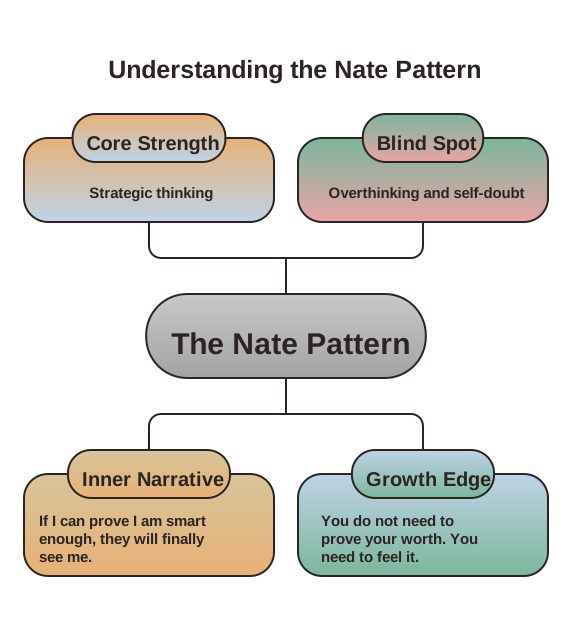
"If I can prove I'm smart enough, they'll finally see me." You seek external validation, spiral into analysis paralysis, and resent feeling unseen.
Patterns: Seeking external validation, analysis paralysis, resentment from feeling unseen.
Growth edge: You don't need to prove your worth. You need to feel it.
You don't need to prove your worth. You need to feel it.
The pattern at a glance — core strength, inner narrative, blind spot, and the growth edge.
Roy Kent
Coping style: Truth as armor
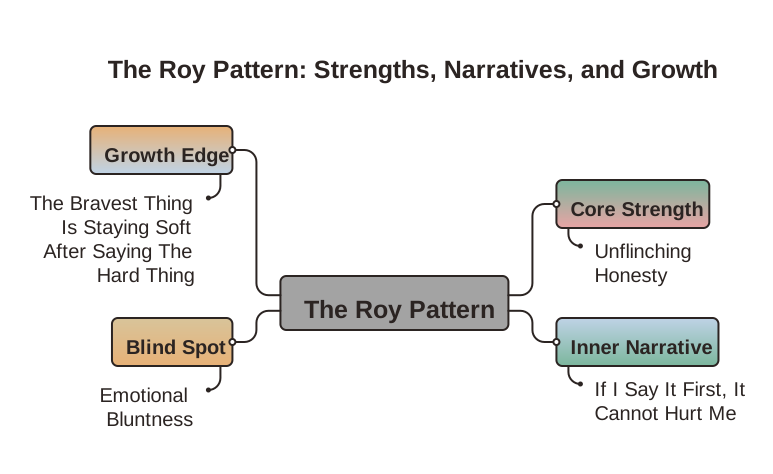
"If I say it first, it can't hurt me." You use honesty to keep distance, struggle with tenderness, and get impatient with emotional processing.
Patterns: Using honesty to keep distance, difficulty with tenderness, impatience with emotional processing.
Growth edge: The bravest thing isn't saying the hard thing. It's staying soft after.
The bravest thing isn't saying the hard thing. It's staying soft after.
The pattern at a glance — core strength, inner narrative, blind spot, and the growth edge.Frequently Asked Questions
Frequently Asked Questions
What does this Ted Lasso quiz measure?
This quiz maps your emotional responses to coping patterns including core strengths, blind spots, and growth edges — framed through familiar Ted Lasso characters.
Is this a clinical assessment?
No. This is an educational self-reflection tool inspired by CBT principles. It is not a diagnostic instrument and should not replace professional mental health support.
What if I get a tie between two characters?
A tie suggests you draw from multiple emotional coping strategies. This is healthy and indicates emotional range — not confusion.
Keep exploring
If you are in crisis or thinking about harming yourself, call or text 988 (US) or find a local line at findahelpline.com. MindLift is a self-help tool and not a replacement for professional care.