A Psychological Coping Pattern Quiz — instant results
About 5 minutes18 questions
Start with question 1 of 18
When someone gets close to you emotionally, you:
About this quiz
Which BoJack Horseman Character Are You Really?
The BoJack Horseman test is a MindLift quiz. MindLift is a software-only CBT app that helps you reframe negative self-talk; each character maps to a coping pattern and inner-critic voice, not to a diagnosis. Read more about MindLift, or start with the negative self-talk test.
A Psychological Coping Pattern Quiz — instant results
This isn't about aesthetics. It's about your core defense mechanism, your attachment wound, your shame response, and your inner voice narrative.
Choose the answer that feels most instinctive, not most flattering.
Six characters, six core wounds — the quiz maps which pattern is yours.How does this quiz work?
How does this quiz work?
Answer 18 questions about how you usually react, not how you would like to. About 5 minutes is the usual time to finish, there are no right answers, and Which BoJack Horseman Character Are You Really? scores your result on your device — free, no email, no signup.
When someone gets close to you emotionally, you:
Expect them to leave eventually
Analyze whether it's healthy
Take care of them instead
Distract from seriousness
Keep things light
Crave intensity but fear boredom
Your dominant emotional pattern:
Shame
Existential dissatisfaction
Responsibility overload
Restlessness
Optimistic denial
Emotional volatility
When you fail, your inner voice says:
"You ruin everything."
"What does this say about who I am?"
"Fix it immediately."
"Change the plan."
"It's fine, it'll pass."
"Nothing matters anyway."
You secretly believe:
You are fundamentally flawed
You must understand everything to be safe
You are only valuable when useful
You can reinvent yourself anytime
People will like you if you stay positive
Intensity equals meaning
In conflict, you:
Self-sabotage
Debate morally
Over-function
Escape
Deflect with humor
Escalate emotionally
Your attachment style most resembles:
Fearful-avoidant
Anxious-intellectual
Anxious-responsible
Avoidant-playful
Secure-appearing
Disorganized-intense
You struggle most with:
Self-worth
Purpose
Delegating
Consistency
Depth
Stability
When alone, your thoughts tend to:
Replay regrets
Spiral philosophically
Plan logistics
Wander creatively
Minimize problems
Drift toward emptiness
You cope with pain by:
Numbing
Writing / thinking
Working
Starting something new
Staying cheerful
Seeking stimulation
Your fear is:
Being exposed
Being meaningless
Losing control
Being trapped
Being disliked
Being forgotten
When praised, you:
Distrust it
Question it
Move on
Laugh
Accept it warmly
Crave more
You feel most powerful when:
Someone forgives you
You understand a hard truth
You manage chaos
You break a pattern
You uplift someone
You're admired
Your shadow belief:
"I am broken."
"Nothing is enough."
"If I stop, everything collapses."
"Commitment limits me."
"Conflict ruins connection."
"I need intensity to feel alive."
In love, you:
Fear abandonment
Overthink compatibility
Caretake
Keep exits open
Stay upbeat
Become consumed
When triggered, you:
Withdraw or implode
Overanalyze
Control
Escape
Smooth it over
React intensely
You relate most to:
Redemption arcs
Moral gray areas
Hustle culture
Side quests
Golden retriever energy
Fame & tragedy
Your deepest need:
Acceptance
Meaning
Stability
Freedom
Harmony
Recognition
If someone truly saw you, you'd hope they'd see:
Your pain
Your mind
Your effort
Your potential
Your heart
Your brilliance
What results can you get?
What results can you get?
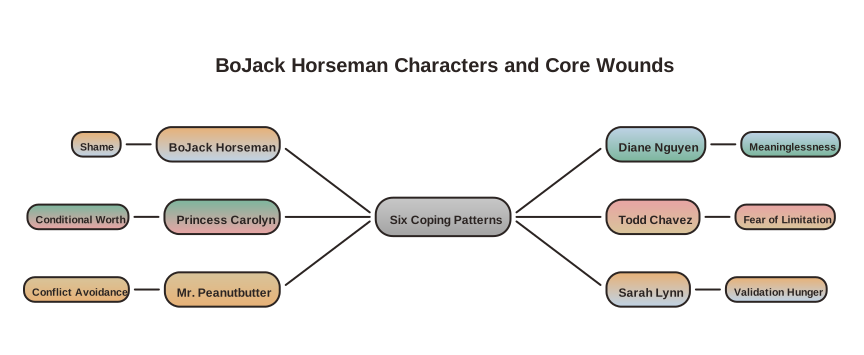
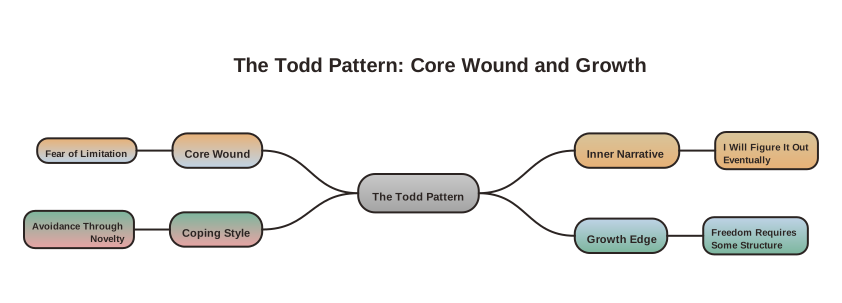
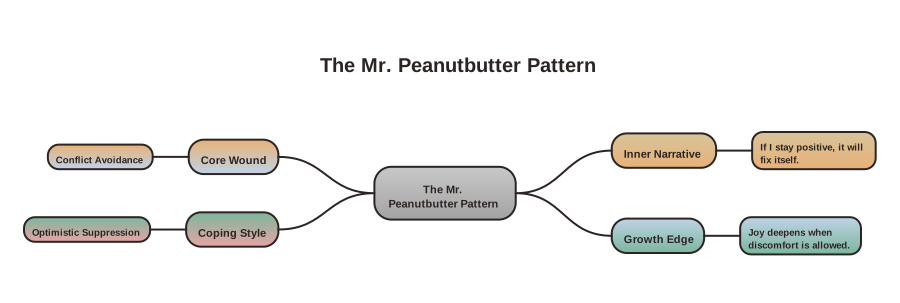
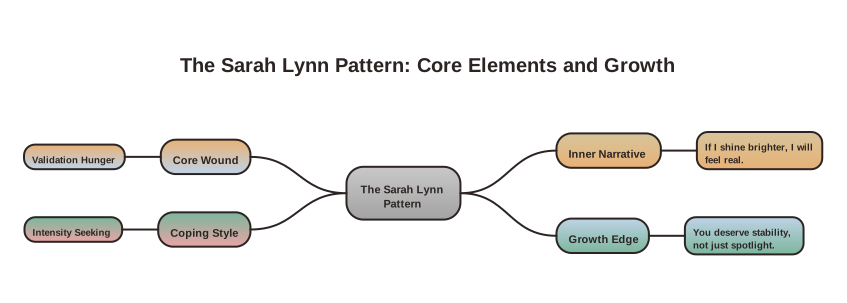
Your answers sort you into one of 6 results — BoJack Horseman, Diane Nguyen, Princess Carolyn, Todd Chavez, Mr. Peanutbutter, Sarah Lynn. Each result comes with a description of its thinking pattern and one growth move you can practise this week, plus the answer mix that produced it.
Result
Who gets it
What it looks like
BoJack Horseman
Majority a answers
Core wound: Shame
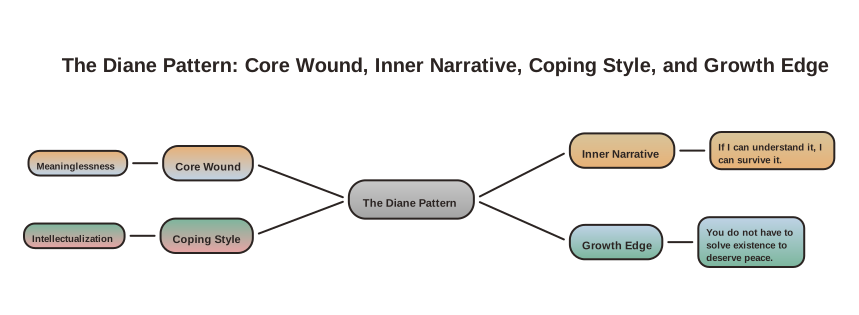
Diane Nguyen
Majority b answers
Core wound: Meaninglessness
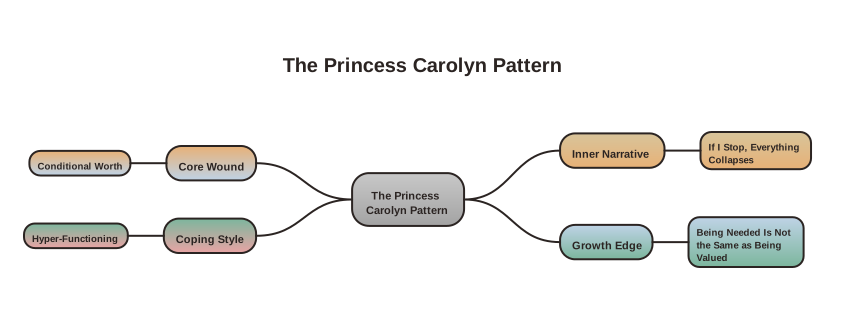
Princess Carolyn
Majority c answers
Core wound: Conditional worth
Todd Chavez
Majority d answers
Core wound: Fear of limitation
Mr. Peanutbutter
Majority e answers
Core wound: Conflict avoidance
Sarah Lynn
Majority f answers
Core wound: Validation hunger
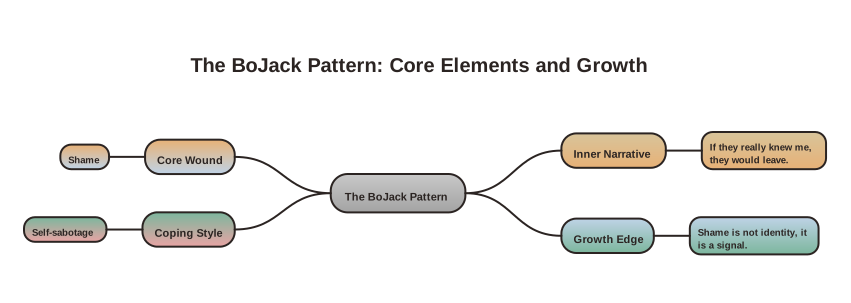
BoJack Horseman
Core wound: Shame
"If they really knew me, they'd leave." Your coping style: Self-sabotage. Attachment: Fearful-avoidant.
This quiz maps your instinctive responses to psychological coping patterns including core wounds, defense mechanisms, attachment styles, and cognitive distortion tendencies — framed through familiar BoJack Horseman characters.
Is this a clinical assessment?
No. This is an educational self-reflection tool inspired by CBT principles. It is not a diagnostic instrument and should not replace professional mental health support.
What if I get a tie between two characters?
A tie suggests you oscillate between two coping strategies. This is common and can indicate complexity in your emotional patterns — not a flaw.
Which BoJack Horseman character are you?
The BoJack Horseman test matches you to one of six characters — BoJack, Diane, Princess Carolyn, Todd, Mr. Peanutbutter, or Sarah Lynn — based on your instinctive responses. Each character maps to a distinct coping pattern, core wound, and attachment style.
Is the BoJack Horseman test free?
Yes — the test is free. No signup, no email, no paywall. You answer 18 quick questions and get your character match plus what it reveals about your coping pattern instantly.
Keep exploring
If you are in crisis or thinking about harming yourself, call or text 988 (US) or find a local line at findahelpline.com. MindLift is a self-help tool and not a replacement for professional care.