
Turn this into a daily habit — free to start in the MindLift app:
You looked in the mirror, saw a slightly puffy face,
and TikTok told you it's a hormone emergency.
Welcome to the "cortisol face" era — where a normal Tuesday-morning face is diagnosed as endocrine dysfunction, and the cure is conveniently available in someone's storefront link.
Here's what's true, what's marketing, and what chronic stress actually does to your body — because that part is real, it's just not visible in your cheekbones.
The kernel of truth behind the trend
"Cortisol face" borrows from a genuine medical phenomenon. In Cushing's syndrome — a rare condition where the body produces extreme amounts of cortisol, often from a tumor or long-term steroid medication — facial rounding ("moon face") is a classic sign.
But that's cortisol at pathological, medically dramatic levels, sustained for months. The cortisol fluctuations of a stressful job, a bad breakup, or doomscrolling do not do this. Your face after a rough week is puffy because of sleep position, salt, alcohol, allergies, hormones cycling normally — or because faces are just puffier in the morning. That's fluid, not fate.
The trend works because it does what health misinformation always does: takes a real term, attaches it to a universal insecurity, and sells the reversal.
What cortisol actually is (hint: not a toxin)
Cortisol is not your enemy. It's the hormone that wakes you up in the morning, mobilizes energy, regulates inflammation, and helps you rise to a challenge. It follows a daily rhythm — highest shortly after waking, tapering through the day — and your body regulates it constantly.
You cannot "detox" cortisol any more than you can detox insulin. The adrenal cocktails, the supplements, the seed-oil-free protocols — none of them have evidence of meaningfully lowering cortisol in healthy people. What they reliably lower is your bank balance.
What chronic stress really does — the part worth taking seriously
Dismissing "cortisol face" doesn't mean dismissing stress. When your threat response stays switched on for weeks — real deadline, imagined catastrophe, your brain doesn't care — chronically elevated stress hormones genuinely affect you:
- Sleep fragments. You fall asleep exhausted and snap awake at 3am, wired. Cortisol's rhythm has shifted.
- Thinking narrows. Elevated stress hormones dampen prefrontal function — the planning, perspective-taking part — while the amygdala's threat detection gets louder. You literally problem-solve worse while feeling more endangered.
- Rumination accelerates. And here's the loop: each rerun of the stressful thought triggers another cortisol release, as if the event were happening again. Your body can't tell the difference between a threat and a vividly replayed one.
- Immunity dips. You catch everything going around.
- Mood flattens. Chronic activation is metabolically expensive; the fatigue and irritability are the bill.
Notice what's on that list — and what isn't. The real costs of chronic stress show up in your sleep, focus, immunity, and mood long before anything shows up in a mirror.
The plot twist: the biggest cortisol trigger is thoughts
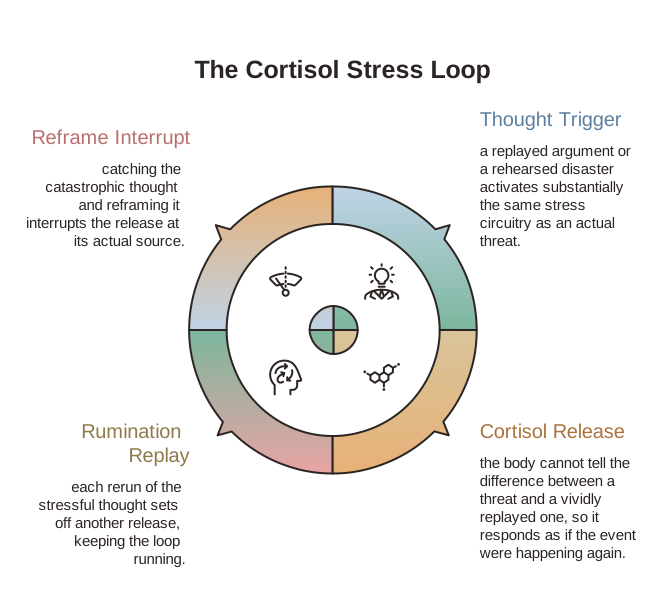
Here's the part the detox crowd never mentions. For most people, the majority of daily stress responses aren't triggered by events. They're triggered by thoughts about events — the replayed argument, the rehearsed disaster, the 2am "what if."
Brain imaging shows that imagined threats activate substantially the same stress circuitry as real ones. Which means the most direct lever on your stress physiology isn't a supplement. It's changing how you respond to your own thinking — exactly what cognitive behavioral techniques are built for.
When you catch a catastrophic thought and reframe it before it spirals, you're not doing "positive thinking." You're interrupting a cortisol release at its actual source.
What actually lowers stress load (boring, free, evidence-backed)
- Consistent sleep and wake times. Cortisol runs on circadian rhythm; erratic sleep is erratic cortisol. This is the single highest-leverage fix.
- Morning daylight. Ten minutes outside anchors the rhythm.
- Moderate, regular movement. Walks, strength training, anything sustainable. (Punishing overtraining can push stress hormones the wrong way.)
- Slow breathing. Extended exhales activate the parasympathetic brake — measurable within minutes, costs nothing.
- Less caffeine and alcohol. Both distort the cortisol curve; alcohol especially wrecks the 3am window.
- Actual connection. Co-regulation with people you feel safe with is one of the oldest stress buffers we have.
- Cognitive reframing. Fewer repetitive threat-thoughts, fewer unnecessary stress responses. This is trainable, like a muscle.
A note on health anxiety — because the trend runs on it
There's an irony at the center of "cortisol face": worrying that your face reveals a stress problem is itself a stress response. Scanning your body for evidence of dysfunction, comparing your morning face to filtered ones, spiraling about your hormones — that loop raises the very arousal it claims to detect.
If your mind tends to grab health worries and run, the skill isn't more monitoring. It's learning to notice the thought — "my face looks off, something's wrong with me" — label it as a thought, and check the evidence before your body treats it as an emergency.
Want to see where your stress is actually coming from? Take the free Am I Burnt Out? quiz — it looks at the patterns behind the exhaustion, not your reflection.
Your face is fine. Your stress might not be. Spend your attention where the evidence is.
Frequently asked questions
Is cortisol face real?
Mostly no — not the way TikTok presents it. True cortisol-driven facial rounding ('moon face') occurs in Cushing's syndrome, a rare medical condition involving extremely elevated cortisol, or with long-term steroid medication. Everyday stress does not reshape your face. Morning puffiness is usually sleep position, salt, alcohol, allergies, or normal fluid shifts — not a hormone crisis.
How do I know if my cortisol is actually high?
Reliable signs of chronically elevated stress hormones are behavioral and physical patterns over weeks: disrupted sleep, waking at 3–4am wired, constant low-grade anxiety, difficulty concentrating, getting sick more often, and feeling tired but unable to relax. The only accurate way to measure cortisol is medical testing ordered by a doctor — not an at-home guess based on your face.
Do cortisol detoxes, supplements, or 'cortisol cocktails' work?
There is no evidence that 'cortisol detox' drinks, adrenal cocktails, or most cortisol-lowering supplements meaningfully change cortisol in healthy people. Cortisol isn't a toxin to flush — it's an essential hormone your body regulates continuously. The interventions with real evidence are unglamorous: sleep, regular movement, reduced stimulants, social connection, and changing your relationship with stressful thoughts.
How can I lower cortisol naturally?
Evidence-backed levers: consistent sleep and wake times; regular moderate exercise (intense overtraining can raise cortisol); slow breathing practices that activate the parasympathetic nervous system; daylight in the morning; limiting caffeine and alcohol; and cognitive techniques like CBT reframing, which reduce the repetitive threat-thoughts that keep triggering cortisol release in the first place.
Like what you're reading?
Continue your wellness journey
Reframe negative thoughts in 60 seconds — free to start in the MindLift app.


Free to start · no account required
Mental Wellness Writers
The MindLift Wellness Team writes evidence-based content on CBT, self-talk, and everyday mental health tools.
Was this article helpful?