
Turn this into a daily habit — free to start in the MindLift app:
What is stress and how do you reduce it?
Stress is the body's response to perceived demands — shaped not just by the situation but by how you interpret it. It shows up physically (tension, fatigue), emotionally (irritability, overwhelm), cognitively (racing thoughts), and behaviorally (avoidance). The most effective ways to reduce stress work on both the nervous system (breathing, exercise) and the cognitive layer (CBT-based thought reframing).
Key Takeaways
- Stress = Situation + Interpretation + Response — the interpretation is where CBT intervenes
- Stress has four symptom domains: physical, emotional, cognitive, and behavioral
- Cognitive distortions (catastrophizing, 'should' thinking, all-or-nothing) amplify stress beyond the actual situation
- Cognitive restructuring — challenging the stress-driving thought — is the most evidence-based intervention
- Slow breathing can ease physical tension within minutes; the effect is physiological, not motivational
- Behavioral activation breaks the avoidance loop that makes stress compound over time
- Small daily CBT practices compound — 5 minutes of reframing practice beats occasional hour-long sessions
What Is Stress?
Stress is the body's natural response to perceived demands or threats. It activates a survival system often called the fight-or-flight response — releasing cortisol and adrenaline to prepare you to act quickly.
But from a Cognitive Behavioral Therapy (CBT) perspective, stress is not just caused by situations. It's shaped by how you interpret them. Thoughts, emotions, physical sensations, and behaviors are linked in a tight feedback loop — each influencing the others.
The CBT model puts it simply: Stress = Situation + Interpretation + Response. A deadline paired with the thought "I'll fail" produces anxiety, avoidance, and paralysis. The same deadline paired with "I can handle this step by step" produces manageable pressure and action.
The situation is identical. The response is completely different. This is why stress management isn't just about removing stressors — it's about changing how your mind processes them.
Causes of Stress
Stress is rarely caused by one thing. It's more like a crowded control room where multiple levers get pulled at once. Causes fall into two broad categories: external pressures and internal psychological patterns.
External causes
- Work pressure or deadlines
- Financial problems
- Relationship conflicts
- Major life changes (moving, loss, career shifts)
- Health concerns (yours or someone close)
Internal (psychological) causes
- Cognitive distortions — catastrophizing, all-or-nothing thinking, overthinking
- Perfectionism and "should" thinking
- Negative self-talk and inner criticism
- Fear of uncertainty or losing control
- Avoidance habits that let problems compound
Stress often intensifies not because of reality itself, but because the mind starts writing disaster scripts in advance. A difficult meeting becomes "I'll be humiliated." A bill becomes "We'll lose everything." This is where CBT-based stress management intervenes most effectively.
Symptoms of Stress
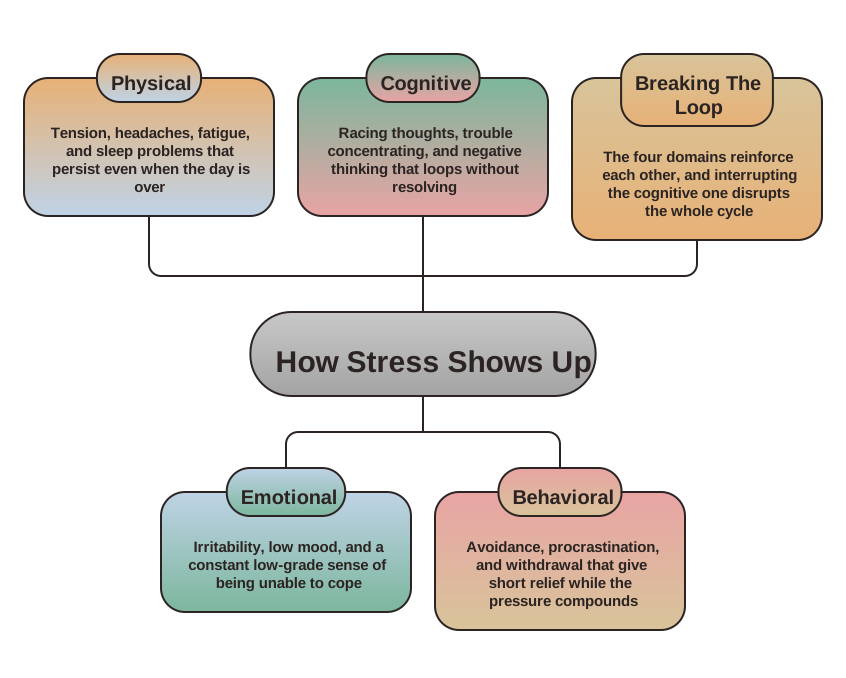
Stress shows up like a shape-shifter — it can wear physical, emotional, cognitive, or behavioral masks. Many people notice only one or two symptom types, which is why stress often goes unrecognized until it compounds.
Physical symptoms
- Headaches, muscle tension or jaw clenching
- Fatigue or low energy despite adequate sleep
- Sleep problems (trouble falling or staying asleep)
- Rapid heartbeat, chest tightness
- Digestive issues (nausea, stomach upset)
Emotional symptoms
- Anxiety or constant low-grade dread
- Irritability — small things feel disproportionately big
- Feeling overwhelmed or unable to cope
- Low mood or emotional flatness
- Difficulty feeling enjoyment (anhedonia)
Cognitive symptoms
- Racing thoughts that won't quiet down
- Difficulty concentrating or finishing tasks
- Negative thinking patterns on loop
- Memory lapses or forgetfulness
- Indecisiveness — even small choices feel hard
Behavioral symptoms
- Avoidance — putting off what needs to happen
- Procrastination that deepens the stress spiral
- Changes in eating (overeating or undereating)
- Increased use of alcohol, nicotine, or caffeine
- Social withdrawal from people who could help
CBT insight: these four symptom types reinforce each other in a loop. Anxious thoughts → emotional overwhelm → avoidance behavior → physical tension → more anxious thoughts. Breaking the loop at any point — especially the cognitive one — disrupts the whole cycle.
How to Reduce Stress: 6 Evidence-Based Methods
Think of stress reduction less like "turning off a switch" and more like adjusting a system. Small changes, repeated consistently, reshape how your brain responds to pressure over time.
1. Cognitive restructuring — the CBT core skill
Cognitive restructuring means catching and challenging the automatic negative thought that's driving the stress. It's one of the most evidence-based interventions for stress and anxiety.
The CBT challenge sequence:
- Name the automatic thought: "This will go terribly."
- Ask: "What evidence supports this? What contradicts it?"
- Replace with a balanced alternative: "I've handled difficult things before. I can get through this."
This breaks the cognitive distortions — catastrophizing, fortune-telling, all-or-nothing thinking — that fuel stress.
2. Behavioral activation — act first, feel better second
When stressed, people withdraw. They put off the email, avoid the conversation, delay the task. This short-term relief creates long-term pressure buildup.
Behavioral activation flips this: take small, concrete actions before you feel ready. Re-engage with tasks gradually. Action reduces stress faster than thinking about action — because the anticipatory dread often exceeds the actual difficulty.
Try this: break one avoided task into the smallest possible first step. Not "write the report" — "open the document and write one sentence." Then stop. The spiral breaks.
3. Mindfulness and attention training
Mindfulness trains your attention to stay in the present moment rather than chasing past regrets or future catastrophes. Crucially, it teaches you to observe thoughts without becoming attached to them — "I'm having the thought that this will fail" rather than "this will fail."
This reduces overthinking loops and improves emotional regulation. Start with 5 minutes daily — in studies of healthy adults, structured mindfulness programs running over several weeks have been linked to lower stress.
4. Self-talk adjustment
Your inner voice matters more than you think. Self-talk influences emotional and behavioral regulation — the way you narrate your situation shapes how your nervous system responds to it.
Stress-amplifying self-talk sounds like "I can't handle this. It's too much. I always mess up under pressure." Stress-reducing self-talk sounds like "This is hard, but I can take one step at a time. I've navigated difficulty before."
This isn't toxic positivity — it's finding a believable alternative to the catastrophic narrative. The reframe has to be honest, not forced.
5. Nervous system regulation
Stress lives in the body as much as the mind. Calming the body creates a window for the mind to follow.
- Deep breathing (box breathing): 4 counts in → 4 hold → 4 out → 4 hold. Activates the parasympathetic nervous system and can noticeably ease physical tension within minutes.
- Physical exercise: even a short session of moderate movement may help you feel less stressed afterward. The intensity matters less than the consistency.
- Sleep hygiene: chronic stress disrupts sleep; poor sleep amplifies stress. Treating sleep as a priority, not a reward, breaks this cycle.
6. Structured problem-solving
Vague worry ("what if everything falls apart?") is far more stressful than concrete problem-solving. CBT emphasizes structured problem-solving to reduce the helplessness that feeds stress.
The structured problem-solving sequence:
- Define the actual problem — specifically, not vaguely
- Generate possible solutions (even imperfect ones)
- Pick the most viable one and take the first action
- Reassess once you've acted — most problems are smaller after one step
Tools & Apps for Stress Management
Digital tools can reinforce stress management habits — particularly when the stress hits in a moment when you don't have access to a therapist, a support person, or time for a full session.
MindLift — AI CBT Mindset Coach
MindLift targets the cognitive layer of stress — the specific thoughts that amplify it. When you describe a stressful thought, MindLift identifies the cognitive distortion (catastrophizing, all-or-nothing thinking, "should" statements) and provides a personalized, believable CBT-based reframe in about 60 seconds.
- Quick stress relief: a fast Mini-Reframe when the spiral starts
- Thought reframing: AI-personalized to your exact situation, not generic
- Self-talk habits: builds healthier inner dialogue over time
Free to start — iOS & Android. Premium available for additional features.
Other tools worth pairing it with
- Meditation apps — for mindfulness training and present-moment awareness; best for building baseline resilience (Calm, Headspace).
- Journaling apps — to track thoughts and patterns, identify recurring stressors, and build self-awareness over time.
- Habit trackers — to reinforce stress-reducing behaviors like sleep, exercise, and breathing practice with visual streaks.
The Bottom Line
Stress is not just pressure from the outside — it's the interaction between your mind and that pressure. When you shift how you think (cognitive restructuring), how you respond (behavioral activation), and how you act (structured problem-solving), you don't just reduce stress in the moment. You retrain your brain to handle future stress differently.
Frequently asked questions
What is stress?
Stress is the body's natural response to perceived demands or threats. From a CBT perspective, stress is not just caused by situations — it's shaped by how we interpret them. The formula: Stress = Situation + Interpretation + Response. The same deadline can feel catastrophic or manageable depending on the thought attached to it.
What are the main causes of stress?
Stress has both external causes (work pressure, financial problems, relationship conflicts, major life changes) and internal psychological causes (cognitive distortions like catastrophizing, perfectionism, negative self-talk, and fear of uncertainty). Often it's the internal interpretation that amplifies the external pressure.
What are the symptoms of stress?
Stress shows up across four domains: physical (headaches, muscle tension, fatigue, sleep problems, rapid heartbeat), emotional (anxiety, irritability, feeling overwhelmed, low mood), cognitive (racing thoughts, difficulty concentrating, negative thinking), and behavioral (avoidance, procrastination, overeating, increased alcohol or nicotine use).
How do you reduce stress quickly?
The fastest evidence-based stress reduction comes from two sources: nervous system regulation (deep breathing, particularly box breathing — 4 counts in, 4 hold, 4 out, 4 hold — can produce a calming effect within minutes) and cognitive restructuring (challenging the specific thought driving the stress, e.g., 'What evidence supports this catastrophic outcome?'). Both can be done in under 60 seconds.
Can an app help with stress management?
Yes. CBT-based apps like MindLift help by targeting the cognitive component of stress — the thoughts that amplify it. When you describe a stressful thought, MindLift identifies the cognitive distortion (e.g., catastrophizing, all-or-nothing thinking) and provides a personalized, believable reframe. This is the same skill taught in cognitive behavioral therapy, made available in 60 seconds.
What is the difference between stress and anxiety?
Stress is typically triggered by an external situation (a deadline, a conflict, a bill). Anxiety is a more persistent state that can occur without a clear trigger — it's the anticipation of future threats, often driven by 'what if' thinking. The two overlap significantly: chronic stress can develop into anxiety disorders, and both respond well to CBT-based cognitive reframing.
Like what you're reading?
Continue your wellness journey
Reframe negative thoughts in 60 seconds — free to start in the MindLift app.


Free to start · premium optional