Turn this into a daily habit — free to start in the MindLift app:
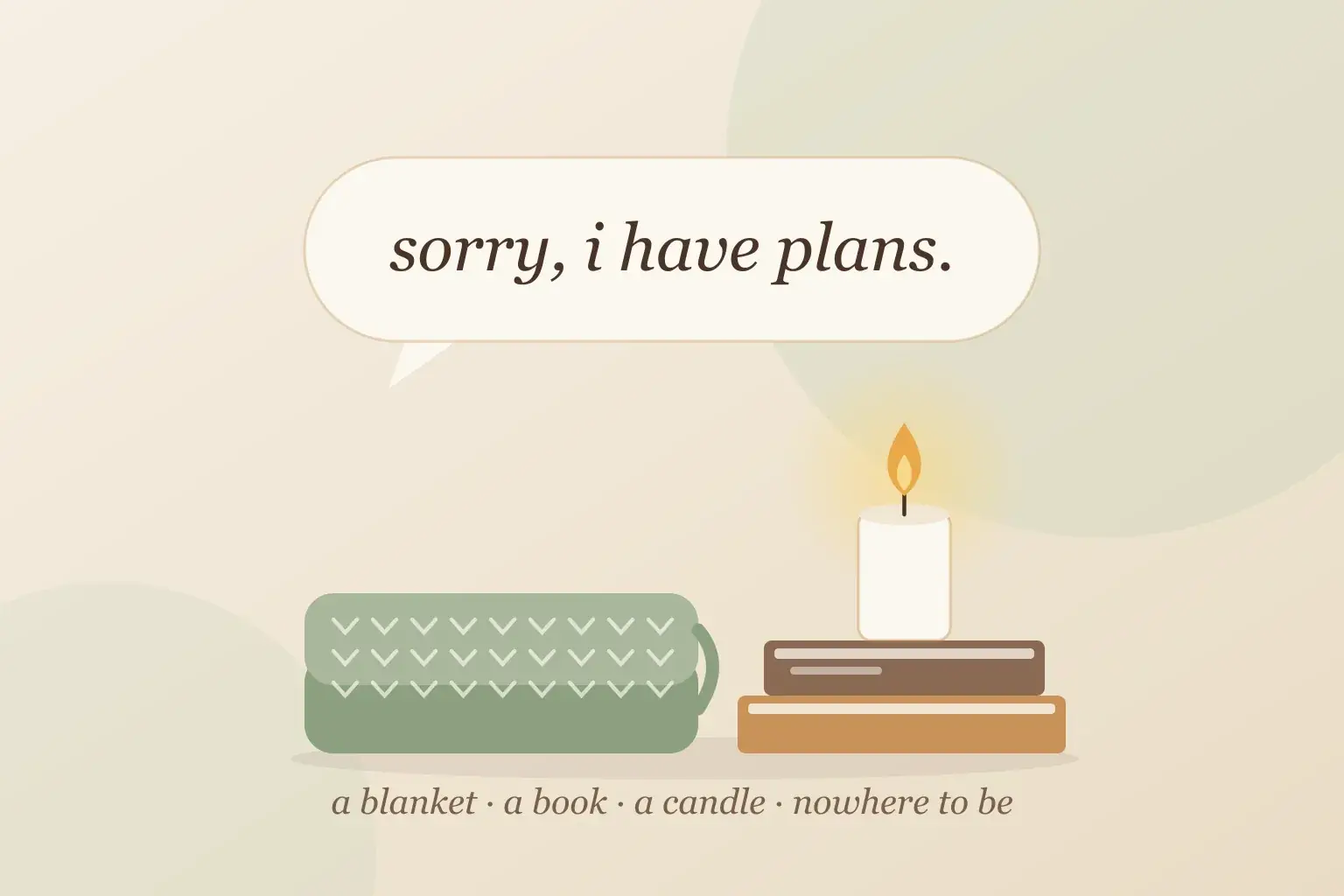
“sorry i have plans.”
The plans: a blanket, a book you’ve been meaning to finish, a candle that smells like autumn, and absolutely nowhere to be.
For about forty minutes, it’s perfect. Then you pick up your phone “just to check something,” and there it is: a story from a rooftop dinner. A group photo you weren’t in. Someone’s spontaneous weekend trip. Someone else’s very productive Saturday.
And just like that, the cozy night that felt like a choice starts to feel like evidence. Everyone’s out living their lives. What am I doing?
That flip, from joy to doubt in a single swipe, is the space between JOMO and FOMO. This article explains why it happens so fast, why comparison is so convincing, and how to use simple CBT reframes to keep your night in feeling like yours.
JOMO vs. FOMO: what’s the difference?
FOMO, the fear of missing out, is the uneasy sense that other people are having more rewarding experiences than you are, right now, without you. Researchers studying it describe two parts: worrying that you’re missing something good, and a strong urge to stay connected so you don’t.
JOMO, the joy of missing out, is the opposite stance. It’s the genuine pleasure of choosing not to be somewhere, because where you are is exactly what you need.
Here’s the interesting part: the situation is often identical. Same Friday night, same couch, same book. The difference isn’t what you’re doing. It’s the story you’re telling yourself about what you’re doing.
FOMO story
- “I’m home because I’m boring / left out / not as fun as everyone else.”
JOMO story
- “I’m home because I wanted to be. This is restful, and it’s enough.”
Which means the shift from FOMO to JOMO isn’t about changing your plans. It’s about changing your interpretation, which is exactly what CBT is designed to help with.
Why one scroll can ruin a perfect night in
Your brain is wired to compare
Back in the 1950s, psychologist Leon Festinger proposed social comparison theory: the idea that people naturally evaluate themselves by measuring against others, especially when there’s no clear standard to go by. “Am I doing okay?” is a hard question to answer on its own, so the brain looks sideways for a reference point.
There’s nothing broken about this. Comparison helped our ancestors learn skills and fit into groups. The problem is what we’re comparing against now.
You’re comparing your full life to their best fifteen seconds
Stories and feeds are highlight reels. People rarely post the cancelled plans, the awkward silences at dinner, the hangover, or the fight in the car on the way home. You see the best angle of the best moment of their night.
Meanwhile, you’re judging your night from the inside, with full access to every unglamorous detail: the pyjamas, the unwashed hair, the fact that you reread the same page three times.
That’s not a fair comparison. It’s your behind-the-scenes against their trailer. Research on social media use suggests that this kind of upward comparison (measuring yourself against people who seem to be doing better) is linked to lower mood and self-esteem.
Your brain fills in the gaps, unkindly
A photo shows a moment. It doesn’t show what people are feeling, whether they’re having fun, or whether they’d secretly rather be home. Your mind fills in those blanks, and if you’re an overthinker, it rarely fills them in your favour.
You see a group dinner and your brain supplies: They’re all closer than I am with anyone. They didn’t invite me. I’m missing the real stuff. None of that is in the picture. All of it feels true.
The thinking traps behind the comparison spiral
CBT calls these automatic, slanted interpretations cognitive distortions. They’re not signs that something’s wrong with you. Everyone has them. But they’re especially loud during the comparison spiral. Here are the four that show up most:
A calm, chosen evening
- 1. Mind readingAssuming you know what others think or feel. “They’re having the best night of their lives.” / “They didn’t invite me because they don’t really like me.”
- 2. Discounting the positiveDismissing what’s good about your own experience. “Sure, I’m comfy, but it doesn’t count. It’s just sitting at home.”
- 3. All-or-nothing thinkingSeeing things in extremes. “Everyone is out. I’m the only one who never does anything.”
- 4. “Should” statementsRigid rules about how life is supposed to look. “At my age I should be out every weekend.” / “I should be more social.”
Notice how each one takes a calm, chosen evening and turns it into a verdict about your worth.
In MindLift: the This week’s reframes card on your Home Screen names your Top Pattern: the thinking trap that shows up most often in the thoughts you reframe. Knowing your pattern makes it much faster to catch.
How to reframe the comparison spiral (in under five minutes)
You don’t have to delete your apps or never look at a story again. You just need a way to interrupt the spiral when it starts. Here’s a simple four-step reframe you can do from the couch.
- Catch the exact thoughtWhat did I just tell myself?
- Name the trapWhich distortion fits?
- Check what you actually knowSeparate what’s in the picture from what your brain added.
- Write a balanced versionMy night doesn’t have to look like theirs to be a good one.
Step 1: Catch the exact thought
When the sinking feeling hits, pause and ask: “What did I just tell myself?” Write it down word for word.
“Everyone else is out having fun and I’m wasting my weekend.”
Step 2: Name the trap
Look at the list above. Which distortion fits? Here, it’s a mix of all-or-nothing (“everyone”) and discounting the positive (“wasting”).
Naming it creates distance. It’s no longer “the truth.” It’s “a mind-reading thought.”
Step 3: Check what you actually know
Separate what’s in the picture from what your brain added:
- What I know: Three people I follow posted stories from going out.
- What I don’t know: How they feel, whether they’re enjoying it, what the other 200 people I follow are doing (probably a lot of them are at home too).
- What’s true about my night: I chose this. I was enjoying it ten minutes ago. I’m tired, and I needed rest.
Step 4: Write a balanced version
“A few people are out tonight, and that looks fun for them. I chose a quiet night because I needed one, and it was genuinely nice until I started comparing. My night doesn’t have to look like theirs to be a good one.”
That’s it. You haven’t lied to yourself or pretended you never want to go out. You’ve just taken the comparison out of the driver’s seat.
In MindLift: the Mini-Reframe walks you through these same moves: type the thought exactly as it sounds, see the distortion named, check what the evidence actually supports, and land on a balanced version in your own words, in about 60 seconds. No blank page, no guessing which question to ask next.
Three comparison thoughts, reframed
Save the one that sounds most like you.
1. “Everyone’s life is more exciting than mine.”
Reframe: “I’m seeing a few edited moments from a few people. My life has its own good parts, and they just aren’t the kind that get posted.”
2. “I’m so boring for staying in again.”
Reframe: “Choosing rest isn’t boring. It’s knowing what I need. People who love a quiet night are some of the most interesting people I know.”
3. “They didn’t invite me, so they must not care about me.”
Reframe: “I don’t know why I wasn’t invited, and there are a dozen possible reasons that have nothing to do with how much they like me. If it matters to me, I can reach out and make a plan myself.”
Turn comparison into self-compassion
Reframing works best when the voice doing it is kind. If your inner commentary sounds like a critic (“You’re pathetic for being jealous of a story”), the spiral just changes shape. You stop comparing and start judging yourself for comparing.
Try talking to yourself the way you’d talk to a friend who texted you the same feeling: “Of course that stung, you’re human. You were having a lovely night. Want to put the phone down and get back to your book?”
Short, grounded phrases can help here, especially in the moment when you don’t have energy for a full reframe. A few examples of the kind of lines that work:
- “Their highlight reel isn’t my measuring stick.”
- “I’m allowed to love a quiet life.”
- “Someone else’s good night doesn’t make mine smaller.”
In MindLift: affirmations are short, CBT-informed lines tied to the goal you choose, written to be believable rather than toxic positivity. A new one appears on your Home Screen each day. Tap the heart to save the ones that land to your Favorites, so they’re ready the next time a story knocks you off balance.
Building real JOMO: a cozy night-in ritual
JOMO isn’t just the absence of FOMO. It grows when staying in feels intentional. A few small habits make a big difference:
Decide before you start. Say it to yourself, or even out loud: “Tonight I’m staying in because I want to.” Choosing on purpose makes the evening feel like a plan, not a default. (Yes, “sorry, I have plans” counts.)
Set a scroll boundary. You don’t have to quit your phone. Just pick a window (“I’ll check messages at 9”) and leave the stories alone outside it. Most comparison spirals start with an unplanned swipe.
Make the space feel good. Light the candle. Make the tea. Choose the book. These small sensory cues tell your nervous system that this is rest, not exile.
End with one reframe. Before bed, notice whether any comparison thoughts showed up, and give one of them a balanced answer. It takes two minutes and stops the thought from following you into tomorrow. (Mornings are loud too: here’s the morning version of the reframe, built around your first coffee.)
Track the shift. Over a few weeks, you’ll start to notice the spiral is shorter, quieter, and easier to catch.
In MindLift: the This week’s reframes chart shows how many thoughts you’ve reframed each day, so you can actually see the habit building week by week.
Your plans tonight
Staying in was never the problem. The comparison was. With a few reframes, a kinder inner voice, and a little practice, your night in can go back to being what it was supposed to be: yours.
MindLift is a CBT-based coaching app for overthinkers. It helps you catch the thoughts that drain you, spot your thinking traps, and reframe them in about 60 seconds, with affirmations and insights that make the habit stick.
Download MindLift and make your next night in a real one. Free to start, on iOS 15+, Android 8+ and the web.
If comparison or low mood is affecting your daily life, consider talking to a mental health professional. MindLift is a self-help tool and not a substitute for professional care.
Frequently asked questions
What does JOMO mean?
JOMO stands for "joy of missing out": the genuine pleasure of choosing not to take part in something, because you'd rather rest, recharge, or do something that fits you better. It's often described as the healthy opposite of FOMO.
Is FOMO a sign of anxiety?
FOMO is a common experience, not a diagnosis. But it often overlaps with anxiety, especially worry about being left out or judged. If FOMO regularly leaves you feeling low or stops you from enjoying your own life, CBT techniques like reframing can help.
How do I stop comparing myself to others on social media?
Start by catching the specific thought behind the comparison, naming the thinking trap (like mind reading or all-or-nothing thinking), and writing a more balanced version. Practical boundaries, like set check-in times or muting accounts that consistently make you feel worse, also make a real difference.
Is it bad to stay in every weekend?
Not if it's what you genuinely want. Rest is a legitimate need. It's worth checking in with yourself, though: if you're staying in to avoid something (like fear of judgement or awkwardness) rather than because you're choosing rest, that may be worth gently exploring.
Can affirmations really help with comparison?
On their own, affirmations aren't a magic fix. But short, believable, specific phrases can be a useful support, especially paired with reframing. They work best when they sound like something a kind friend would actually say, not over-the-top positivity.
Like what you're reading?
Continue your wellness journey
Reframe negative thoughts in 60 seconds — free to start in the MindLift app.


Free to start · no account required
- Przybylski, A. K., Murayama, K., DeHaan, C. R., & Gladwell, V. (2013). Motivational, emotional, and behavioral correlates of fear of missing out. Computers in Human Behavior, 29(4), 1841–1848. — DOI (opens in a new tab)
- Festinger, L. (1954). A theory of social comparison processes. Human Relations, 7(2), 117–140. — DOI (opens in a new tab)
- McComb, C. A., Vanman, E. J., & Tobin, S. J. (2023). A meta-analysis of the effects of social media exposure to upward comparison targets on self-evaluations and emotions. Media Psychology, 26(5), 612–635. — DOI (opens in a new tab)
CBT & Self-Talk Researchers
MindLift content is grounded in cognitive behavioral therapy principles and designed to help you shift harsh self-talk in real time. Our guides focus on practical, evidence-based techniques you can use in the moment.
Was this article helpful?