Self-Esteem: Understanding and Building Self-Worth
What low self-esteem actually looks like — and what it takes to shift it
23 articles in this topic
Low self-esteem rarely looks the way you'd expect. In men, it shows up as needing to win every argument, refusing to ask for help, or being unable to receive care without deflecting it. In everyone, it routes through behavior rather than announcing itself — which is why it goes unnoticed for years.
Take the Low Self-Esteem Quiz to see which patterns are present in your own behavior. Then use the guides below to understand where they come from — and what CBT-based tools can help shift them.
MindLift is built on the premise that the inner voice saying not enough is a pattern, not a fact. This hub collects everything we've published on identifying that voice, examining it, and building a more accurate relationship with yourself.
Interactive Quizzes
Test your patterns with these free, science-based assessments. No sign-up required.

Understanding Low Self-Esteem
What it actually looks like, where it comes from, and why it hides.



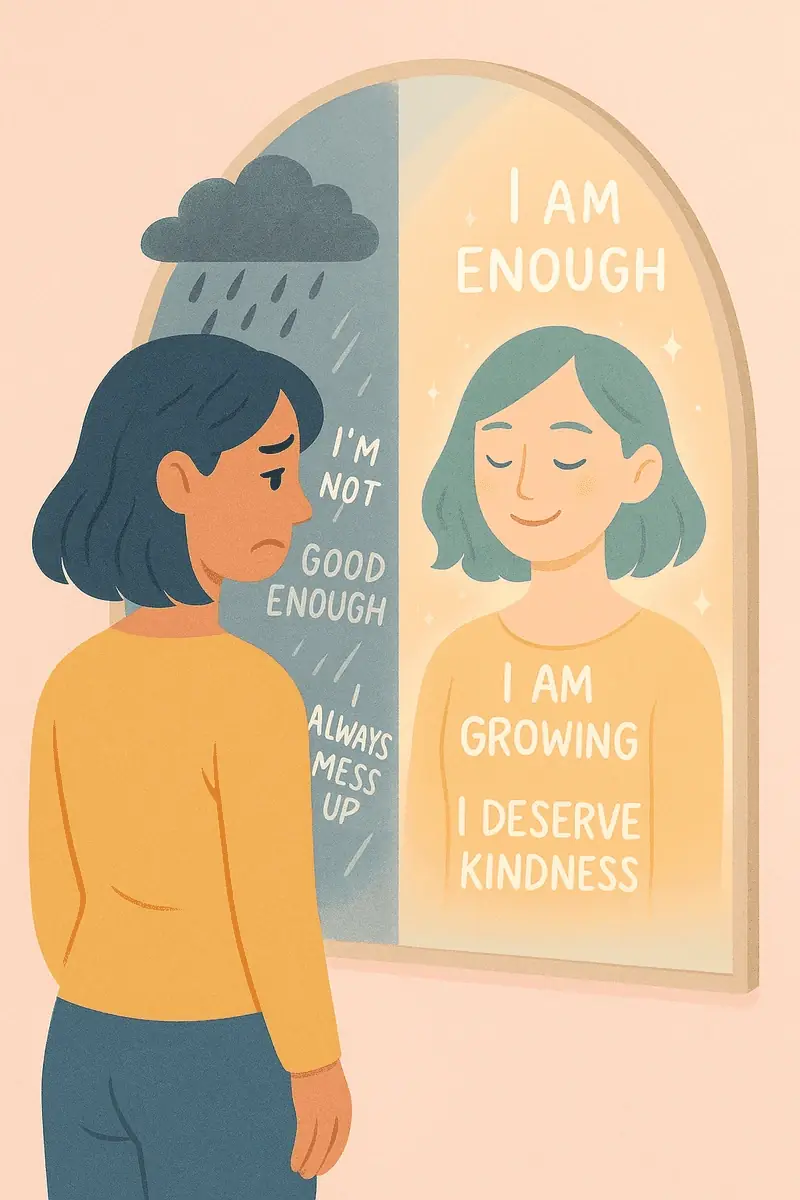



Building Self-Worth
Practical guides for shifting the beliefs and behaviors underneath low self-esteem.









CBT Tools for Self-Esteem
Step-by-step techniques for examining and rewriting the thoughts that drive low self-worth.






MindLift For
Dedicated support pages for specific challenges.
Reframe the 'Not Enough' Thought in 60 Seconds
MindLift uses CBT to challenge the exact thought behind your low self-esteem — in your own words, without generic positivity. The thought underneath changes when you examine it.
Try MindLift free →Frequently asked questions
What causes low self-esteem?
Low self-esteem typically develops from early experiences where love, approval, or safety felt conditional on performance, appearance, or behavior. Over time, the brain builds a belief — 'I'm not enough' — that operates automatically in response to criticism, failure, or close relationships. It's a learned pattern, not a fixed trait.
What are the signs of low self-esteem in men?
In men, low self-esteem most often presents as: needing to win arguments, inability to ask for help, seeking validation through achievement or sex, dismissiveness toward others' feelings, jealousy and possessiveness, difficulty apologizing genuinely, and an inability to receive love or care without suspicion or deflection. These look like personality traits from the outside — which is why they're consistently missed.
Can low self-esteem be changed?
Yes. Low self-esteem is a set of thought patterns and behaviors that developed for reasons — and patterns can change. The most evidence-based approaches are CBT (Cognitive Behavioral Therapy) and schema therapy. The core of the work is learning to identify the belief underneath the behavior, examine whether it's actually true, and gradually build tolerance for being imperfect and known. It takes time and repetition — and responds well to small, consistent practice.
What is the difference between low self-esteem and low confidence?
Confidence is situational — it refers to belief in your ability to do specific things. Self-esteem is more fundamental: your baseline sense of worth as a person, independent of performance. Someone can be highly confident professionally while having low self-esteem in relationships. Low self-esteem shows up most clearly in how you handle criticism, vulnerability, and connection — not in what you can achieve.