
Turn this into a daily habit — free to start in the MindLift app:
It's June. You have two trips planned, a long weekend on the calendar, and a group chat full of “we HAVE to do this summer” messages you haven't replied to yet.
You should feel excited. Instead, you feel vaguely behind.
There's this low-grade hum of anxiety that follows you into the season — the sense that summer is already slipping away, that you're not doing it right, that everyone else's plans look more intentional than yours. You scroll through someone's beach photos and feel something that isn't quite envy and isn't quite sadness. Just… pressure.
This isn't a summer problem. It's an overthinking problem. And CBT has a lot to say about why it happens — and how to interrupt it before July becomes a blur of things you almost enjoyed.
The “perfect summer” trap
Here's what's actually happening cognitively: your brain has built a mental model of what summer should feel like. Warm, spontaneous, connected. The version from a movie, or maybe a memory from ten years ago when the stakes were lower and the group chat was smaller.
Every real moment gets measured against that model. The weekend that was “fine but nothing special.” The trip that felt good in the photos but stressful in the planning. The Tuesday evening you spent at home instead of somewhere worth remembering.
Psychologists call this should-based thinking — a cognitive distortion where you hold your actual experience up against an idealized standard and find it lacking. It doesn't matter that the standard was invented. It feels like a verdict.
The cruel irony: the more you want to enjoy summer, the harder you monitor yourself enjoying it. And the monitoring kills the experience.
Why anticipatory anxiety peaks right now
Anticipatory anxiety — the dread of things that haven't happened yet — is particularly sharp in early summer for a few reasons.
The horizon feels finite. Summer has an end date. That scarcity triggers the same neural patterns as any threatened resource. Your brain starts calculating how much time you have left and whether you're using it well. Spoiler: it always concludes you're not.
Social comparison accelerates. Summer is the most visible season. People post. People make plans in public. You see the highlights of everyone else's free time while living the unfiltered version of your own.
Unstructured time is genuinely hard. Most of us operate in structured environments most of the year. When that structure loosens, the brain doesn't automatically relax — it often gets louder. Freedom creates decision fatigue and the anxiety of choosing wrong.
What this produces is a paradox: you're spending your free time worrying about how to spend your free time.
The thoughts that show up
If any of these have crossed your mind this season, you're not alone:
- “I feel like I'm wasting summer.”
- “Why am I not more excited about this?”
- “Everyone else seems to be doing more.”
- “I should be making memories, not just getting through the week.”
- “It's already [month] and I haven't done anything.”
These aren't character flaws. They're patterns — specific, recognizable, interruptible cognitive loops. CBT identifies them as a combination of mental filtering (noticing what's missing while ignoring what's present), fortune-telling (assuming the season will continue to disappoint), and emotional reasoning (feeling like summer is slipping away, therefore it must be).
The problem isn't that you're ungrateful. It's that your brain has locked onto a threat — wasted time, missed experiences, a summer that doesn't measure up — and is doing what brains do with threats: obsessing over them. (If that obsessing tends to hit hardest once the lights are off, that's its own well-worn loop — here's how to stop overthinking at night.)
What CBT actually recommends
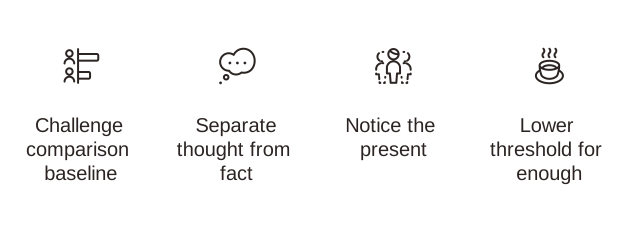
The goal isn't to force yourself to feel excited. It's to challenge the thought structures that are blocking the experience you already have access to.
Challenge the comparison baseline. When you catch yourself thinking “everyone else is doing more,” ask: more than what? More than whom? You're comparing your internal experience — exhaustion, ambivalence, logistical stress — to other people's external presentation. That's not a fair comparison. It's not even a real one.
Separate the thought from the fact. “I'm wasting summer” is a thought. It feels like a fact, but it isn't one. A CBT reframe doesn't ask you to replace it with “I'm having the best summer ever.” It asks you to find something that's actually, verifiably true: I had three real conversations this week. I slept in on Saturday. I spent an hour doing something I chose. That's not nothing.
Notice the present before evaluating it. Anticipatory anxiety lives in the future. It's always about what you're not yet doing, what might not happen, what the season might fail to deliver. Grounding yourself in what's actually happening right now — even something ordinary — interrupts the loop.
Lower the threshold for “enough.” The most consistently happy people aren't the ones having the most extraordinary experiences. Research in positive psychology consistently shows that ordinary pleasures — a good meal, a slow morning, an unplanned conversation — generate more lasting wellbeing than highlight-reel events. Your brain's highlight-reel standard for summer is making ordinary good things invisible.
When the thought hits in real time
The trouble with cognitive techniques is that they're easy to understand and hard to apply at 11pm when you're lying awake mentally cataloging everything you didn't do this weekend.
That's the gap worth closing — between knowing what to do and actually being able to do it when the thought has you.
This is exactly where MindLift was built to help. You type the thought exactly as it appears in your head — “I feel like summer is already passing me by and I haven't done anything worth remembering” — and within 60 seconds you get three reframes: a Realist that challenges the evidence, a Growth perspective that recontextualizes what the feeling is actually about, and a Compassionate one that responds the way a good friend would.
Not affirmations. Not generic advice. A reframe of your specific words, in a moment when you actually need it.
The 167 hours between therapy sessions don't have to be unassisted. The anxious thought doesn't have to run until morning.
The summer you're already having
Here's the reframe you don't have to earn: the fact that you want summer to be good — that you care about connection, experience, memory — is not the problem. That desire is actually the thing. The anxiety is just that desire with no exit ramp.
You don't need a better summer. You need a better relationship with the one you're already in.
That starts with catching the thought before it becomes the week. (Curious which patterns run your particular brand of overthinking? The female archetypes test is one way to notice the story you default to.)
Frequently asked questions
Why do I feel anxious about summer instead of excited?
Summer anxiety usually isn’t about summer at all — it’s about the gap between an idealized version of the season and your actual experience of it. Your brain builds a mental model of how summer "should" feel (spontaneous, connected, memorable) and measures every real moment against it, so ordinary good days register as not enough. This is called should-based thinking, a cognitive distortion. The more you want the season to be great, the harder you monitor yourself enjoying it — and the monitoring itself blocks the enjoyment.
What is anticipatory anxiety?
Anticipatory anxiety is dread about things that haven’t happened yet — worrying about the future instead of experiencing the present. In early summer it sharpens for three reasons: the season feels finite, so your brain treats time like a threatened resource and calculates whether you’re using it well; social comparison accelerates because summer is the most visible, publicly posted season; and unstructured free time creates decision fatigue rather than relaxation. The result is a paradox — you spend your free time worrying about how to spend your free time.
How do I stop overthinking my summer plans?
Start by treating the thought as a thought, not a verdict. "I’m wasting summer" feels like a fact but isn’t one. CBT suggests three moves: challenge the comparison baseline (you’re comparing your internal exhaustion to other people’s external highlight reel — not a fair comparison); separate the thought from the fact (find something verifiably true instead, like "I had three real conversations this week"); and lower the threshold for "enough," because research in positive psychology shows ordinary pleasures generate more lasting wellbeing than highlight-reel events. The goal isn’t forced excitement — it’s an accurate thought.
Why is unstructured free time so anxiety-inducing?
Most of us operate in structured environments most of the year, and the brain doesn’t automatically relax when that structure loosens — it often gets louder. Freedom creates decision fatigue and the anxiety of choosing wrong, so open time can feel more stressful than a packed schedule. This is why a long weekend or an unplanned evening can trigger more rumination than a busy week, and why "I should be making memories" tends to hit hardest exactly when you finally have time on your hands.
Can a CBT app help with summer anxiety in the moment?
CBT techniques are easy to understand and hard to apply at 11pm when you’re mentally cataloging everything you didn’t do this weekend. That gap — between knowing what to do and being able to do it when the thought has you — is where a real-time reframe tool helps. MindLift takes the exact anxious thought in your own words and returns three specific reframes (Realist, Growth, and Compassionate) in about 60 seconds, so the thought doesn’t have to run until morning. It’s a reframe of your specific words, not generic advice.
Like what you're reading?
Continue your wellness journey
Reframe negative thoughts in 60 seconds — free to start in the MindLift app.


Free to start · no account required
CBT & Self-Talk Researchers
MindLift content is grounded in cognitive behavioral therapy principles and designed to help you shift harsh self-talk in real time. Our guides focus on practical, evidence-based techniques you can use in the moment.
Was this article helpful?