
Turn this into a daily habit — free to start in the MindLift app:
Everyone tells you the same thing: Just be yourself. Stop overthinking it. You'll be fine.
And every time, you smile and nod — because you know that advice is completely useless when your heart is pounding before a meeting, your mind is already replaying everything you said wrong, and the thought of walking into a room full of people makes you want to cancel, again.
Social anxiety isn't a personality flaw. It's a thinking pattern. And thinking patterns can be changed.
Here's how — fast.
First: Understand What's Actually Happening
Social anxiety isn't really about other people. It's about what your brain predicts they're thinking.
Your mind runs a threat assessment every time you enter a social situation. It scans for danger: Will I say something embarrassing? Are they judging me? Do I look nervous? And because the brain is wired to protect you, it amplifies every possible negative outcome.
You're not shy. You're not weak. You're running a hyperactive prediction machine that's trying to keep you safe — and doing it badly.
The good news: you can interrupt the prediction.
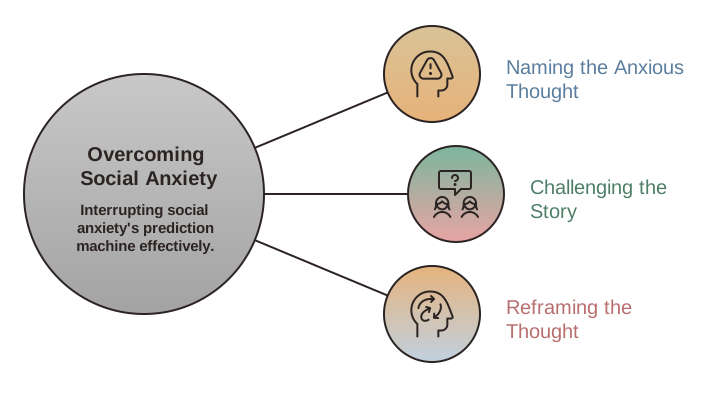
Step 1: Name the Thought, Don't Fight It
The worst thing you can do with an anxious thought is wrestle with it. Stop thinking about this. You're being ridiculous. Why are you like this?
That just gives the thought more fuel.
Instead, name it like you're observing it from the outside. "There's that thought again — they think I'm awkward." Labeling a thought creates just enough distance for your brain to stop treating it as fact.
You're not agreeing with it. You're not dismissing it. You're just removing it from the driver's seat.
This is one of the core moves in recognizing cognitive distortions — the named thinking patterns that keep social anxiety running on loop.
Step 2: Challenge the Story, Not the Feeling
Anxiety feels true. That's the trap.
When you think "Everyone noticed how weird I was in that conversation," it feels like a fact. But it's a story — one your brain wrote in about 0.3 seconds without any actual evidence.
Ask yourself: What's one other explanation? Maybe they were distracted. Maybe they were anxious too. Maybe they didn't notice at all — because most people are too busy worrying about themselves to catalog your awkward pause.
You don't need certainty. You just need to crack the story open a little.
Most people are too busy worrying about themselves to catalog your awkward pause.
Step 3: Reframe in Your Own Words
Generic affirmations don't work for social anxiety. Telling yourself "I am confident and people love me" when your hands are shaking feels like lying to yourself — and your brain knows the difference.
What works is reframing the specific thought you're actually having, in your own voice.
Not: "I am great at social situations."
But: "I'm nervous because I care how this goes — and that's actually okay."
That lands. That your brain can work with.
The more you reframe your own specific thoughts, the faster the pattern shifts — because you're building new mental pathways, not pasting over the old ones. This is neuroplasticity in practice.
Step 4: Do the Thing Before You Feel Ready
Here's the hard truth: waiting until you feel confident before acting confident is backwards.
The feeling follows the action, not the other way around. Every time you stay home, cancel, or go quiet — your brain logs it as confirmation that the situation was dangerous. The avoidance makes the anxiety stronger.
You don't have to throw yourself into the deep end. But you do have to move toward the thing, even a little, before your brain gives you permission.
Small reps build real confidence. Show up. Stay five minutes longer than you planned. Say one thing you'd normally hold back. Stack those moments.
Step 5: Reset After, Not Just Before
Most anxiety advice focuses on what to do before a social situation. But the spiral that happens after is just as damaging.
Replaying the conversation. Cringing at things you said. Catastrophizing how you came across. This post-event processing is where social anxiety really lives — and it feeds the dread before the next thing.
If you notice yourself doing this, you're probably also caught in the pattern described in overthinking after talking to someone.
When you catch yourself replaying, interrupt it immediately — not by suppressing it, but by reframing it. "I'm replaying this because I care, but I'm not a fair judge of how it actually went."
That one shift can break the loop.
What Fast Actually Looks Like
Overcoming social anxiety "fast" doesn't mean overnight. It means you stop waiting for a slow, passive process to fix you — and start actively interrupting the thoughts the moment they show up.
Every reframe is a rep. Every interrupted spiral is progress. The more often you catch the thought and choose a different response, the less power it has next time.
This is not years of therapy. This is something you can start right now, in the next anxious moment you have.
The Pattern Is the Problem. The Pattern Can Change.
Social anxiety is not who you are. It's what your brain learned to do. And what the brain learned, it can unlearn — one thought at a time.
You don't need to become a different person. You need to respond differently to the thoughts that are running the show.
Start there. Start small. Start now.
MindLift helps you catch and reframe anxious thoughts in real time — in 60 seconds. Built for the moments between therapy sessions, before the meeting, after the conversation that's replaying in your head. Free to start.
Frequently asked questions
What actually causes social anxiety?
Social anxiety is driven by a hyperactive threat-prediction system. Your brain scans social situations for danger — judgment, embarrassment, rejection — and amplifies every possible negative outcome. It's not shyness or weakness. It's a learned cognitive pattern that treats social situations as threats.
How can I overcome social anxiety fast?
Fast means actively interrupting anxious thoughts the moment they appear — not waiting for a slow passive process. Name the thought, challenge the story with one alternative explanation, reframe it in your own words, and act before you feel ready. Each rep weakens the pattern.
Why don't generic affirmations work for social anxiety?
"I am confident and people love me" contradicts what your nervous system is currently registering. Your brain rejects it as false. What works is reframing the specific thought you're actually having — in your own voice, at a believability level your brain can accept.
What is post-event processing in social anxiety?
Post-event processing is the replay loop after a social situation — replaying what you said, cringing, catastrophizing how you came across. CBT research shows this is where social anxiety is reinforced. Interrupting it with a reframe (not suppression) breaks the cycle before the next situation.
Does CBT actually help social anxiety?
Yes — CBT is the most evidence-backed treatment for social anxiety. It works by identifying and challenging the cognitive distortions (mind reading, catastrophizing, emotional reasoning) that fuel anxious prediction. Neuroplasticity means consistent practice literally rewires how your brain defaults.
Like what you're reading?
Continue your wellness journey
Reframe negative thoughts in 60 seconds — free to start in the MindLift app.


Free to start · no account required
CBT & Self-Talk Researchers
MindLift content is grounded in cognitive behavioral therapy principles and designed to help you shift harsh self-talk in real time. Our guides focus on practical, evidence-based techniques you can use in the moment.
Was this article helpful?