Turn this into a daily habit — free to start in the MindLift app:
11:04pm. You opened the phone to check one thing. It's now 11:52, your chest is tight, you feel worse than when you started — and your thumb is still moving. Here's what was happening in your brain during those 48 minutes, and where the actual exit is.
What happens in your brain when you doomscroll?
Two systems lock into a loop: negativity bias (the brain weights bad news as survival-critical, so every alarming headline reads as important) and reward prediction (dopamine fires hardest for unpredictable outcomes, so the *next* scroll always promises the crucial item). Anxiety powers the scrolling; the scrolling replenishes the anxiety. The exit is interrupting the belief driving it, not out-willpowering your thumb.
Rozin & Royzman (2001); Schultz et al. (1997); Sharma et al. (2022)
Minute 1: the check that isn't neutral
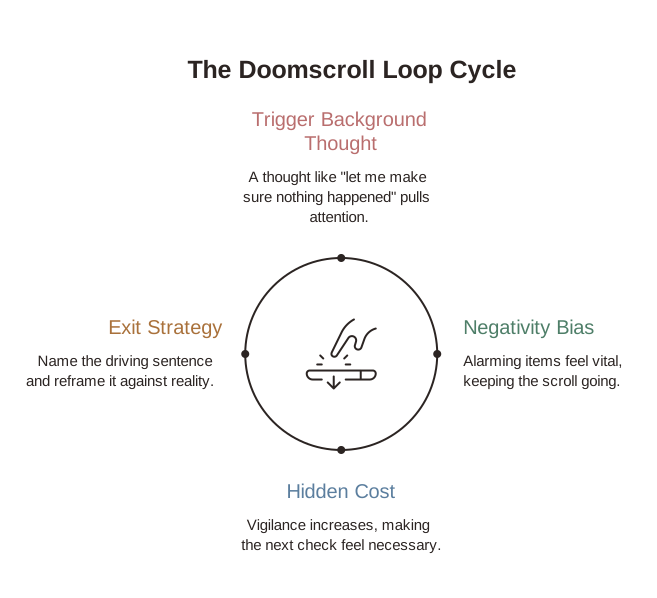
The scroll never starts as "entertainment." It starts as a safety check — a background thought like "let me make sure nothing happened." That thought recruits the oldest bias in your cognitive stack: negativity bias, documented across decades of research (Rozin & Royzman's classic review), which weights negative information more heavily than positive at every level — attention, memory, learning. For your ancestors, missing good news cost little; missing a threat could be fatal. So bad news gets priority processing, and a feed full of it reads as dense with vital information, no matter how repetitive it actually is.
Minutes 2–10: the slot machine engages
Here's the mechanism the platforms understood before the rest of us. Landmark reward-prediction research (Schultz, Dayan & Montague) showed dopamine doesn't simply respond to reward — it responds to the gap between prediction and outcome, firing hardest when outcomes are uncertain. A feed is uncertainty in its purest consumer form: the next flick might be nothing, might be catastrophe, might be the one update that finally explains everything. That "maybe" is the same variable-reward schedule that makes slot machines the most compulsive machines ever built. You're not pulling for the content. You're pulling for the resolution of the maybe.
Minutes 10–40: the loop closes
Now the two systems feed each other. Each alarming item spikes vigilance, and vigilance makes the next check feel necessary rather than optional — the scroll has quietly become the thing keeping you "safe." Meanwhile the amygdala keeps the body's alarm ticking (tight chest, shallow breath), and your rumination machinery starts chewing on the worst items in parallel. When researchers finally gave this pattern a validated scale in 2022 (Sharma, Lee & Johnson), the correlates were what you'd predict: higher anxiety, lower well-being, worse sleep. The loop isn't a moral failure. It's well-documented machinery running in an environment engineered for it — the same way your brain believes negative thoughts for reasons that made sense fifty thousand years ago.
Minute 48: where the exit actually is
Screen-time limits and app blockers fight your thumb. The loop doesn't live in your thumb — it lives in a sentence, usually some version of:
- "I need to stay on top of this or I'll be blindsided."
- "If I understand it fully, I'll feel less anxious."
- "Everyone else knows what's happening; I can't check out."
The evidence-based exit starts with naming that sentence — literally putting it in words, which by itself reduces amygdala reactivity (the affect-labeling effect, Lieberman 2007). Then reframe it against reality: the 14th check added vigilance, not safety; genuinely urgent news finds you; understanding a crisis and monitoring it are different activities, and only one of them was happening at 11:52pm. That's a standard cognitive reframe — prefrontal control engaging, alarm dialing down — applied to the exact thought that started the scroll.
The 60-second reset, in full
Next time you surface mid-scroll: phone face down. Name the driving thought in one honest sentence. Reframe it — realist, not rosy. Then give your attention one concrete landing spot: a page of a book, tomorrow's first task written down, the actual pillow. And if this is a nightly 3am pattern rather than an occasional slip, we built a whole page for that hour. Each interruption is also a rep — the kind that compounds: the catch gets earlier, the exit gets cheaper, and the loop loses its best customer.
MindLift turns the thought fueling the scroll into a Realist, Growth, and Compassionate reframe in about 60 seconds — right there in the moment. Free to start, premium available. Try MindLift — free to start →
Frequently asked questions
What happens in your brain when you doomscroll?
Two systems reinforce each other. Your negativity bias — the brain's default of weighting bad information more heavily than good, because threats were historically more costly to miss — flags each alarming headline as important. Meanwhile your dopamine system, which fires most strongly for unpredictable rewards, keeps you pulling for the next item, because the feed might contain something crucial. The result is a loop where anxiety powers the scrolling and the scrolling replenishes the anxiety.
Why can't I stop doomscrolling even when it makes me feel worse?
Because the loop doesn't run on enjoyment — it runs on threat vigilance and variable reward. Reward-prediction research shows dopamine responds most to uncertain outcomes, the "maybe this next one matters" schedule that also drives slot machines. Add the implicit belief underneath ("if I stay informed, I'll be prepared; if I look away, I'll be blindsided") and stopping feels unsafe rather than merely difficult. You're not weak — you're running two well-documented systems exactly as designed, in an environment engineered to exploit them.
Is doomscrolling actually bad for your mental health?
The research that formalized the term suggests yes, at meaningful doses. Since Sharma and colleagues published a validated doomscrolling scale in 2022, studies have linked habitual doomscrolling to higher anxiety, lower well-being, and poorer sleep — the last one compounding everything else, since late-night scrolling replaces exactly the sleep your brain needs to regulate emotion the next day. Occasional news-checking is not the issue; the compulsive, hours-long vigilance loop is.
How do you actually stop a doomscroll in the moment?
Interrupt the belief, not just the behavior. App blockers fight the hand; the loop lives in a thought — usually some version of "I need to keep watching or something bad will catch me off guard." Name that exact thought in words (which itself reduces amygdala response — the affect-labeling effect), then reframe it: "Checking for the 14th time adds vigilance, not safety. Anything genuinely urgent will reach me." A 60-second reframe at the moment you notice the scroll beats a screen-time report the next morning.
What should I do instead of doomscrolling at night?
The goal is an off-ramp, not a ban. When you catch the scroll: put the phone face down, name the driving thought, reframe it, and give your attention one concrete landing spot — a page of a book, tomorrow's first task written down, or an actual wind-down. MindLift is built for the naming-and-reframing step: type the thought fueling the scroll and get a Realist, Growth, and Compassionate reframe in about 60 seconds. Free to start, premium available.
Like what you're reading?
Continue your wellness journey
Reframe negative thoughts in 60 seconds — free to start in the MindLift app.


Free to start · premium optional