
Turn this into a daily habit — free to start in the MindLift app:
Burnout rarely appears overnight.
It usually starts quietly — with small signals: mental exhaustion, irritability, difficulty concentrating, or the feeling that everything requires more effort than usual.
Because these changes happen gradually, many people ignore them until they reach a breaking point.
Recognizing the early signs can help you pause, reset, and protect your mental energy.
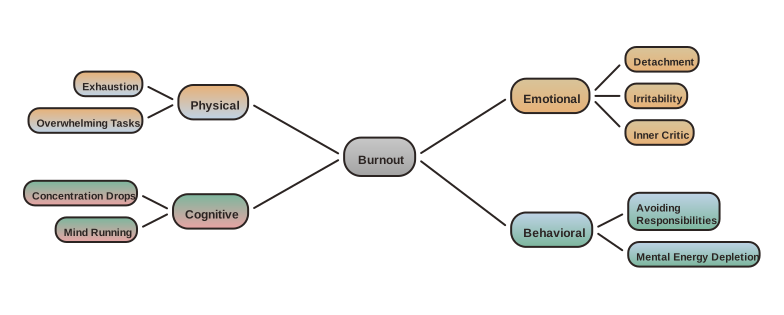
Here are 10 common signs of burnout that many people overlook.
1. You Feel Tired Even After Rest
Burnout exhaustion isn't just physical.
You might sleep enough, yet still wake up feeling mentally drained. Tasks that used to feel manageable suddenly require much more effort.
This type of fatigue is often described as "emotional exhaustion."
2. Small Tasks Feel Overwhelming
When burnout builds, your brain starts treating ordinary tasks like major challenges.
Things like answering emails, making decisions, or starting a project can suddenly feel unusually difficult.
Your mind may respond with thoughts like:
"I just can't deal with this right now."
3. You Feel Detached From Work or Life
People experiencing burnout often feel emotionally distant from things that used to matter.
You might notice:
- Less motivation
- Less interest
- Feeling numb or indifferent
This emotional distancing is the brain's way of protecting itself from stress.
4. Your Inner Critic Gets Louder
Burnout often amplifies negative self-talk.
Thoughts might sound like:
- "I'm not doing enough."
- "Everyone else handles this better."
- "I'm falling behind."
The more exhausted the brain becomes, the more likely it is to fall into self-criticism loops.
5. You Struggle to Concentrate
Burnout can make it difficult to focus or make decisions.
You may notice:
- Rereading the same message several times
- Forgetting simple things
- Difficulty starting tasks
Mental overload reduces your brain's ability to process information efficiently.
6. You Feel Irritable or Easily Frustrated
When the nervous system is under constant stress, patience becomes harder.
Small inconveniences might suddenly feel disproportionately frustrating.
This is a common sign that your stress reserves are running low.
7. You Start Avoiding Responsibilities
Burnout often leads to avoidance behaviors.
You might delay tasks, ignore messages, or put off decisions simply because your brain feels overloaded.
Avoidance isn't laziness. It's often a sign that your mental energy is depleted.
8. Your Mind Won't Stop Running
Burnout can also increase rumination.
Instead of resting, your brain may constantly replay problems or future worries.
Many people describe this as:
"My mind never really turns off."
9. Things That Used to Feel Easy Now Feel Hard
Burnout often creates a sense that everything requires more effort than before.
Even activities you normally enjoy may feel draining rather than refreshing.
10. You Feel Like You're Running on Empty
Perhaps the clearest sign of burnout is the feeling that you have nothing left to give.
You may feel:
- Emotionally exhausted
- Mentally overloaded
- Disconnected from motivation
This doesn't mean you're weak. It means your system has been under pressure for too long.
What Actually Helps With Burnout
Burnout recovery rarely comes from pushing harder.
It usually starts with small mental resets that help the brain exit constant stress mode.
Helpful steps include:
- Reducing cognitive overload
- Setting clearer boundaries
- Practicing short mental pauses during the day
- Replacing harsh self-talk with more realistic inner dialogue
Even small changes in how you talk to yourself can reduce pressure.
A Small Tool That Helps Reset the Mind
When burnout builds, the mind often becomes dominated by thoughts like:
- "I'm failing."
- "I can't keep up."
- "I should be doing more."
Gentle reframing can help interrupt these mental loops.
The MindLift app was designed for moments like this. It offers short, grounded mindset shifts based on CBT principles:
- "Doing one small step is still progress."
- "Rest is part of productivity."
- "I don't have to solve everything today."
These reminders help reduce mental pressure and bring the brain back to a calmer state.
Final Thought
Burnout doesn't mean you've failed.
It's often a signal that your mind and body have been carrying too much for too long.
Recognizing the signs early gives you the chance to slow down, reset, and recover your energy.
You don't have to earn the right to rest. Your brain already knows you need it.
If you want gentle support resetting your inner dialogue, you can try MindLift — free to start and see how it feels.
Frequently asked questions
What are the early signs of burnout?
Early burnout signs include feeling tired even after rest, small tasks feeling overwhelming, emotional detachment, louder inner critic, difficulty concentrating, increased irritability, avoidance of responsibilities, constant mental chatter, activities feeling harder than usual, and a persistent sense of running on empty.
Is burnout just being tired?
No. Burnout involves emotional exhaustion that doesn't resolve with sleep. It includes cognitive symptoms like poor concentration and decision fatigue, emotional symptoms like detachment and irritability, and behavioral changes like avoidance. It's a systemic stress response, not ordinary tiredness.
How do you recover from burnout?
Recovery starts with reducing cognitive overload, setting clearer boundaries, taking short mental pauses throughout the day, and replacing harsh self-talk with realistic inner dialogue. Small, consistent changes work better than dramatic overhauls.
Why does burnout make self-talk worse?
When the brain is exhausted, it's more likely to default to cognitive distortions like catastrophizing and all-or-nothing thinking. The prefrontal cortex has fewer resources to regulate emotional responses, so the inner critic becomes louder and harder to challenge.
Is avoidance during burnout the same as laziness?
No. Avoidance during burnout is a sign that mental energy is depleted. The brain is conserving resources by pulling back from tasks that feel cognitively expensive. It's a protective response, not a character flaw.
Like what you're reading?
Continue your wellness journey
Reframe negative thoughts in 60 seconds — free to start in the MindLift app.


Free to start · premium optional