
Turn this into a daily habit — free to start in the MindLift app:
Mindfulness sounds simple. And it is — in theory.
But when your brain is racing, "just be present" can feel impossible.
This guide breaks mindfulness into five practical exercises that anyone can start today — no experience, apps, or quiet rooms required.
What Mindfulness Actually Means
Mindfulness is paying attention to what's happening right now — without trying to fix it, judge it, or push it away.
It doesn't mean your mind goes blank. It means you notice what your mind is doing, like watching clouds pass without chasing them.
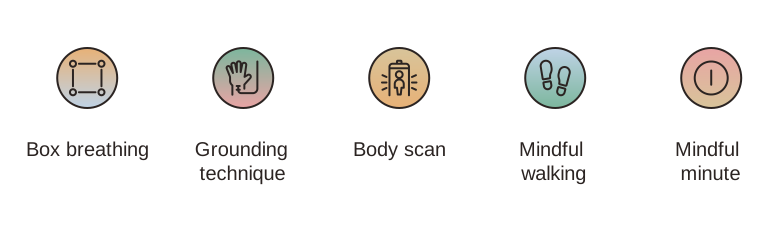
Exercise 1: Box Breathing
This is the simplest entry point to mindfulness.
- Inhale for 4 counts
- Hold for 4 counts
- Exhale for 4 counts
- Hold for 4 counts
Repeat for 2-3 minutes. This activates the parasympathetic nervous system and slows racing thoughts. If breathwork helps most, you'll also like our breathing techniques guide.
Exercise 2: The 5-4-3-2-1 Grounding Technique
When anxiety pulls you out of the present, this technique anchors you back:
- 5 things you can see
- 4 things you can touch
- 3 things you can hear
- 2 things you can smell
- 1 thing you can taste
This redirects your brain from abstract worries to concrete sensory input.
Exercise 3: Body Scan
Sit or lie down. Starting from your toes, slowly move your attention up through your body.
Notice where you hold tension — jaw, shoulders, stomach. You don't need to fix anything. Just notice.
This builds body awareness, which is often the first thing we lose when stressed.
Exercise 4: Mindful Walking
Next time you walk — even from your desk to the kitchen — slow down slightly and notice:
- The feeling of your feet on the ground
- The rhythm of your steps
- The temperature of the air on your skin
Walking mindfully turns an ordinary moment into a reset.
Exercise 5: One Mindful Minute
Set a timer for 60 seconds. Close your eyes and focus on your breath.
When your mind wanders (it will), gently bring it back. That's not failure — that's the practice.
One minute. That's all you need to start.
Why Mindfulness Helps With Overthinking
Overthinking happens when your brain gets stuck in loops — replaying the past or rehearsing the future. For more targeted relief, see mindfulness exercises specifically for overthinking.
Mindfulness interrupts those loops by pulling your attention back to right now. Over time, this weakens the habit of spiraling and strengthens your ability to let thoughts pass.
How MindLift Supports Mindful Awareness
MindLift combines mindfulness principles with cognitive reframing. When you notice a negative thought, the app helps you respond with a short, believable alternative — building mindful self-awareness one thought at a time.
Final Thought
Mindfulness isn't about achieving a state of calm. It's about being present with whatever is happening — including the noise.
Start small. One breath. One minute. One moment of noticing.
Frequently asked questions
What is mindfulness?
Mindfulness is paying attention to the present moment on purpose, without judging what you notice. It includes awareness of thoughts, feelings, and physical sensations.
Do I need to meditate to be mindful?
No. Meditation is one way to practice mindfulness, but you can also practice through breathing exercises, mindful walking, or simply paying full attention during daily activities.
How long should I practice mindfulness each day?
Even 2-5 minutes daily can make a difference. Consistency matters more than duration, especially for beginners.
Related Topics
Mental Wellness Writers
The MindLift Wellness Team writes evidence-based content on CBT, self-talk, and everyday mental health tools.
Was this article helpful?