
Turn this into a daily habit — free to start in the MindLift app:
Mindfulness exercises for overthinking are quick, simple practices that help you notice a thought, name it and step back from it instead of arguing with it. Psychologists call that step back decentering. The seven easy mindfulness practices below take between 10 seconds and a few minutes, and none of them needs a meditation cushion.
When your mind starts looping through worries, regrets, or "what if" scenarios, it can feel like there's no off switch.
Mindfulness doesn't stop thoughts from appearing. It helps you change your relationship with them.
Instead of getting pulled into every thought, you learn to observe them without chasing them.
Research shows mindfulness can reduce rumination, anxiety, and stress by helping the brain return to the present moment. If you want the deeper science behind why spirals happen, read the neuroscience of overthinking.
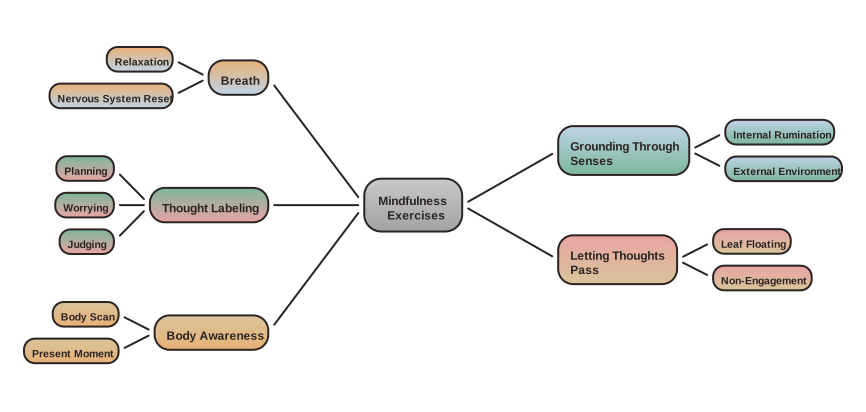
Here are 7 simple mindfulness exercises for adults you can try anytime your mind starts spiraling, quickest first:
- The 3-breath reset (about 15 seconds)
- 5-4-3-2-1 grounding (about 1 minute)
- Label your thoughts (10 seconds per thought)
- Leaves on a stream (2 to 5 minutes)
- The one-minute body scan
- "This is just a thought" (one sentence)
- The one-thing practice (any routine task)
All seven are versions of one CBT-adjacent skill: treating a thought as a mental event you can watch, not an order you have to follow[3]. If you are brand new to this, start with the mindfulness techniques for beginners guide; if anxiety is the main driver, the anxiety hub pairs these exercises with CBT tools.
1. The 3-Breath Reset
One of the fastest ways to interrupt overthinking is to shift attention to your breath.
Try this:
- Take a slow inhale through your nose.
- Exhale slowly through your mouth.
- Repeat three times.
- Focus only on the sensation of breathing.
Even a few slow breaths can signal to your nervous system that it's safe to relax.
2. Name 5 Things You Can See
This grounding exercise helps your brain return to the present moment.
Look around and notice:
- 5 things you can see
- 4 things you can touch
- 3 things you can hear
- 2 things you can smell
- 1 thing you can taste
This technique works because attention shifts from internal thoughts to sensory experience.
3. Label Your Thoughts
Many people believe every thought is important or urgent.
Mindfulness teaches a different approach: observe thoughts instead of obeying them.
When a thought appears, gently label it:
- "planning"
- "worrying"
- "remembering"
- "judging"
This creates distance between you and the thought, which reduces its emotional intensity. It's also a natural bridge into cognitive reframing.
4. The "Leaves on a Stream" Exercise
Imagine sitting by a quiet stream.
Each time a thought appears, place it on a leaf floating down the water.
Watch it pass.
You don't need to stop the thoughts. You simply let them move on.
This visualization is commonly used in mindfulness- and acceptance-based therapies such as ACT.
5. The One-Minute Body Scan
Your mind often lives in the future or the past.
Your body is always in the present moment.
Close your eyes and notice:
- Your shoulders
- Your jaw
- Your hands
- Your breathing
Ask yourself: "Where am I holding tension?"
Then gently relax those areas.
6. The "Thought Is Just a Thought" Reminder
When overthinking takes over, the brain treats thoughts as facts.
Mindfulness reminds us that thoughts are mental events, not reality.
Try repeating silently:
"This is just a thought, not a prediction."
This small shift can weaken the power of anxious thinking.
7. The One-Thing Practice
Instead of multitasking, choose one activity and give it full attention.
For example:
- Drinking tea
- Walking
- Washing dishes
- Listening to music
Notice the details: temperature, movement, sound.
Training your attention this way strengthens your ability to leave rumination loops.
How Mindfulness Helps Stop Overthinking
Overthinking happens when the mind treats thoughts as problems that must be solved immediately.
Mindfulness changes that pattern.
Instead of reacting to every thought, you learn to notice and release them.
Over time, this reduces the brain's habit of rumination.
A Small Tool to Practice This Daily
If your mind tends to spiral, supportive reminders can help you reset faster.
The MindLift app was designed for moments like this. To be clear about what it is: MindLift is not a meditation app. There are no guided sessions or timers. It is a CBT reframing tool for the moment after you have noticed the thought: you type it, the app names the thinking pattern and offers a calmer, more accurate version in about 60 seconds. (For how the two kinds of app differ, see CBT vs meditation apps.)
Instead of generic affirmations, it offers short, realistic reframes based on CBT and self-affirmation principles:
- "Not every thought needs solving."
- "A thought can pass without action."
- "I can pause before reacting to this."
These small reminders help train your brain to step out of overthinking loops.
Final Thought
Mindfulness isn't about having an empty mind.
It's about learning to let thoughts come and go without getting trapped in them.
Even one minute of mindful attention can shift your mental state.
And the more often you practice, the easier it becomes to return to the present moment.
You don't need to silence your mind. You just need to stop chasing every thought.
To turn these into a habit, how to practice mindfulness daily ties a 60-second version to everyday cues. And if you want a baseline first, the How Mindful Is Your Mind? quiz takes about a minute.
If you want gentle support interrupting spirals, you can try MindLift — free to start and see how it feels.
Frequently asked questions
What are some quick and easy mindfulness exercises?
The quickest are the 3-breath reset (about 15 seconds), labelling a thought with one word such as 'worrying' (about 10 seconds) and 5-4-3-2-1 grounding (about a minute). Each one helps you notice a thought and step back from it instead of following it.
Can mindfulness stop overthinking?
Mindfulness doesn't stop thoughts from appearing — it changes your relationship with them. Instead of chasing every thought, you learn to observe and release them, which reduces the brain's habit of rumination over time.
What is the fastest mindfulness exercise for anxiety?
The 3-Breath Reset is the fastest technique: take three slow breaths, focusing only on the sensation of breathing. Even a few slow breaths signal your nervous system that it's safe to relax.
How does the 5-4-3-2-1 grounding technique work?
Notice 5 things you can see, 4 you can touch, 3 you can hear, 2 you can smell, and 1 you can taste. This shifts attention from internal thoughts to sensory experience, pulling the brain back to the present moment.
What is thought labeling in mindfulness?
Thought labeling means gently categorizing thoughts as they arise — 'planning,' 'worrying,' 'judging,' 'remembering.' This creates distance between you and the thought, reducing its emotional power without suppressing it.
How long does it take for mindfulness to help with overthinking?
Even one minute of mindful attention can shift your mental state. With regular practice, the brain builds stronger present-moment awareness, making it easier to exit rumination loops each time.
Like what you're reading?
Take control of your mental wellness
Reframe the thought that started it — personalized CBT reframes in the MindLift app.


Free to start · premium optional