Turn this into a daily habit — free to start in the MindLift app:
It is 2am and your brain has found a sentence from dinner.
“why did I say that. they definitely think I’m weird now.”
You did not decide to think about it. A comment at dinner landed wrong, nobody reacted, and seven hours later it is back, louder than it was at the table. So you ask yourself why you said it. Then why you are always like this. Then whether everyone noticed, and what they said in the car on the way home. None of these questions has an answer you can reach from your bed, so each one hands over to the next.
The overthinking loop has a shape
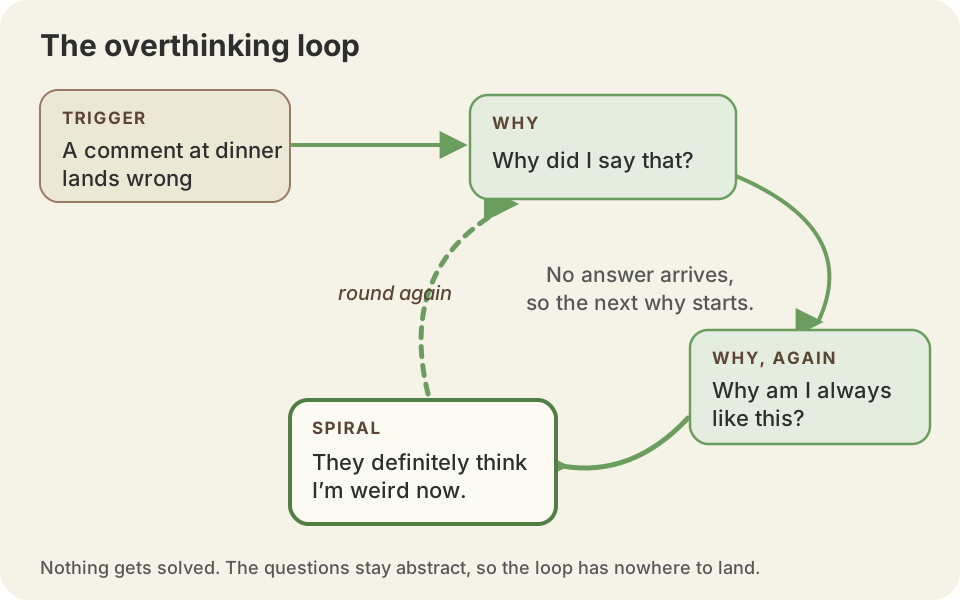
Overthinking runs in a loop with a fixed shape: a trigger, then an abstract why question, then another why, then the spiral, and back to the start. Nothing gets solved. The questions stay abstract, so the loop has nowhere to land.
“Why did I say that?” sounds like a question, but it is not looking for information. No answer arrives, so the next why starts: “Why am I always like this?” By the time you reach “they definitely think I’m weird now,” the original moment has become a verdict about who you are, and the verdict is a fresh trigger. Round again.
If this is you, the most useful thing science said about it in 2025 was not “try therapy” or “think positive.” It was more specific than that: target the loop.
What 55 studies found, in plain language
In 2025, a team of researchers pooled 55 randomized controlled trials, 4,970 participants in all, to ask one question: how well does cognitive behavioural therapy reduce repetitive negative thinking, and which kind of CBT does it best?
Repetitive negative thinking is the research umbrella for rumination and worry. The meta-analysis, by Stenzel and colleagues, was published in Psychological Medicine. It counted every post-treatment measure of repetitive thinking in the included trials and compared people who got CBT with people in control groups. Three results matter here.
First, CBT helped. Across all 55 trials, the overall effect on repetitive negative thinking was moderate, in favour of CBT: a Hedges’ g of 0.67. Hedges’ g measures how far apart the treated and untreated groups ended up, in units of the normal spread of scores. By the usual rule of thumb from the statistician Jacob Cohen, 0.2 is small, 0.5 is medium and 0.8 is large. A g around 0.5 is a change you would notice. A g around 0.9 is a big one.
Second, treatments built for the loop did better. The authors split the trials into treatments designed specifically for repetitive thinking and more general CBT. The loop-targeted treatments reduced repetitive thinking with an effect of 0.87. The general ones managed 0.48. That is a larger effect by a factor of about 1.8, and the authors report the difference as statistically significant.
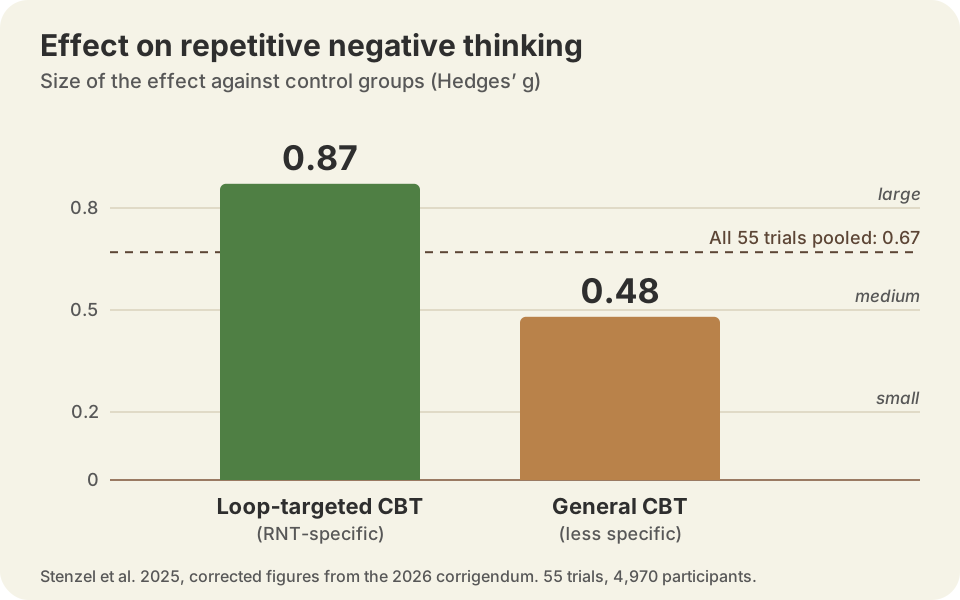
Those two numbers are the corrected ones. The original paper reported 0.99 and 0.56. After a letter to the editor from the metacognitive therapy researcher Robin Bailey argued that some treatments had been put in the wrong group, the authors reclassified metacognitive therapy, Applied Relaxation and one Emotion Regulation Therapy treatment as loop-targeted, re-ran the analysis and published a corrigendum in 2026. The numbers moved. The conclusion did not: in the authors’ words, no conclusions were affected.
Third, the label mattered less than the loop. The meta-analysis is transdiagnostic, which means it pooled trials across different diagnoses instead of studying one condition at a time. Researchers treat repetitive negative thinking as a process shared by anxiety and low mood, and the effect did not differ significantly between trials that measured worry, rumination or repetitive thinking in general. Whatever you call it, the loop is the shared engine.
Content vs process: why “is this thought true?” isn’t enough
Classic thought-checking works on the content of one thought, asking whether it is true, while rumination is a process: the habit of circling. Fixing a single thought does not stop the circling, because the next thought arrives in a new costume and the loop carries on with it.
Researchers who study repetitive thinking, Thomas Ehring and Edward Watkins among them, describe it by how it runs, not by what it is about: it repeats, it intrudes, it is hard to switch off, and it tends to be abstract. That is why the same person can ruminate about a work email on Monday and a friend’s silence on Thursday. The topics change. The machinery does not.
So there are two different jobs. Working on the content asks: is this thought true? It fixes one thought at a time, and it is genuinely useful. Working on the process asks: what is my mind doing right now? It interrupts the circling itself, so it works on whichever thought shows up next.
Working on the content
- Asks: is this thought true?
- Fixes one thought at a time
- The next thought arrives in a new costume
Working on the process
- Asks: what is my mind doing right now?
- Interrupts the circling itself
- Works on whichever thought shows up next
This is the gap the meta-analysis points at. General CBT often spends its effort on the content of individual thoughts. Loop-targeted approaches spend it on the circling. MindLift is built around the same idea: targeting the loop itself, not just the mood it leaves behind. That is why it does more than hand you one reframe and wish you luck.
Five ways to interrupt the loop
You can interrupt an overthinking loop at five points: before it gathers speed, at the distortion, at the abstract why, the next day, and across many loops at once. Each one below gives the technique, why it works, and where MindLift does it.
- Catch it earlyYou cannot stop a loop you do not notice.
- Name the distortionA label puts distance between you and the thought.
- Make it concreteTurn a why into one small next step.
- Test it laterCheck whether the reframe still holds.
- See the patternYour loop has favourite themes.
1. Catch it early
You cannot stop a loop you do not notice. The earlier you catch it, the fewer laps it has run and the less certain the verdict feels. A loop caught at the first why is a question. A loop caught at 3am is a belief.
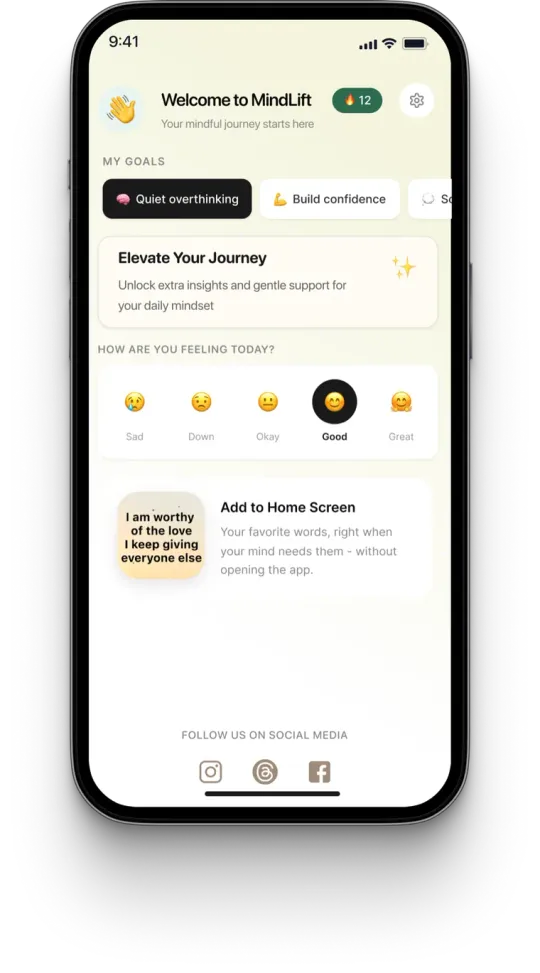
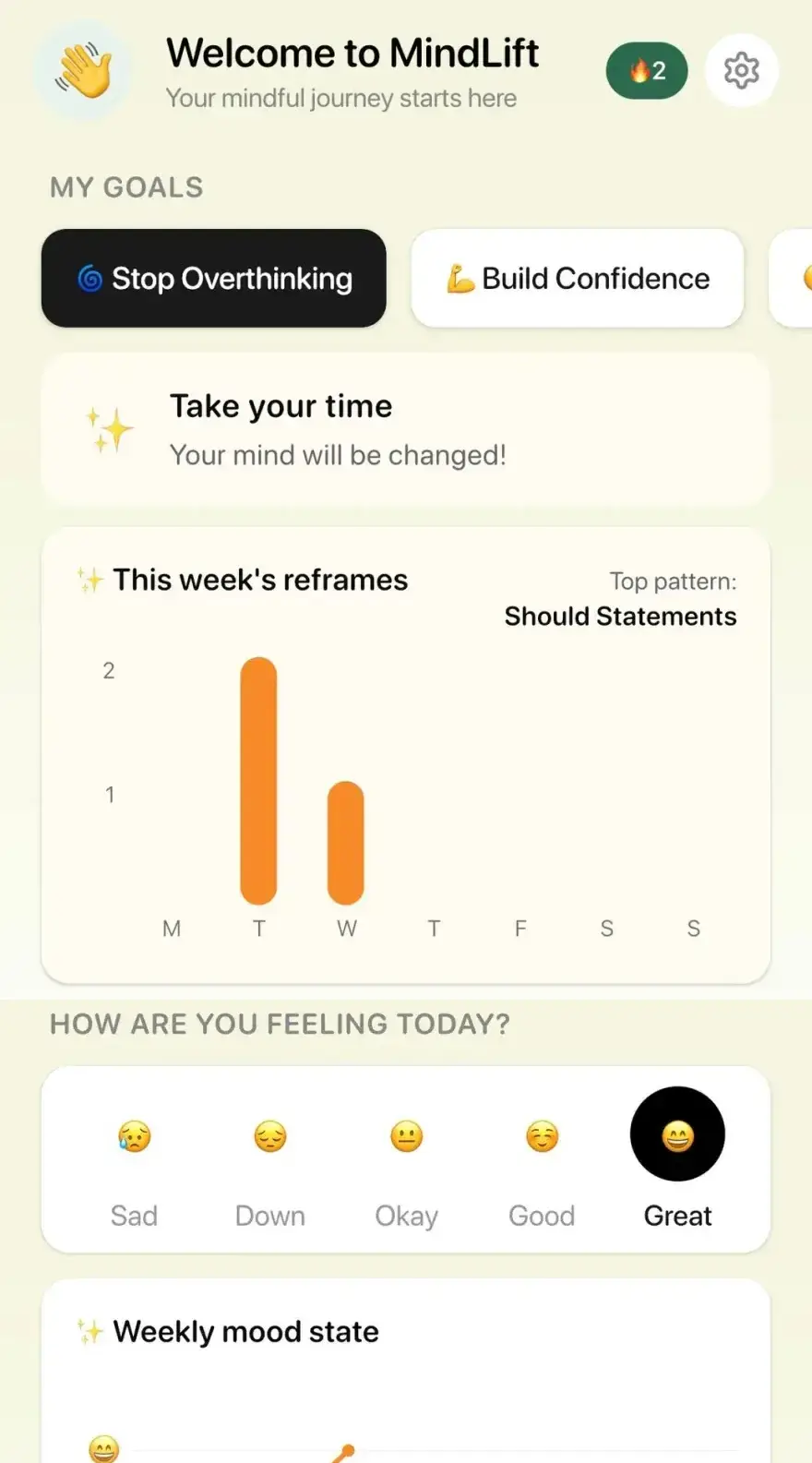
In MindLift, the home screen asks how you are feeling today with a one-tap row of moods, from Sad to Great, and gives you a direct route into Reframe when one thought is the problem. Checking in takes a second, which is the point: noticing has to be cheaper than the loop. If you want to know which loop you tend to run before you install anything, the free rumination quiz sorts it into four types: replayer, rehearser, verdict-seeker or fixer.
2. Name the distortion
A label puts distance between you and the thought. “They definitely think I’m weird now” feels like a fact. “That’s mind reading” is a description of what your mind just did. You are treating a guess about what other people think as a fact. Nobody said it; your mind supplied it. The thought is still there, but you are now looking at it instead of through it.
“They definitely think I'm weird now.”
Show the answer
Mind reading. You are treating a guess about what other people think as a fact. Nobody said it; your mind supplied it.
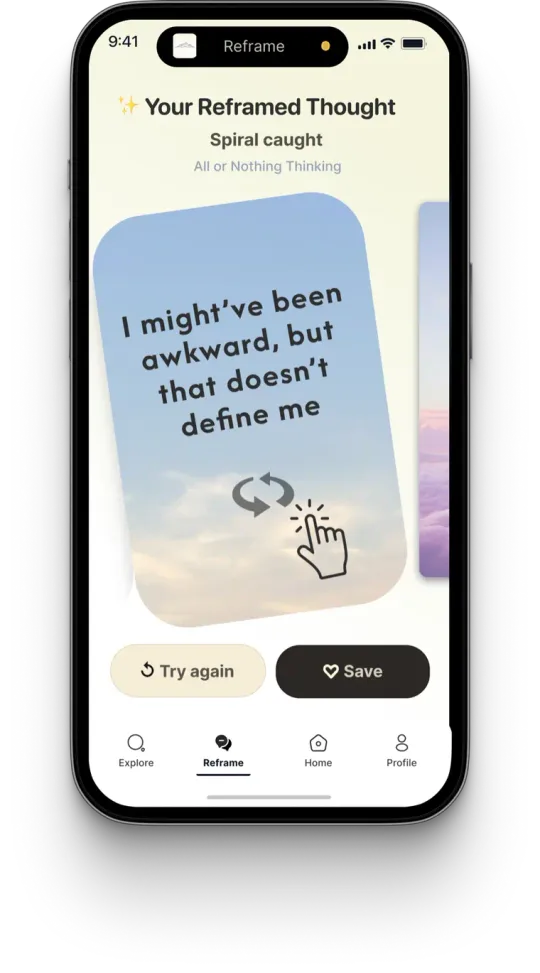
In MindLift, you type the thought in your own words, and the AI reframe names the distortion it caught above the reframed line: “Spiral caught,” then the pattern, such as all-or-nothing thinking or mind reading. If your loop is mostly about how you came across to other people, the 7-day social anxiety reframe works through that theme one day at a time.
3. Go from abstract to concrete
“Why am I like this?” is abstract, and abstract questions are the fuel of the loop. Edward Watkins’ review of repetitive thought found that abstract, evaluative thinking about a problem tends to be the unhelpful kind, while concrete thinking about how it happened and what to do next tends to be the helpful kind. The move is to turn a why into one small next step: “why am I like this?” becomes “what is one thing I can do?”
MindLift gives every thought three reframes, one through each lens. The Realist reframe makes the thought more accurate by checking it against what you actually know. The Growth reframe finds the smallest concrete next step inside the thought. The Compassionate reframe answers the feeling underneath without pretending the moment went well. You pick the one that fits; this post explains the three cards in detail.
One thought
- RealistMakes the thought more accurate by checking it against what you actually know.
- GrowthFinds the smallest concrete next step inside the thought.
- CompassionateAnswers the feeling underneath without pretending the moment went well.
For the dinner thought, the Growth version might be as small as: send one normal message to the friend tomorrow. That is a step the loop cannot argue with, because it is not a question.
4. Test it later
A reframe that only works in the moment does not stick, so check whether the reframe still holds the next time the thought comes back, when you are tired and the original feeling has returned.
When a reframe shifts something, save it so you can find that exact wording again. Then wait for the thought to come back. It will. That is the moment that counts, not the calm minute after the reframe. Re-read it and ask: did it hold? Does the sentence still sound true when the feeling is back? A reframe that fails is usually too positive. Make it smaller and more accurate until it holds.
Test a reframe the next day
When a reframe shifts something, save it so you can find that exact wording again.
It will. That is the moment that counts, not the calm minute after the reframe.
Does the sentence still sound true when the feeling is back?
A reframe that fails is usually too positive. Make it smaller and more accurate until it holds.
In MindLift, the Save button on a reframe puts it in your Favorites, so you can revisit that exact perspective when the same thought comes back. The checking is yours to do. The app keeps the wording; you decide whether it held.
5. See the pattern, not the thought
Your loop has favourite themes. One thought at a time, every loop looks unique, but across a few weeks most people find their loops run on a small number of them. Seeing that pattern is where the process view pays off, because you stop fighting individual thoughts and start recognising the groove.
On MindLift’s home screen, the This week’s reframes card shows your reframes by day, Monday to Sunday, and names your Top Pattern: the distortion that has come up most. Read it once a week rather than daily, so it stays information and does not become another score. From Thought to Pattern walks through the whole loop, from one caught thought to the weekly card.
Before the loop starts: practice when you are calm
Interrupting a loop is a skill, and skills are rehearsed when you are calm, not learned in the middle of a spiral. Once you know your Top Pattern, you can practise its counter-thought in advance.
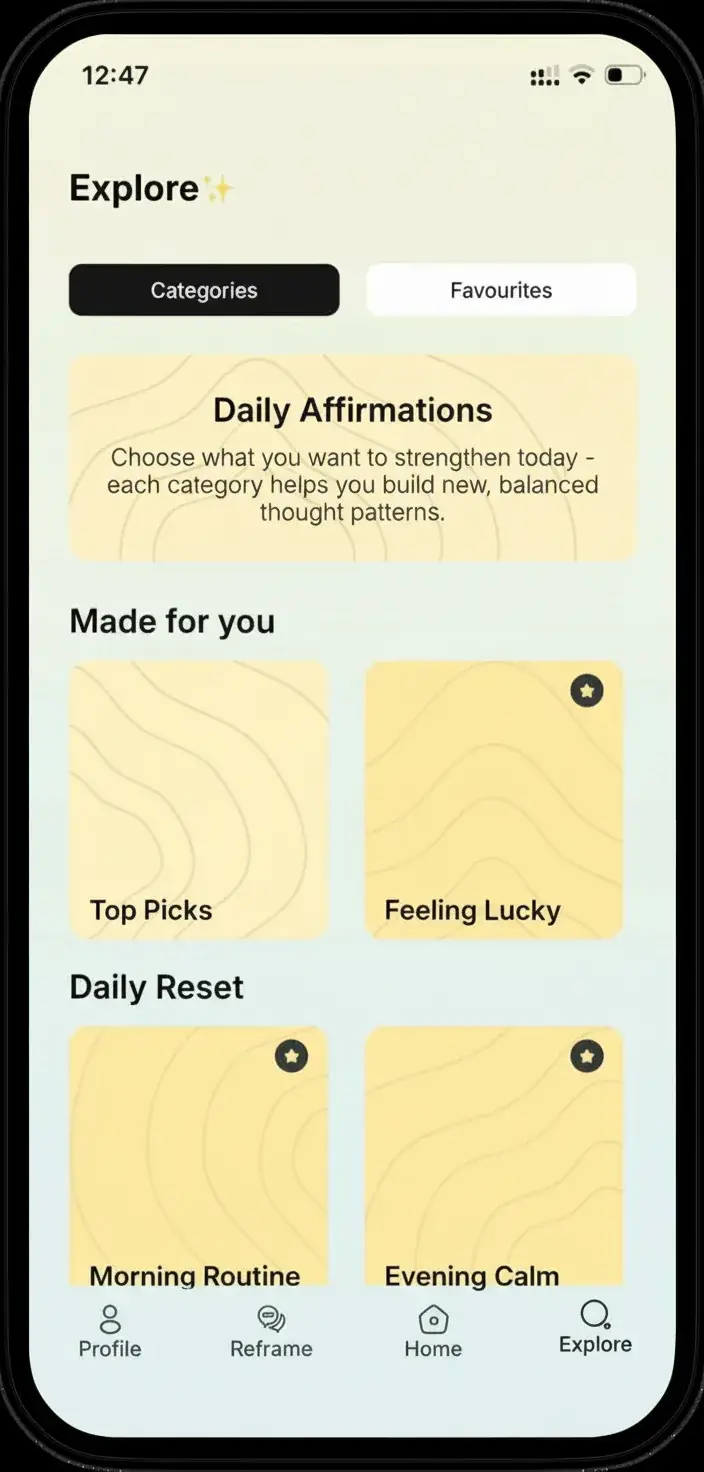
MindLift’s Explore tab holds the affirmation categories, including a Daily Reset set with a Morning Routine and an Evening Calm. Pick the category closest to your Top Pattern and play the Morning Routine before your first scroll. The lines are written to be believable rather than cheerful, because a sentence your brain rejects on contact tends to backfire; why affirmations don’t work explains how.
What an app can’t do
The trials in this meta-analysis tested structured CBT programmes delivered as treatment, some in person with a therapist and some online, and none of them tested MindLift. The results support the approach. They do not show that any app, this one included, produces those effects.
MindLift is a daily practice tool, not treatment. It is useful for the ordinary 2am loop and alongside therapy, and it is no substitute for therapy. If the loop is stopping you from sleeping, working or functioning, or if it has gone on for weeks, see a doctor or a mental health professional. Loop-targeted treatments exist, and a professional can tell you which one fits.
For nights when the loop is the ordinary kind, the guide to stopping rumination at night covers what to do in bed, and the rumination hub collects everything else we have written about it.
Find out which voice your loop runs on
The quickest way into the loop is to know which voice usually starts it. The free inner critic archetype quiz takes twelve statements and names the voice your critic tends to use, along with the reframe that answers it. Bring that voice to your first reframe.
MindLift is free to start, on iOS 15+, Android 8+ and the web. Download MindLift and catch the next loop at the first why.
MindLift is a wellness and self-reflection tool, not a replacement for professional mental-health care. If you are experiencing severe or persistent symptoms, or are in crisis, seek support from a qualified mental-health professional or your local emergency or crisis service.
Frequently asked questions
Is rumination the same as overthinking?
They overlap. Overthinking is the everyday word. Rumination is the research term for dwelling repetitively on problems, feelings and their causes, usually about the past, while worry is the future-facing version. Researchers group both under repetitive negative thinking, because they share the same process: repetitive, hard to stop, and abstract.
Does CBT work for overthinking?
The evidence says it helps. A 2025 meta-analysis in Psychological Medicine pooled 55 randomized trials with 4,970 participants and found a moderate overall effect of CBT on repetitive negative thinking (g = 0.67). Approaches built specifically for repetitive thinking did better than general CBT: 0.87 against 0.48, using the figures the authors corrected in 2026.
Can an app help with rumination?
An app can help you practise interrupting the loop every day: catching the thought early, naming the distortion and turning an abstract question into a concrete one. It is not treatment. The trials tested structured CBT programmes, not apps like MindLift. If rumination is stopping you from sleeping, working or functioning, talk to a doctor or mental health professional.
Why do I overthink at night?
At night there is nothing to act on, fewer distractions and less energy to redirect your attention, so the mind keeps asking why. A why question about yourself has no answer you can reach at 2am, so the loop keeps running. Writing down one concrete next step for the morning gives the thought somewhere to land.
Like what you're reading?
Stop the spiral in real time
MindLift gives you a gentle CBT-based reframe the moment your thoughts start looping.


Free to start · no account required
- Stenzel, K. L., Keller, J., Kirchner, L., Rief, W., & Berg, M. (2025). Efficacy of cognitive behavioral therapy in treating repetitive negative thinking, rumination, and worry: a transdiagnostic meta-analysis. Psychological Medicine, 55, e31. — DOI (opens in a new tab)
- Stenzel, K. L., Keller, J., Kirchner, L., Rief, W., & Berg, M. (2026). Efficacy of cognitive behavioral therapy in treating repetitive negative thinking, rumination, and worry: a transdiagnostic meta-analysis. Corrigendum. Psychological Medicine, 56, e31. — DOI (opens in a new tab)
- Bailey, R. (2025). Misclassifying and differentiating metacognitive therapy: conceptual and methodological issues in Stenzel et al. Psychological Medicine, 55, e238. — DOI (opens in a new tab)
- Stenzel, K. L., Keller, J., Kirchner, L., Rief, W., & Berg, M. (2026). Response to Robin Bailey's letter to the editor, "Misclassifying and differentiating metacognitive therapy: conceptual and methodological issues in Stenzel et al.". Psychological Medicine, 56, e14. — DOI (opens in a new tab)
- Ehring, T., & Watkins, E. R. (2008). Repetitive negative thinking as a transdiagnostic process. International Journal of Cognitive Therapy, 1(3), 192–205. — DOI (opens in a new tab)
- Watkins, E. R. (2008). Constructive and unconstructive repetitive thought. Psychological Bulletin, 134(2), 163–206. — DOI (opens in a new tab)
- Cohen, J. (1988). Statistical Power Analysis for the Behavioral Sciences (2nd ed.). Lawrence Erlbaum Associates.
CBT & Self-Talk Researchers
MindLift content is grounded in cognitive behavioral therapy principles and designed to help you shift harsh self-talk in real time. Our guides focus on practical, evidence-based techniques you can use in the moment.
Was this article helpful?