
Turn this into a daily habit — free to start in the MindLift app:
Overthinking and anxiety are often described as if they were the same thing, and in common usage, they're treated interchangeably. But understanding the difference matters — because they respond to different interventions. Treating one as if it were the other can leave you spinning.
What Is Anxiety?
Anxiety is primarily a physiological state. It begins with the brain's threat detection system — the amygdala — signaling danger, which activates the sympathetic nervous system. The result: elevated heart rate, muscle tension, shallow breathing, heightened alertness, and the subjective experience of dread or fear.
Crucially, the threat doesn't have to be real. The amygdala responds to perceived threat — which is why someone can experience a full panic response to a social situation, a thought, or an imagined scenario. The body doesn't distinguish between a bear in the woods and the imagined judgment of colleagues.
In its clinical form, anxiety is a spectrum: generalized anxiety disorder (GAD), social anxiety disorder, panic disorder, specific phobias, and others. Each has a different presentation, but all involve a dysregulated threat response.
What Is Overthinking?
Overthinking is primarily cognitive — a mental loop the brain runs when it encounters uncertainty, unresolved conflict, or perceived threat. Unlike anxiety's physiological signature, overthinking lives mostly in the mind: reviewing the same scenario repeatedly, catastrophizing future outcomes, analyzing what you said or should have said, trying to achieve certainty about something inherently uncertain.
The clinical term is rumination — from the Latin for chewing cud. The brain returns to the same thought over and over, as if repeated processing will eventually produce resolution. It usually doesn't. Rumination tends to amplify negative thinking rather than resolve it.
Overthinking can occur without clinical anxiety. Some people overthink as a learned coping style, a response to uncertainty intolerance, or a byproduct of perfectionism — without the physiological activation that characterizes anxiety disorders.
How They Overlap — and Where They Diverge
| Feature | Overthinking | Anxiety |
|---|---|---|
| Primary domain | Cognitive (thinking) | Physiological + cognitive |
| Key experience | Mental looping, rumination | Fear, dread, bodily tension |
| Trigger | Uncertainty, unresolved questions | Perceived threat (real or imagined) |
| Physical symptoms | Minimal or secondary | Central — heart rate, breathing, tension |
| Core mechanism | Uncertainty intolerance | Threat detection (amygdala activation) |
| Best intervention | Cognitive restructuring, thought interruption | Exposure, relaxation, CBT |
| Medication response | Modest | Significant (SSRIs, SNRIs) |
| Functional impairment | Moderate (time, focus) | Can be severe (avoidance, panic) |
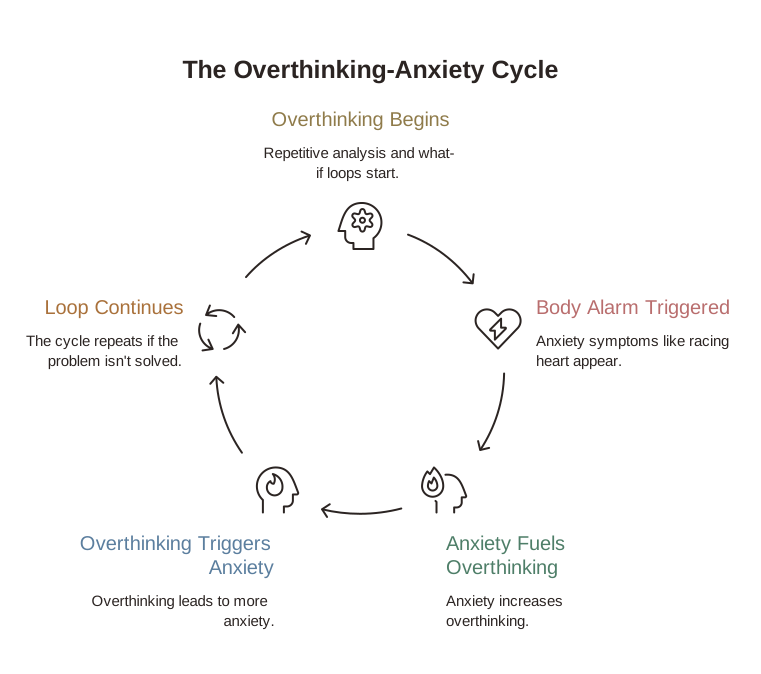
The overlap is significant. Anxiety often produces overthinking — when the body is in a state of threat activation, the mind searches for what the threat is and how to resolve it. That search is overthinking. Conversely, overthinking can generate anxiety — the more you rehearse catastrophic scenarios, the more your nervous system believes them to be real threats.
This feedback loop is why they're so often experienced together. But they enter the loop from different directions, which is why different interventions are needed.
Why the Distinction Matters for Treatment
For overthinking: The most effective interventions are cognitive — thought labeling, cognitive restructuring, containment scheduling, behavioral activation. These work at the level of the thought loop. Meditation can help by building awareness of the loop, but it doesn't directly restructure the thoughts themselves.
For anxiety: The most effective interventions address both the physiological state and the cognitive patterns. Exposure therapy (gradually approaching feared situations) is particularly effective for anxiety because it directly retrains the threat response. Relaxation techniques (diaphragmatic breathing, progressive muscle relaxation) reduce physiological arousal. CBT addresses the cognitive distortions that maintain anxiety.
Medication: SSRIs and SNRIs can significantly reduce anxiety by modulating the serotonin system. They have a more modest effect on overthinking specifically, because they reduce the arousal baseline but don't directly change thought patterns. Many people find that medication reduces anxiety enough that CBT becomes easier to apply.
A Practical Diagnostic Question
When you're in the middle of a difficult moment, ask yourself: what is more prominent right now — the physical experience or the mental looping?
- Mostly physical (tight chest, racing heart, shortness of breath): start with physiological regulation — slow breathing, grounding, body-based calming before trying to address the thoughts.
- Mostly mental (replaying events, catastrophizing, analyzing): start with thought interruption — labeling the distortion, containment scheduling, or the reframe.
- Both equally prominent: physical regulation first (2 minutes of slow breathing), then cognitive intervention.
When to Seek Professional Support
Self-directed CBT tools work well for moderate overthinking and manageable anxiety. Consider seeking support from a therapist or psychiatrist if:
- Anxiety is significantly interfering with work, relationships, or daily functioning
- You're avoiding important situations because of anxiety
- Panic attacks are occurring frequently
- Overthinking is so pervasive that it's affecting your ability to rest, focus, or make decisions
- You've tried self-directed approaches for 6–8 weeks without meaningful change
Related Reading
- How to Stop Overthinking Immediately
- Cognitive Reframing Techniques
- High-Functioning Anxiety
- Do I Have Social Anxiety? Quiz
Frequently asked questions
What is the difference between overthinking and anxiety?
Anxiety is primarily a physiological state — racing heart, muscle tension, shallow breathing — triggered by the brain's threat detection system. Overthinking is primarily cognitive — the mental loop the brain runs when it perceives uncertainty or threat. They overlap significantly and often reinforce each other, but they respond to different interventions.
Is overthinking a sign of anxiety disorder?
Overthinking can be a symptom of anxiety disorders, particularly generalized anxiety disorder (GAD), which is characterized by persistent, excessive worry. But overthinking also occurs in people without clinical anxiety — as a habit, a coping style, or a response to stress. Frequency, duration, and functional impairment are the key factors in clinical assessment.
Can you have anxiety without overthinking?
Yes. Some anxiety presentations are primarily somatic — physical symptoms like panic attacks, muscle tension, and heart palpitations — without prominent cognitive looping. Social anxiety can manifest as strong bodily fear without extended overthinking. Phobias are another example where the response is physical (avoidance, fight-or-flight) rather than primarily cognitive.
What helps more — CBT or medication — for overthinking?
For overthinking specifically, CBT tends to produce more durable results because it directly targets the thought patterns. Medication (particularly SSRIs) can reduce the overall anxiety baseline that fuels overthinking, making CBT easier to apply. For many people, the combination is more effective than either alone. For standalone overthinking without clinical anxiety, CBT tools alone are often sufficient.
Like what you're reading?
Take control of your mental wellness
Reframe the thought that started it — personalized CBT reframes in the MindLift app.


Free to start · premium optional