Turn this into a daily habit — free to start in the MindLift app:
You might think your money habits are about discipline, income, or luck.
But here's the uncomfortable truth:
Your money personality is driven by a hidden fear. Not spreadsheets. Not logic. Fear.
And once you see it… everything starts to make sense.
Why Money Feels So Emotional
Money isn't just numbers — it's psychology.
Every financial decision you make is filtered through:
- Your thoughts
- Your emotions
- Your past experiences
This is the core idea behind cognitive behavioral therapy (CBT): your thoughts shape your feelings, which shape your behavior.
The 4 Money Personalities (And the Fear Behind Them)
Let's decode yours.
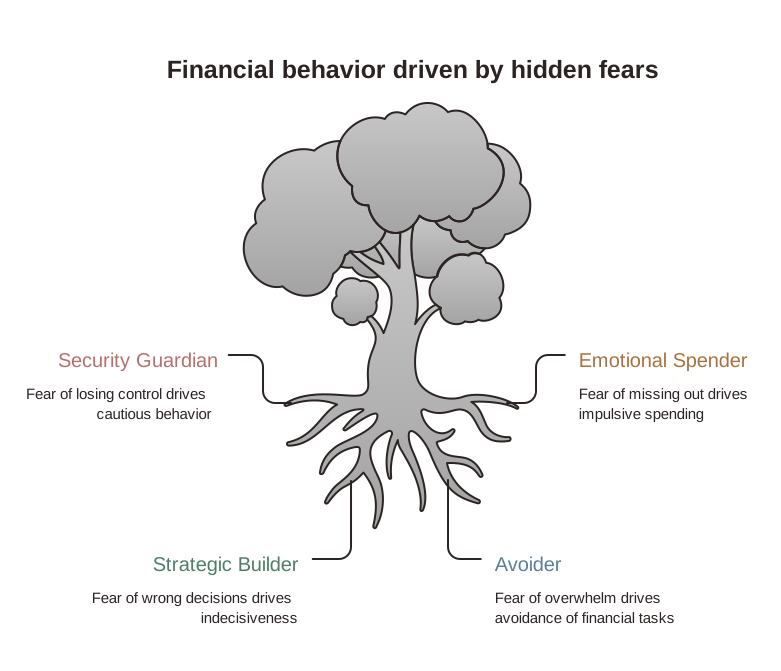
1. The Security Guardian
Core fear: Losing control or safety
You save. You plan. You think ahead. You're the person others call "responsible." But underneath? A quiet fear: "What if something goes wrong?"
Avoid risks
Over-save
Hesitate to invest or enjoy
CBT pattern
Catastrophizing future outcomes
MindLift shift
"I can be safe and still allow growth."
2. The Emotional Spender
Core fear: Missing out or feeling empty
You don't just spend money — you feel it. Spending becomes reward, comfort, escape. "I deserve this." "This will make me feel better." And for a moment… it does.
Impulse spending
Reward-based purchases
Emotional shopping cycles
CBT pattern
Emotional reasoning — "If I feel it, it must be right"
MindLift shift
"I can feel good without spending."
3. The Strategic Builder
Core fear: Making the wrong decision
You optimize everything. You research, compare, analyze. You want the best move — not just a good one. But this creates a hidden loop: overthinking → delay → pressure.
Analysis paralysis
Decision delay
Constant mental "what ifs"
CBT pattern
Inner dialogue overload and analysis loops
MindLift shift
"Progress matters more than perfect decisions."
4. The Avoider
Core fear: Overwhelm and not being "good enough"
You don't love thinking about money. So you avoid checking accounts, delay decisions, and hope things work out. "It's too much." "I'll deal with it later."
Avoids checking accounts
Delays financial decisions
Hopes things work out
CBT pattern
Avoidance → relief → more anxiety later (CBT avoidance cycle)
MindLift shift
"Small steps make money feel safe again."
The Real Problem Isn't Money
Here's the truth most people miss:
Your brain is trying to protect you, reduce discomfort, and stay in control — even if it's not helping.
Over time, these patterns become automatic. They feel like "this is just who I am."
You Can Rewire Your Money Mindset
Did You Know?
That means you can build a new relationship with money — one thought at a time.
Try This (Simple Shift)
Next time you make a money decision, pause and ask:
Two questions to pause on
- "What am I feeling right now?"
- "What fear is underneath this?"
Not to judge it. Just to notice it. That's where change begins.
Discover Your Money Personality
If you want to go deeper, take the 2-minute quiz to uncover your hidden fear, your thinking pattern, and your personalized mindset shifts.
Final Thought
Money isn't just about what you do. It's about what you believe. And once you see the belief… you can finally change the behavior.
Frequently asked questions
What is a money personality?
A money personality is a pattern of financial behavior shaped by your thoughts, fears, and beliefs — not just your income or discipline. It reflects how your inner voice talks to you about security, worth, and control, and it drives decisions around saving, spending, investing, and avoiding.
How does CBT relate to money habits?
Cognitive Behavioral Therapy (CBT) shows that thoughts shape feelings, which shape behavior. Money habits are no different — cognitive distortions like catastrophizing ('I'll lose everything'), emotional reasoning ('I feel anxious so I should spend'), and avoidance cycles directly influence how you handle finances.
Can I change my money personality?
Yes. These are learned patterns, not fixed traits. By noticing your financial self-talk, identifying the fear underneath, and practicing gentle reframes, you can gradually develop a healthier relationship with money. Neuroplasticity means your brain can form new patterns at any age.
What's the difference between this article and the quiz?
This article explains the psychology and CBT science behind the four money personalities. The quiz gives you a personalized result with tailored reframes and affirmations. They work best together — read the article for understanding, take the quiz for self-discovery.
Like what you're reading?
Continue your wellness journey
Reframe negative thoughts in 60 seconds — free to start in the MindLift app.


Free to start · premium optional