
Turn this into a daily habit — free to start in the MindLift app:
Many adults struggle with an inner voice that tends to be overly critical or pessimistic. This negative self-talk — those habitual thoughts of self-doubt and harsh self-judgment — can act like a persistent dark cloud hovering over one's mind. When left unchecked, these negative thoughts can significantly wear down your psychological and emotional well-being.
In this guide, we'll discuss what persistent negative thinking does to the mind and mood, examine both cognitive and behavioral consequences of constant self-criticism, and outline research-backed strategies to shift from negative thinking toward a healthier inner dialogue.
The Toll of Persistent Negative Thinking
Negative thoughts are more than just unpleasant — over time, they can reshape how you think, feel, and behave. Cognitive-behavioral theory tells us that thoughts, emotions, and behaviors are deeply interconnected. Persistent negative self-talk can create and sustain low mood by reinforcing a distorted, negative self-image.
Emotional and Psychological Impact
- Catastrophizing and self-blame contribute to anxiety disorders and depression
- High levels of negative self-talk correlate with more severe mental health issues
- Chronic stress from negative thinking can manifest as physical symptoms
- Decreased motivation and greater feelings of helplessness emerge over time
Cognitive Distortions: Habitual Errors in Thinking
Our thoughts act like a lens through which we view ourselves and the world. With persistent negativity, that lens becomes dark and distorted. Psychologists refer to many of these as cognitive distortions — systematic patterns of inaccurate or biased thinking.
All-or-Nothing Thinking
Seeing things in extreme terms with no middle ground. If a situation isn't perfect, you perceive it as a total failure.
Catastrophizing
Automatically jumping to the worst-case scenario, no matter how unlikely the outcome actually is.
Perfectionism
Holding yourself to impossible standards and then criticizing yourself for any perceived imperfection.
Personalization
Blaming yourself for events outside your control, leading to excessive guilt and shame.
From Negative Thinking to Self-Love: Strategies and Tools
Overcoming negative self-talk isn't as simple as flipping a switch — it's a gradual process of retraining your mind. Techniques like cognitive restructuring, self-compassion practices, positive affirmations, and mindfulness have all been shown to help break the grip of negative thoughts.
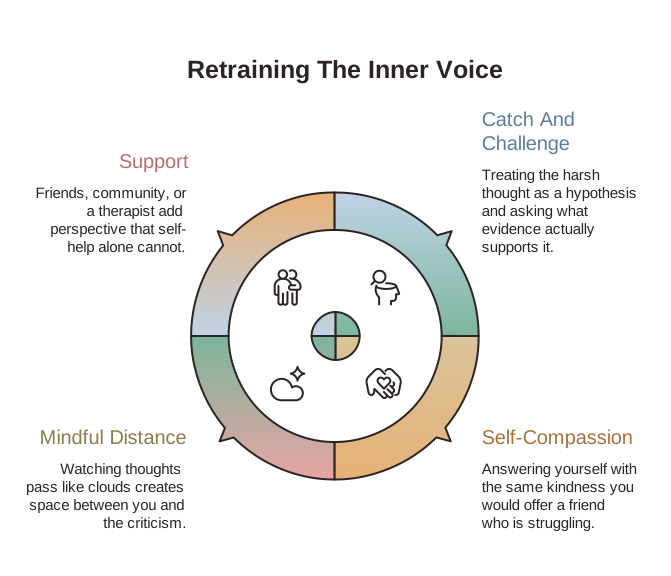
Cognitive Restructuring: Challenging Negative Thoughts
One of the core techniques in CBT is cognitive restructuring — learning to catch, challenge, and change negative thoughts. When negative self-talk has become a reflex, the first step is to slow down and notice those thoughts.
Key Questions for Challenging Thoughts:
- "What's the evidence for this thought?" — Treat the thought like a hypothesis rather than truth
- "Is there an alternative explanation?" — Consider other perspectives beyond your first interpretation
- "Would I say this to a good friend?" — Introduce self-compassion into the process
Practicing Self-Compassion
If negative self-talk is an inner bully, self-compassion is the inner best friend we all need. Psychologist Kristin Neff defines it as treating yourself with the same kindness, understanding, and support that you would offer to a friend who is suffering.
Mindful Acknowledgement
Notice your feelings without immediately judging yourself. Simply observe with neutral awareness.
Common Humanity
Remember that struggles and imperfection are part of the shared human experience.
Self-Kindness
Replace harsh self-judgment with the same caring tone you'd use with a good friend.
Using Positive Affirmations
Positive affirmations are short, encouraging statements that you repeat to affirm your worth, capabilities, or hopeful outcomes. Studies show that practicing self-affirmations can activate brain areas associated with self-processing and reward, leading to increased self-esteem and resilience over time.
Effective Affirmation Tips:
- Choose statements that resonate with you personally
- Make them positive but believable to avoid backfire effects
- Practice consistency — repeat them daily
- Use them as counterpoints to your common negative thoughts
Mindfulness and Meditation
Mindfulness — the practice of paying attention to the present moment with an open, non-judgmental attitude — is a powerful antidote to negative thinking. It teaches you to observe thoughts as just thoughts, not facts, creating distance between you and negative self-talk.
Simple Mindfulness Techniques:
Mindful breathing breaks: Focus on your breath for 5-10 breaths when negative thoughts arise
Body scan check-ins: Notice physical tension and consciously relax those areas
Thought observation: Watch thoughts like clouds passing across the sky of your mind
Seeking Therapy and Support
Professional help — particularly Cognitive-Behavioral Therapy (CBT) — can be immensely beneficial, especially if negative thoughts are deeply entrenched or contributing to serious issues like depression, anxiety, or trauma.
Therapy provides something you can't get from self-help alone: human connection and professional perspective. A therapist can help you explore the root causes of your negative self-talk and provide structured support for faster progress.
Putting It All Together
Shifting from a habit of negative thinking to a stance of self-love is a gradual, yet deeply rewarding process. It involves unlearning the habit of self-criticism and replacing it with habits of self-questioning, self-kindness, and present-moment awareness.
Key Strategies Recap:
- Challenge and reframe negative thoughts using evidence and alternative perspectives
- Practice self-compassion daily, especially in moments of pain or failure
- Use positive affirmations to reinforce a new narrative about yourself
- Build mindfulness through meditation or simple breathing exercises
- Seek support when needed, whether through friends or professional therapy
Remember, the goal is progress, not perfection. Even the most self-compassionate person still has the occasional negative thought; the difference is they've learned not to give that thought a permanent home. For a deeper dive into reframing techniques, read our guide on cognitive reframing.
Frequently asked questions
How do negative thoughts affect mental health?
Negative thoughts can significantly impact mental health by eroding self-esteem, increasing anxiety and depression symptoms, and creating distorted perceptions of reality. Research shows that persistent negative self-talk can lead to decreased motivation and greater feelings of helplessness.
What is cognitive restructuring and how does it help?
Cognitive restructuring is a core technique in Cognitive-Behavioral Therapy (CBT) that involves learning to catch, challenge, and change negative thoughts. It helps by training your brain to think more realistically and kindly, reducing the frequency and intensity of negative thoughts over time.
How can mindfulness help with negative self-talk?
Mindfulness helps by teaching you to observe negative thoughts as just thoughts, not facts. It creates distance between you and your thoughts, allowing you to respond rather than react to negative self-talk, and reduces rumination and emotional reactivity.
Like what you're reading?
Take control of your mental wellness
Reframe the thought that started it — personalized CBT reframes in the MindLift app.


Free to start · premium optional