
Turn this into a daily habit — free to start in the MindLift app:
Low self-esteem in relationships doesn't look like someone sitting in the corner saying "I'm not good enough." It's quieter than that, and more disruptive.
It looks like checking a partner's phone. Needing to know where they are. Feeling threatened by their friendships. Saying yes to everything and quietly resenting it. Flinching when someone tries to get close. Needing reassurance so frequently that it strains the relationship — and still not being satisfied when it comes.
It looks, from the outside, like other things: insecurity, jealousy, neediness, people-pleasing, emotional unavailability. It gets diagnosed as a relationship problem when it's actually a self-worth problem that relationships are bearing the cost of.
The Core Dynamic
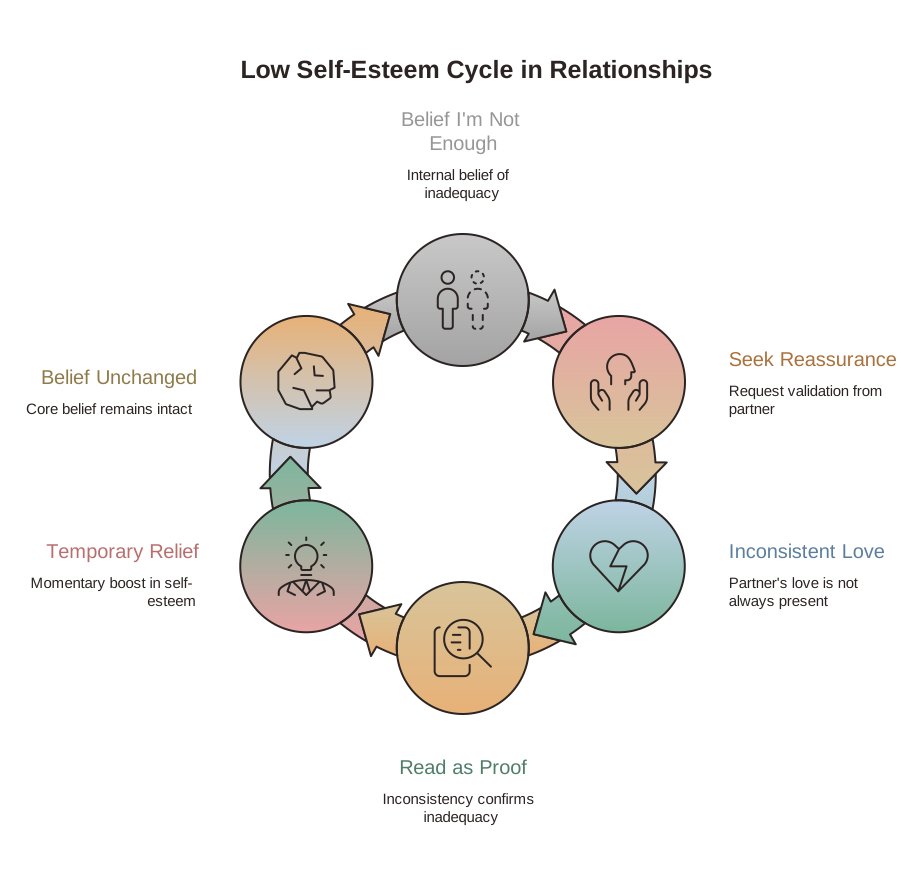
Low self-esteem in relationships operates through one core dynamic: using the relationship to fill a validation gap that the relationship cannot permanently fill.
The internal logic goes like this: I don't fully believe I'm enough. If my partner loves me, that proves I'm enough. So their love — their presence, their reassurance, their attention — becomes the evidence I use to temporarily settle the question of my worth.
The problem: external love is inconsistent. Partners have bad days, get distracted, need space, express frustration. Any of these normal relationship events gets interpreted through the self-worth lens as evidence of the fear: see, I was right, I'm not enough.
The reassurance-seeking that follows — the need to resolve the uncertainty, to get confirmation that everything is fine — provides temporary relief. It doesn't update the belief. So the cycle repeats, often escalating over time as ordinary relationship events trigger larger responses.
The Patterns It Creates
Jealousy and possessiveness
Jealousy that comes from low self-esteem is rarely about trusting or distrusting the partner. It's about the underlying belief: I'm not enough to keep them. When that belief is running, any situation that introduces uncertainty — a friend they talk about, an ex they run into, success or attention that others give them — becomes a threat.
The behavioral response is an attempt to control the uncertainty: monitoring, questioning, subtly undermining the partner's confidence, restricting their independence. None of this addresses the underlying belief. It temporarily reduces the anxiety while making the relationship progressively smaller.
Partners of people with this pattern often find themselves adapting more and more — mentioning friends less, downplaying their own successes, providing constant reassurance — and still finding it's never quite enough.
People-pleasing and loss of self
People-pleasing in relationships comes from the same source as jealousy, operating in the opposite direction. The fear isn't they'll leave for someone better — it'sthey'll leave if I'm not easy enough to be with.
The result: suppressing needs, preferences, and disagreements to maintain the relationship. Saying yes when the honest answer is no. Performing agreeableness as a form of insurance against abandonment.
Over time, this erodes two things: authentic connection (which requires two real people, not one person and a performance) and the self-respect of the person doing the performing. The needs don't disappear — they go underground, accumulating as resentment that eventually surfaces in ways that feel disproportionate to whoever triggered it.
Difficulty receiving love
This is the pattern that breaks relationships most quietly. A person with low self-esteem often cannot receive love cleanly. When a partner expresses care — affection, admiration, loyalty — it gets filtered through a belief that says I don't deserve this.
The care doesn't reach the person it's meant for. Instead: deflection (oh, you're just saying that), reframing (they don't really know me), or suspicion (what do they want from this?). The partner offering care watches it bounce off repeatedly and eventually — naturally — starts offering less.
For the person with low self-esteem, this confirms the original belief: see, I was right, I'm not lovable. What they don't see is that the belief created the outcome it predicted.
Emotional walls and withdrawal
Not all low self-esteem in relationships presents as neediness. The defended version presents as emotional unavailability — keeping partners at arm's length, not letting anyone get too close, moving on before being left.
The underlying belief is the same: I'm not enough. The behavioral response is different: rather than seeking reassurance, avoid the situation where the belief could be confirmed. Don't fully invest, so there's less to lose. Don't be fully known, so there's less to be found wanting.
This creates intimacy ceilings — relationships that can't go past a certain depth because something in the person keeps pulling back whenever they get close to being truly seen.
What Partners Experience
Partners of people with significant low self-esteem often describe a similar progression: an initial period where the attention and intensity felt flattering; a middle period of increasing reassurance demands, conflict over insecurity, or emotional distance; and an exhaustion phase where they feel like nothing they do is ever enough.
That last phase — the nothing I do is enough experience — is usually accurate. Not because the partner isn't trying, but because the need isn't for more of what they're providing. The need is for an internal shift that only the person with low self-esteem can make.
Recognizing this is important for partners: constant reassurance doesn't build self-esteem. It can actually reinforce the pattern by confirming that external reassurance is what's needed. The most loving response is often also the most counterintuitive one: consistent, calm presence combined with encouraging the other person to do their own work.
What Actually Changes Things
The shift doesn't come from finding the right partner, or from a partner proving their love sufficiently. It comes from the person with low self-esteem developing a different relationship with their own worth — one that doesn't require external confirmation to feel stable.
That's work that happens inside the person, not inside the relationship. It involves:
- Recognizing the patterns as patterns — not as facts about the relationship or the partner.“I'm doing the jealousy thing again” is different from “something is actually wrong.”
- Examining the underlying belief: cognitive restructuring applied to I'm not enough to keep them — what's the actual evidence for this? What's the evidence against it?
- Behavioral practice: acting from values rather than from fear. Expressing a need instead of performing agreeableness. Letting a compliment land instead of deflecting it. These small actions generate new evidence that contradicts the old belief.
- Professional support: for significant patterns — especially those rooted in early attachment experiences — CBT or schema therapy provides structure and expertise that self-help alone can't match.
The broader version of this work is in how to build self-esteem. If the person you are thinking about is a man, the signs of low self-esteem in a man often look like confidence or control rather than insecurity. The self-esteem hub collects the rest.
The Quiz That Helps Identify the Pattern
If the patterns in this article resonate — in yourself or in someone you're in a relationship with — the Low Self-Esteem Quiz can help identify which specific patterns are most active. The questions cover the behavioral indicators most closely linked to self-worth: how you handle criticism, how you respond to praise, how you navigate closeness and vulnerability.
Understanding the specific shape of the pattern is the first step toward working with it — rather than just living inside it.
Frequently asked questions
How does low self-esteem affect relationships?
Low self-esteem affects relationships through several consistent patterns: needing excessive reassurance, difficulty trusting that a partner's love is real, jealousy rooted in 'I'm not enough,' people-pleasing that erodes authentic connection, and difficulty receiving love or care without deflecting it. The underlying dynamic is that the person with low self-esteem is asking the relationship to fill a self-worth gap that relationships aren't designed to fill.
Can a relationship survive one partner's low self-esteem?
Yes — but usually not without the person with low self-esteem doing some work on it. The patterns (jealousy, people-pleasing, difficulty receiving love) tend to intensify over time and create relationship dynamics that exhaust both partners. Partners of people with low self-esteem often find they can't give enough reassurance to satisfy — because the need isn't for external reassurance, it's for internal belief that isn't yet there.
Is jealousy always a sign of low self-esteem?
Mild jealousy is a normal human experience. Persistent jealousy — monitoring a partner's movements, feeling threatened by their friendships or successes, subtle undermining of their confidence — typically reflects low self-esteem rather than reasonable concern. The internal logic: 'I'm not enough to keep them, so I need to manage the situation to prevent them from figuring that out.'
What should I do if my partner has low self-esteem?
First: recognize that you cannot fix it for them. You can create a safe, consistent environment — being predictable, following through, responding calmly to insecurity — but the internal work of building self-esteem belongs to them. Trying to compensate by providing constant reassurance often makes the pattern worse, because it confirms that external reassurance is what's needed. Gently encouraging professional support (therapy) is often the most loving thing you can do.
Like what you're reading?
Continue your wellness journey
Reframe negative thoughts in 60 seconds — free to start in the MindLift app.


Free to start · premium optional