Turn this into a daily habit — free to start in the MindLift app:
Overthinking doesn't feel like weakness. It feels like responsibility. Like preparation. Like trying to get it right. This is the long read in our overthinking hub; for the step-by-step method, see the complete guide to stopping overthinking.
But if you're here, you already know the truth: it doesn't calm you. It drains you.
If you searched for "The Art of Not Overthinking book," you're probably hoping for relief — not just insight. This version goes deeper.
You'll learn:
- Why overthinking happens (psychologically)
- 7 lessons that actually reduce rumination
- Practical ways to apply them daily
- How to turn insight into consistent change
Why We Overthink (And Why It Feels So Hard to Stop)
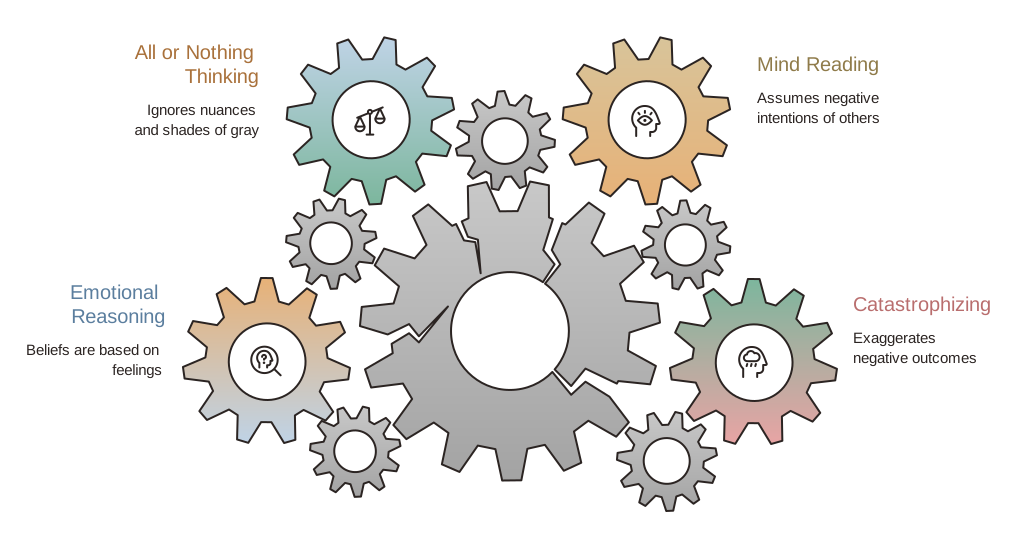
Overthinking is usually powered by cognitive distortions — predictable mental patterns that exaggerate threat and underestimate your ability to cope.
Common ones include:
- Catastrophizing – "This is going to end badly."
- Mind-reading – "They must think I'm incompetent."
- All-or-nothing thinking – "If it's not perfect, it's a failure."
- Emotional reasoning – "I feel anxious, so something must be wrong."
These distortions activate the brain's threat system. For the neuroscience underneath that process, see what overthinking does in the brain.
Research shows that the way we speak internally directly influences emotional regulation.
Overthinking = distorted prediction + threat activation + looping self-talk.
The good news? Loops can be interrupted.
7 Lessons That Actually Stop Rumination
1A Thought Is Not a Fact
Overthinkers treat thoughts as evidence.
Shift from:
"I'm going to mess this up."
To:
"I'm having the thought that I might mess this up."
This creates cognitive distance — a proven CBT technique. If you want a step-by-step version, read how to reframe negative thoughts.
Small shift. Big relief.
2Rumination Feels Productive — But It Isn't
Problem-solving ends with action. Rumination repeats without movement.
Ask: "Is this helping me act — or just making me tense?"
If there's no action, it's looping.
3Uncertainty Is Uncomfortable — Not Dangerous
Overthinking is often intolerance of uncertainty. Your brain wants guarantees.
Instead of: "I need to be sure."
Try: "I can handle not knowing."
This directly challenges catastrophic thinking.
4Change the Tone of Your Inner Voice
Harsh internal language activates stress responses. Supportive language strengthens regulation.
Instead of: "Why am I like this?"
Try: "This is my brain trying to protect me."
Compassion reduces mental escalation.
5Perfection Feeds the Loop
All-or-nothing standards create pressure.
Replace: "It has to be flawless."
With: "Good enough moves me forward."
Action breaks rumination.
6Feelings Are Signals — Not Proof
Emotional reasoning is powerful.
Anxiety ≠ danger. Discomfort ≠ disaster.
Ask: "What actual evidence supports this fear?"
Often, very little.
7Repetition Rewires Patterns
Overthinking is a habit. Habits change through repetition.
A kinder, more balanced inner voice gets easier the more you practice it.
Reading helps. Practicing daily rewires.
Why Reading About Overthinking Isn't Enough
Books give insight. But overthinking isn't an intellectual problem. It's a repetition problem.
You don't spiral once. You might spiral many times a day.
And most spirals happen:
- Before meetings
- After sending a text
- At night in bed
- During silence
Insight fades. Loops return. What changes patterns is consistent interruption in the moment.
A Gentle Truth About Change
You don't need:
- More willpower
- More self-criticism
- More analysis
You need:
- A faster interruption
- A calmer internal response
- A replacement thought ready when the spiral starts
That's where most people struggle. They know the distortion. They just can't access the reframe fast enough.
Turning Insight Into Daily Practice
Here's what actually works:
- Catch the distortion quickly.
- Label it.
- Replace it with a balanced thought.
- Repeat consistently.
That's cognitive retraining. But doing that alone — especially mid-spiral — is hard.
Where MindLift Fits In
MindLift was built for one thing: interrupting spirals in real time.
Instead of sitting with "I should know better," you open the app, type the thought, it identifies the distortion, and gives you 3 grounded reframes.
Not fluffy positivity. CBT-informed. Believable. Gentle.
Because stopping overthinking isn't about thinking less. It's about:
- Replacing catastrophic predictions
- Softening emotional reasoning
- Reducing urgency
- Rebuilding internal tone
And that requires repetition.
Books spark awareness. Daily micro-reframes build neural change.
If You're Serious About Stopping Rumination
Here's a simple plan:
- Read the lessons.
- Practice one manual reframe per day.
- When spirals hit fast, use guided interruption.
- Repeat for 30 days.
Consistency beats intensity.
Final Thought
Overthinking isn't a flaw. It's a protective system that became overactive.
You don't need to silence your mind. You need to retrain it — gently.
If you want support interrupting loops in real time, you can try MindLift — free to start and see how it feels.
Not as a replacement for insight. But as daily reinforcement.
Because insight starts change. Repetition completes it.
Frequently asked questions
Why do I overthink everything?
Overthinking is usually powered by cognitive distortions like catastrophizing, mind-reading, and all-or-nothing thinking. These patterns exaggerate threat and underestimate your ability to cope, activating your brain's threat system and creating repetitive loops.
How do I stop rumination?
Stop rumination by: (1) recognizing that a thought is not a fact, (2) asking if your thinking is leading to action or just tension, (3) tolerating uncertainty instead of seeking guarantees, and (4) replacing harsh self-talk with compassionate language. Consistency matters more than intensity.
What is the difference between overthinking and problem-solving?
Problem-solving ends with action. Rumination repeats the same thoughts without movement. If your thinking isn't leading to a next step, it's looping — not solving.
Why is reading about overthinking not enough to stop it?
Overthinking isn't an intellectual problem — it's a repetition problem. You spiral dozens of times daily, and insight fades between episodes. What changes patterns is consistent interruption in the moment, not understanding alone.
What is cognitive distance in CBT?
Cognitive distance means shifting from 'I'm going to mess this up' to 'I'm having the thought that I might mess this up.' This small language change separates you from the thought, reducing its emotional power — a core CBT technique.
Like what you're reading?
Stop the spiral in real time
MindLift gives you a gentle CBT-based reframe the moment your thoughts start looping.


Free to start · premium optional